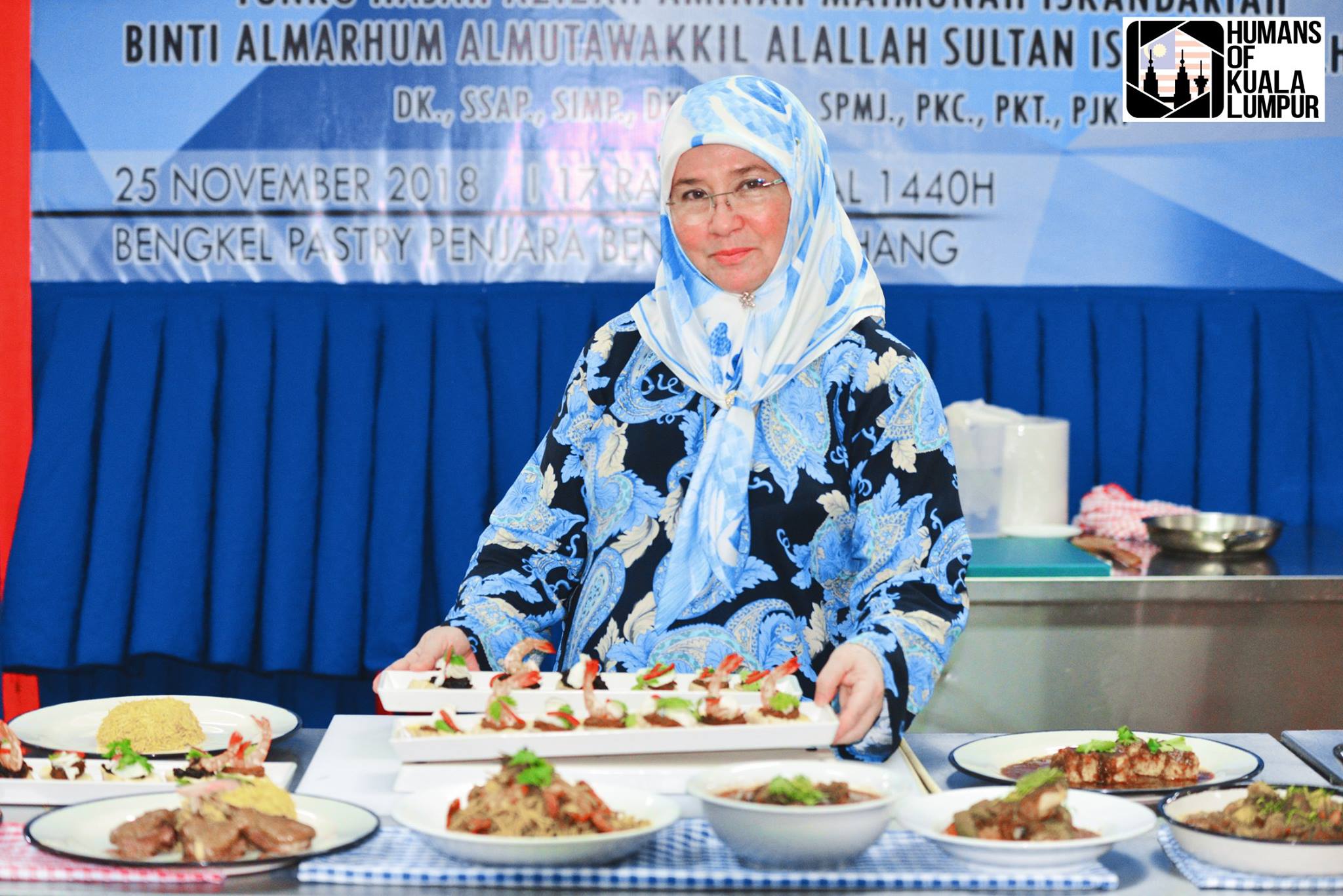
“When I teach these girls how to cook, we get to spend time together and I would listen to their stories. I ask them, what happened to you? Some of them told me how much they regret their mistakes. Some of them were too young so they didn’t even know what they did was wrong.
What we are doing here is to give the prisoners hope and to broaden their views on opportunities after leaving the prison. The recipes from my cookbook ‘Air Tangan Tengku Puan Pahang – Masakan Tradisional Pahang’ is the basis of this rehabilitation programme for prisoners. In the first class,I will teach the prisoners how to make ‘rendang’ paste and ‘asam pedas’ paste.
We want to give them training while they are here and get their mind active in contributing to the society and at the same time having sustainable income.
This is very important as we want them to be useful and accepted by the society. We hope this pilot project and initiative by the Malaysian Prison Department and support by Resorts World Genting will bear fruit.
If it is successful we hope to expand this idea to other prisons in Pahang and maybe other prisons in Malaysia in the future as well.
Apparently TPP doesn’t only stand for ‘Tuanku Puan Pahang’, it also stands for ‘Timbalan Penguasa Penjara’ (Deputy Director of Prison). They gave me a special ‘pangkat’ (title) because I am involved in the welfare and rehabilitation of these inmates. So I guess I am double TPP now. (laughs)”
Captured at the “Beauty Behind the Wall” programme, a CSR initiative by KDYTM Tengku Puan Pahang (TPP) Tunku Hajah Azizah Aminah Maimunah Iskandariah and Resorts World Genting, aimed to equip female inmates of Bentong Prison with culinary skills.
“We then give a test to see if they have changed and improved themselves. Each inmate will go to a religious class and be assigned their guru. If you’re Muslim you go to the Islamic classes and if you’re Buddhist or Hindu you go to those religious classes. We tell them ‘when you walked in here, you were empty, you did not know many good things. You now leave with goodness in you’.
Majority of prisoners here are Malays, about 60{eb97150a49149dc6c9e8165e90f1c9129bb6172e02a598b4264a1fc329d7d5bc} of them, with 40{eb97150a49149dc6c9e8165e90f1c9129bb6172e02a598b4264a1fc329d7d5bc} Chinese and Indians. There’s 3000 inmates in this (Bentong) prison, and 200 of them are women. The women are in mostly because of drugs, and the men’s crimes vary from drugs to rape and assault.
Most of the prisoners are here because of drug-related crimes. For inmates, their uniforms vary on color. We measure them by months. If you’re here for more than 12 months, and for many years, you will be wearing the dark blue uniforms. Those who had attempted to escape out of prison will be wearing those black and white striped uniforms that you see in the cinemas. New prisoners wear the orange colored uniforms.
They spend their time doing work – we pay them and they gain valuable skills that they can use after they have served their prison sentence.
There’s 4 workshops the can work on – laundry, sewing, metal works, gardening and making chairs out of rotan.
We want to show that here in Malaysia, even though they are in prison, we are training them in useful vocational skills so that they have a chance for the future.
Death row prisoners (those who have been served death sentences and are awaiting their time) are not allowed to go out and work. They are secured in the maximum security cells, with only 1 hour a day given to go out on a break.
Their food and meals are specials too – the chicken that we serve does not contain any bones. This is because they can potentially use this to end their own life”.
Captured at the “Beauty Behind the Wall” programme, a CSR initiative by KDYTM Tengku Puan Pahang (TPP) Tunku Hajah Azizah Aminah Maimunah Iskandariah and Resorts World Genting, aimed to equip female inmates of Bentong Prison with culinary skills.
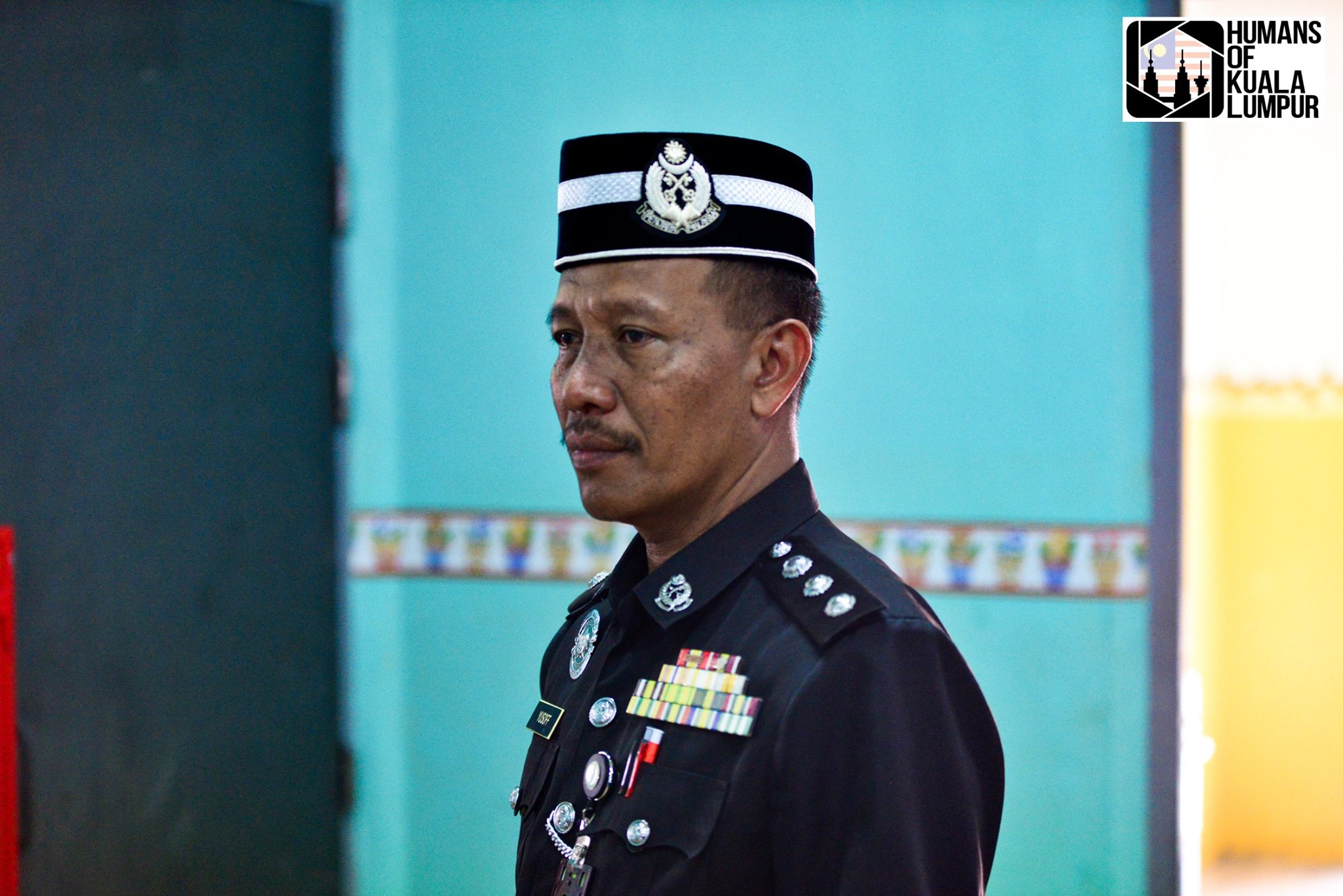
“Most of the female prisoners under my surveillance are around 20 years old. They were high school dropouts that got involved in drugs.
Their story usually goes like this. They go to pubs, became friends with ‘bad boys’, got addicted to drugs, got pregnant, and the boys just leave them. That’s how they got sent here.
I always see the prisoners as my daughters and sons. When I see some of them coming back to prison for the second time, it breaks my heart.
Growing up, I never thought I’ll end up becoming a prison officer, but I’ve been doing this for 20 years now. I always wanted to be a model, but my late father insisted that I join the uniform. That’s why I am here today *laughs*”
————————–———————–
Captured at the “Beauty Behind the Wall” programme, an initiative by KDYTM Tengku Puan Pahang Tunku Hajah Azizah Aminah Maimunah Iskandariah and Resorts World Genting, aimed to equip female inmates of Bentong Prison with culinary skills.
Photostory by Samantha Siow
Edited by Amalina Davis
“We strongly believe that each inmate has a chance to rehabilitation if we give them that chance.
Part of the rehabilitation programme includes giving courses on cooking, baking, sewing, weaving, driving busses and operating heavy machinery. At the end of the programme, we will give them a certificate of completion, and this certificate can be used to find jobs outside. If they have jobs after being released, hopefully they won’t commit crime like stealing and robbery to earn a living.
Some of the inmates are lazy to take these classes, as they view it as tiring and wasting time. We have to force them to commit to these classes. Otherwise, its so easy for them to reoffend once being released. I have seen it happen so many times, prisoners coming in and out of jail because they don’t have a purpose once they leave. We try our best to provide them with that purpose.”
—————————————
Captured at the “Beauty Behind the Wall” programme, a CSR initiative by KDYTM Tengku Puan Pahang Tunku Hajah Azizah Aminah Maimunah Iskandariah and Resorts World Genting, aimed to equip female inmates of Bentong Prison with culinary skills.
(2/2) The biggest one was obtaining sponsorships. I’ve tried seeking for sponsorships from politicians, corporates, entrepreneurs, you name it! Promises after promises, yet I didn’t receive a single cent from them.
I saved up about RM100,000 of my own money for a one year trip around the world. It was definitely not enough. There were times where I had to eat porridge with salt for weeks just to save money.
As for accommodation, I always try to find places where I could stay for free, whether it was with friends, Malaysian diplomats, couchsurfing or camped with my tent. On rare occasions I would pay for accommodation, even then it would be the cheapest hostel I could find.
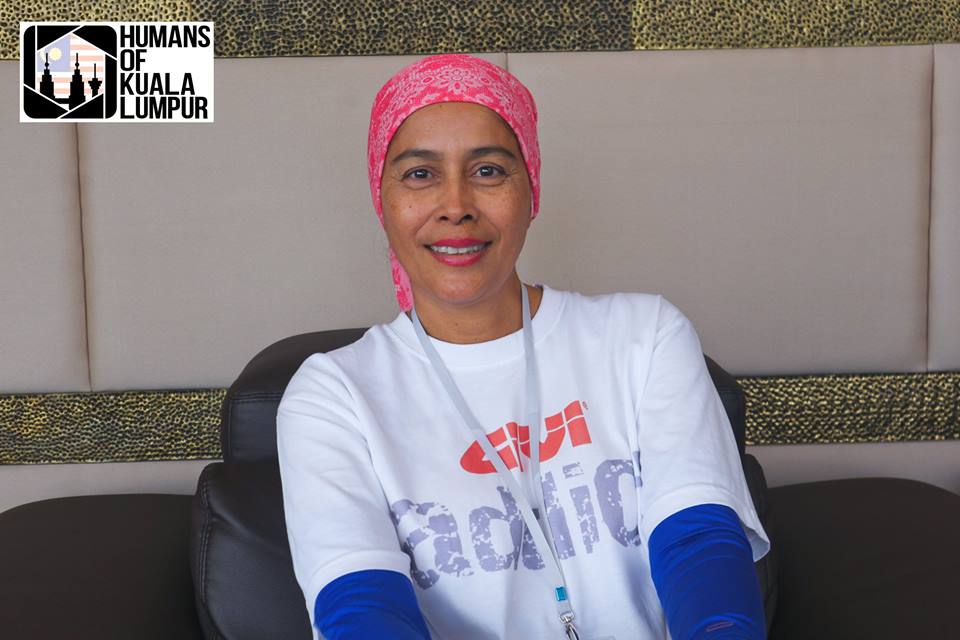
The only sponsorship I obtained was from Givi and Yamaha Motors. Givi, an Italian motorbike accessory brand, specially designed a jacket and riding pants suitable for four-season riding just for me. Yamaha sponsored the motorbike and all servicing costs, which were extremely helpful as services can cost a lot.
I wondered, why were big international brand names like Givi and Yamaha, didn’t even hesitate to sponsor me? My ‘Global Dream Ride’ was not a small adventure, its a big trip surrounded with high risks. The answer that came into my mind was only one – the leaders of both these companies were from Italy and Japan, and they believe in people’s ability. They don’t find it quick to belittle someone nor think negatively of them.
Besides them, I also received contributions from close friends and supporters. Everything from accessories and equipment to cash. Contributions, no matter how small, have helped me a lot. I am extremely grateful for every single one of them.”
—————————————
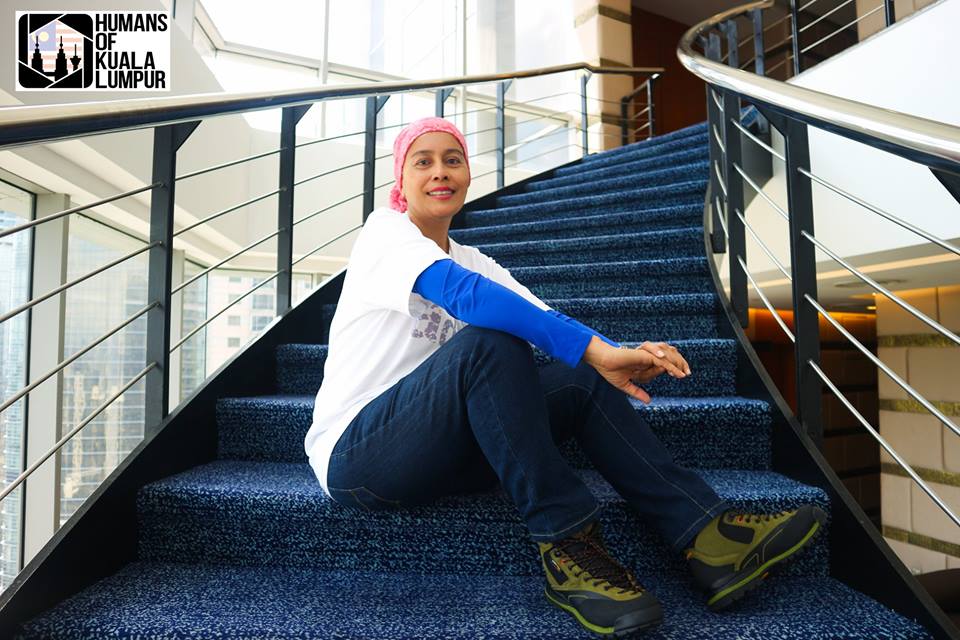
Anita Yusof is an adventure rider from Batu Pahat, Johor, whom have received the Malaysian Book of Records for ‘First Solo Motorcycle Ride Around the World’ and Asia Book of Records for ‘Longest Solo Motorcycle Ride Across the World.’
(1/2) I did it because I wanted to fulfill my dream of traveling the world, and to create a record to be the first Muslim woman that traveled the world solo on a motorbike.
My ‘Global Dream Ride’ took 370 days, and it began by flying my motorbike to Seattle, USA, the western-most point of my trip. I rode through Canada, the US, Central America and South America before flying my bike to United Kingdom.
I crossed Europe from France to Turkey, and then traveled through the ‘stans’ – Turkmenistan, Uzbekistan, Kazakhstan, Tajikistan and Kyrgyzstan, which till this day is the most beautiful part of the world I’ve been in.
The eastern-most point of my trip was in Vladivostok, Russia, before flying to Bangkok, Thailand and riding back to Malaysia, arriving exactly on Malaysia Day, 16th September 2016.
I wasn’t always a traveler. Before this, I have only traveled around South East Asia and that was with my family. I would have never guessed that I would travel the world, let alone do it solo! The first time I backpacked solo was to Europe, and I did it because I was in love with a Spanish man. Unfortunately things didn’t work out between us, but instead my love for traveling was born.
Later on, I met a Malay man who loved traveling and adventuring just like me. Naturally, I thought I have found the love of my life so we got married. Unfortunately, it didn’t work out that way, and we got divorced after 10 years of marriage.
I was so tense at the moment, so before I went crazy I wanted to do something crazy. I picked up riding and found that it was my escapism. When I ride, I felt a lot better and don’t think about him that much. Eventually, my bike became my lover.
Of course, the first two years of divorce was very difficult. So when I did my world ride, besides wanting to create a world record, I also wanted to do the trip to completely get over him. One time, as I was on the edge of a cliff somewhere in South America, looking down at the valley, I threw all our memories into the valley. After that, I felt completely free and I no longer hold any grudges.
I have never been lucky with my marriages. I was married twice, and have two grown up kids. When I had marital problems, I kept on asking God why. Why why why. There’s a lots of whys. ‘Why me? Why not everyone else? Why can’t I be happy?’
But later when I did the ‘Global Dream Ride’, I discovered that God was preparing me to do bigger things in life. That’s why my life was complicated from the very beginning. I was tested with lots of tests, because He wanted to prepare me for such a feat. Alhamdulillah, I managed to overcome His tests and create history.
I don’t think I can live a normal life anymore. After my first global ride, eventhough it was only 370 days away from Malaysia, the impact to me was so great. All these while, I’ve been living a normal life, had a normal 8-5 job as a lecturer in Institut Pengajian Guru Ipoh, preparing teachers before they go to school.
My next adventure trip will be ‘the love loop’ in Africa, starting and finishing in Capetown, South Africa. I have decided to retire from my job early next year, at the age of 52, 8 years earlier from the retirement age of 60. This is a big decision that I have made, because I just can’t live a normal routined life anymore – its so boring! *laughs*
If you do decide to do something like this, bear in mind, its a love hate relationship. Either you love it or you hate it. It can be very addictive, that why I keep coming back for more.
Because sometimes I find myself in the middle of nowhere. And sometimes, in the middle of nowhere, I find myself…”
—————————————————-
Anita Yusof is an adventure rider from Batu Pahat, Johor, whom have received the Malaysian Book of Records for ‘First Solo Motorcycle Ride Around the World’ and Asia Book of Records for ‘Longest Solo Motorcycle Ride Across the World.’
“We would play the piano, do a dance routine, perform a comedy act and even culminate a stage play. I would then gather all the money in an envelope, give it to my father and said ‘Can you please give this to charity?’
My father was a socialist, so he always wanted to help the underprivileged. We were brought up thinking about other people. My grandfather came to Malaysia from Kerala, India, which was the first communist state in the world. In Kerala, there is a 100{eb97150a49149dc6c9e8165e90f1c9129bb6172e02a598b4264a1fc329d7d5bc} literacy rate and 0{eb97150a49149dc6c9e8165e90f1c9129bb6172e02a598b4264a1fc329d7d5bc} child mortality rate.
My father used to run a clinic on the ground floor of low cost flats (PPR – Program Perumahan Rakyat), so I spent quite a bit of time there growing up. In a way, I understand what life must be like for them.
Low cost flats was a very dangerous place. There were a lot of gangsters and drug dealers, but somehow I felt safe there. The clinic was never raided, damaged or destroyed. I think its because they have a code – to look after their own. Since my father looked after them, they would look after him in return too.
I remember, one day, a girl frantically came running down and said, ‘My friend is delivering a baby upstairs now, can someone please help her? I don’t know who to tell or what to do.’
So my dad and the nurse ran upstairs. This pregnant teenage girl had locked herself in her home, so my dad couldn’t get in. Virtually, the whole neighbourhood tried to break into her house to help her. Eventually, they called the locksmith and managed to get in and help her deliver in time.
Unwanted pregnancies, especially amongst Muslim teenage girls is a very stressful experience for them, so they tried their best to hide it. That’s just one of the stories in these low cost flats. Everyday, there’s a new story. That’s just how life is there.
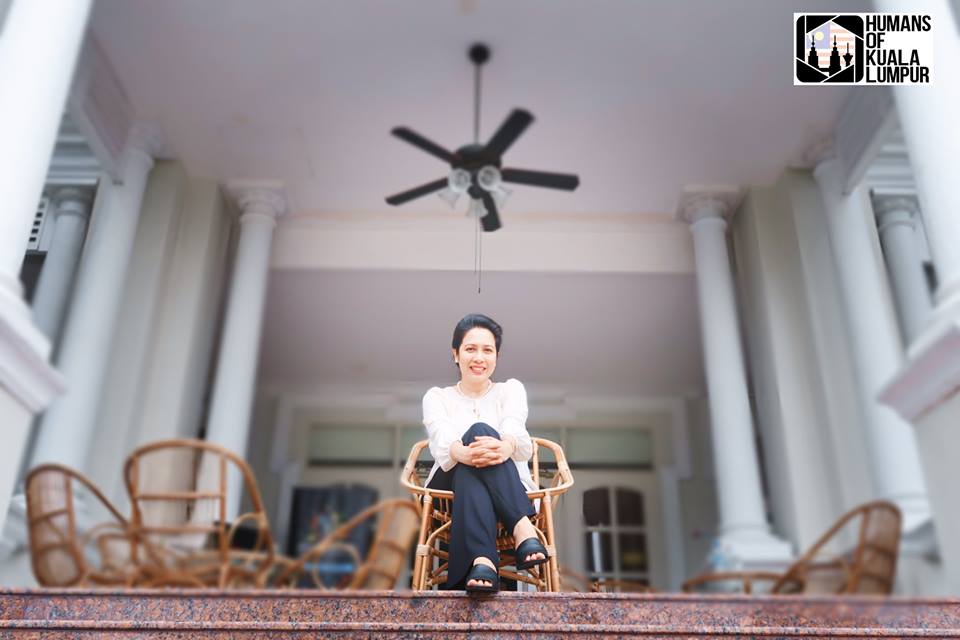
Aside from my corporate job, I run the DiverseCity Kuala Lumpur International Arts Festival (KLIAF) on a voluntary basis. As part of our CSR (Corporate Social Responsibility), we conducted art and culture programmes with kids from the Flat Seri Tioman, also a PPR (Projek Perumahan Rakyat/low cost flats like the one I grew up in.
It was held during the whole month of September, where we had photography workshops, public speaking classes, film screenings, community theatres,and dance shows.
The kids have taught us so much, and one of the things I’ve learnt from them, is dignity. In a survey we did, we asked how many of them have received BR1M (Bantuan Rakyat 1Malaysia – government financial assistance). Most of them answered no, which was a surprise to us. When we asked them why, they said its because they don’t want to be a burden to the government.
Can you believe that? Even if its RM500 a year, they’d rather be financially independent. They don’t want handouts. Maybe they are blessed just to be so grateful, and that’s something we can all learn from.”