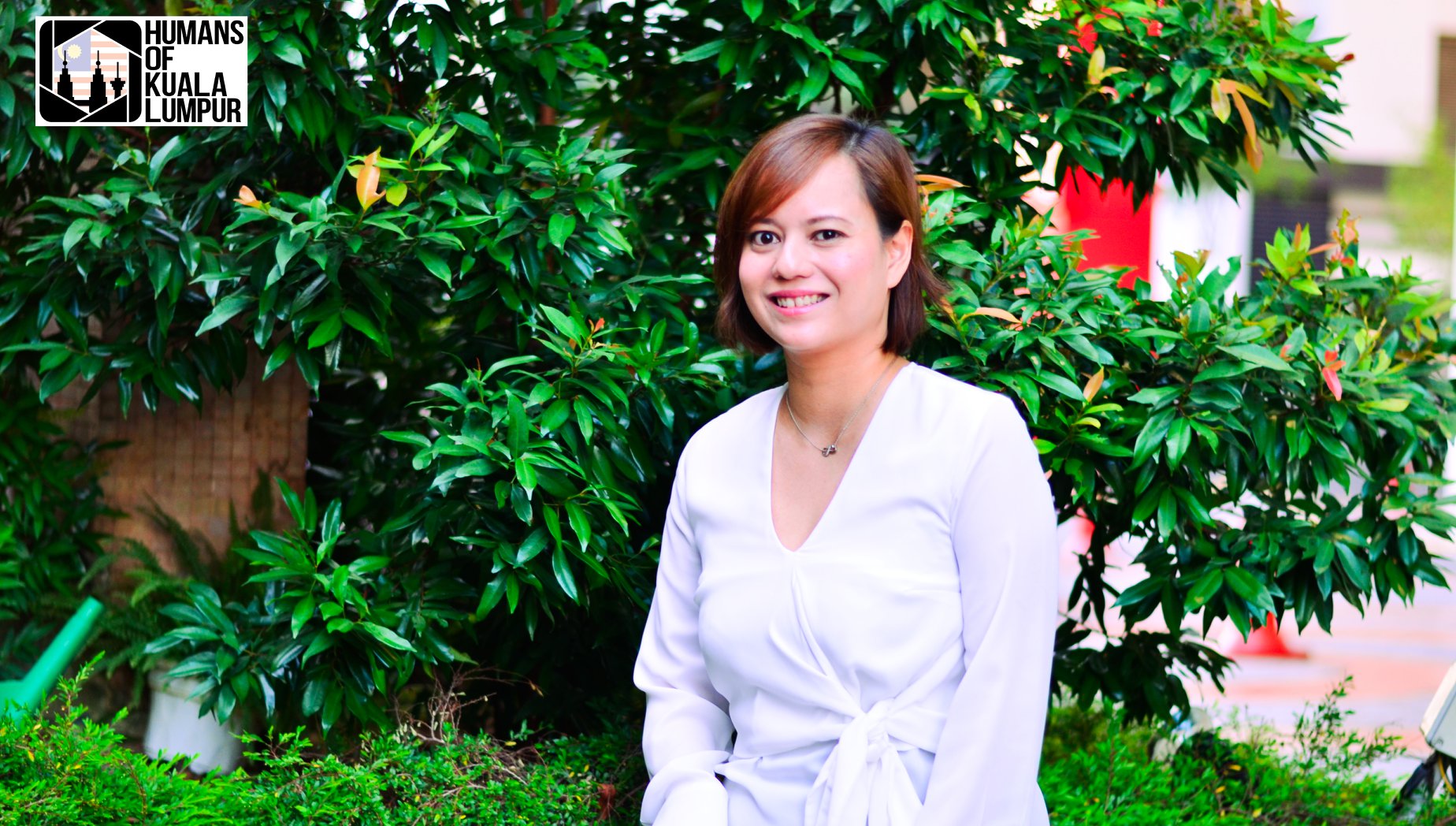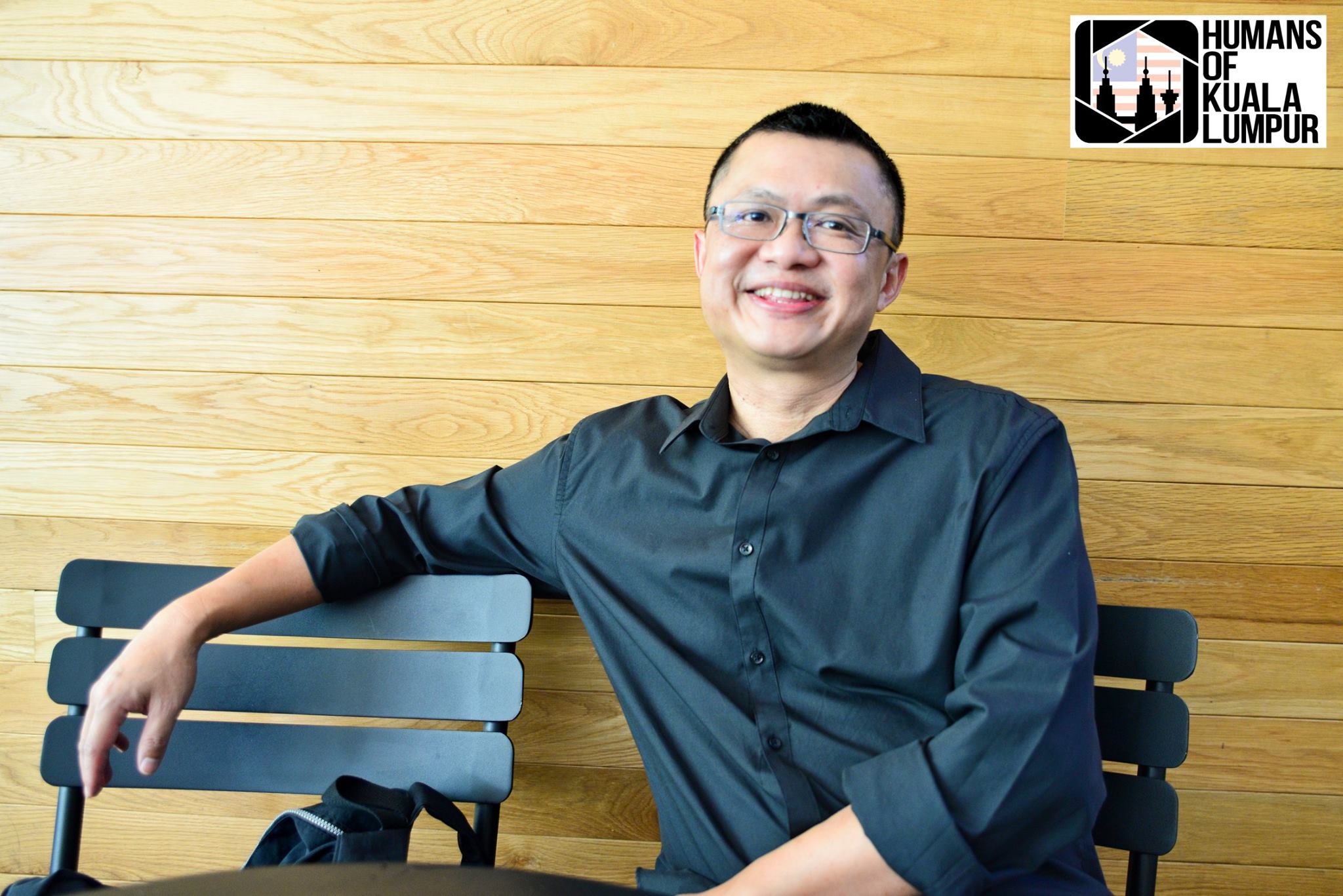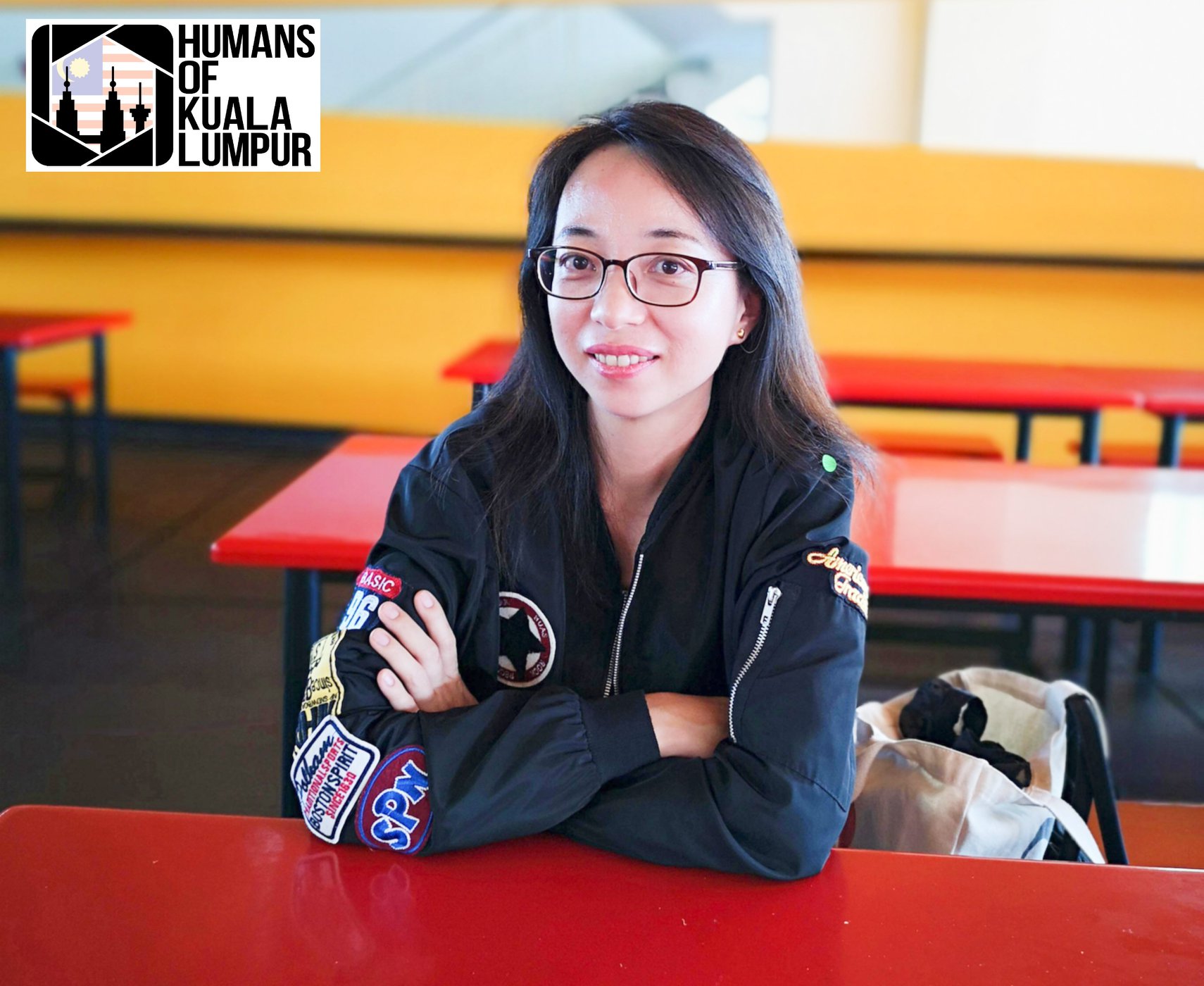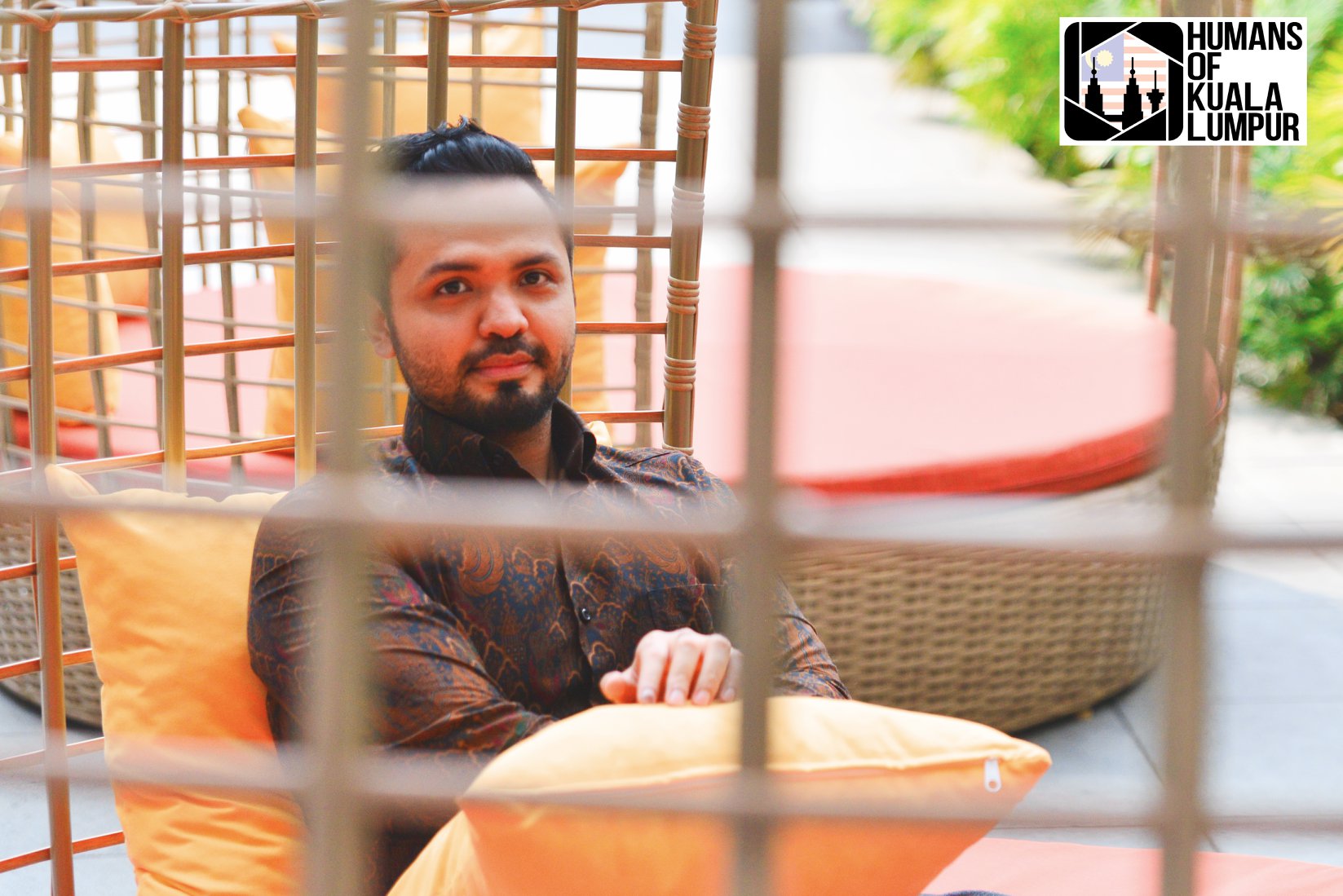
(2/2) “I have had cases where my cleaners were verbally abused, just because they missed a spot. They were called useless, trash, and all sorts of names.
I’ve had cleaners coming back to me crying because she got 1-star rating from the customer, from using our app Maideasy, where we match cleaning service providers with those looking to have their house professionally cleaned. The next day she terus demam (got sick) !
I’ve had customers calling me up and saying, ‘You tau tak i ni siapa? I ni Datin tau!’ (Do you know who I am? I’m a Datin!). Another customer said, ‘the cleaner and myself live in two different worlds, we just don’t have the same values.’
We shouldn’t say those things. Most of the time, the cleaners are just doing their best, and they want to earn an honest income.
When we are training the cleaners in how to do housekeeping, we also try to teach them to look at life differently, to not let a dirty job define you. Don’t feel like you are less important than an office executive just because you are a cleaner.
Our cleaners really need the money that they get from MaidEasy. Some of them have been with us from the beginning, so that’s three years. We can see how they use the money for rent, send their kids to school, and things like that. They share with us how this job have given them some stability in their life, it does make me happy.
It makes me feel like I have made a difference in their life. More than just making money. Business is just business, but when I feel like I’ve done something to change someone’s life, and bring a positive impact to the community, it feels really good.
I joined the e@Stanford programme under theMalaysian Global Innovation and Creativity Centre(MaGIC), and we visited the United States and Silicon Valley. It was very eye-opening. Everything in America, especially in the Silicon Valley, is in the billions. They think big, everyone there wants to change the world.
In Malaysia, it is happening too, but on a smaller scale. That doesn’t mean you are less capable than them, it just means you are solving problems closer to your vicinity.
With age, I have come to the mindset that it does not matter how big or small is the things that you do. As long as you are happy doing what you do, and it pays the bills, anything more than that it is a bonus. It’s what’s true, to you”.
_______________________
Humans of Kuala Lumpur is partnering with Malaysian Global Innovation and Creativity Centre (MaGIC) in featuring inspiring and impact-driven entrepreneurs, problem solvers and startups in their mission to solve Malaysia’s problems!#HumansofMaGIC
Photostory by Amalina Davis Edited by Mushamir Mustafa
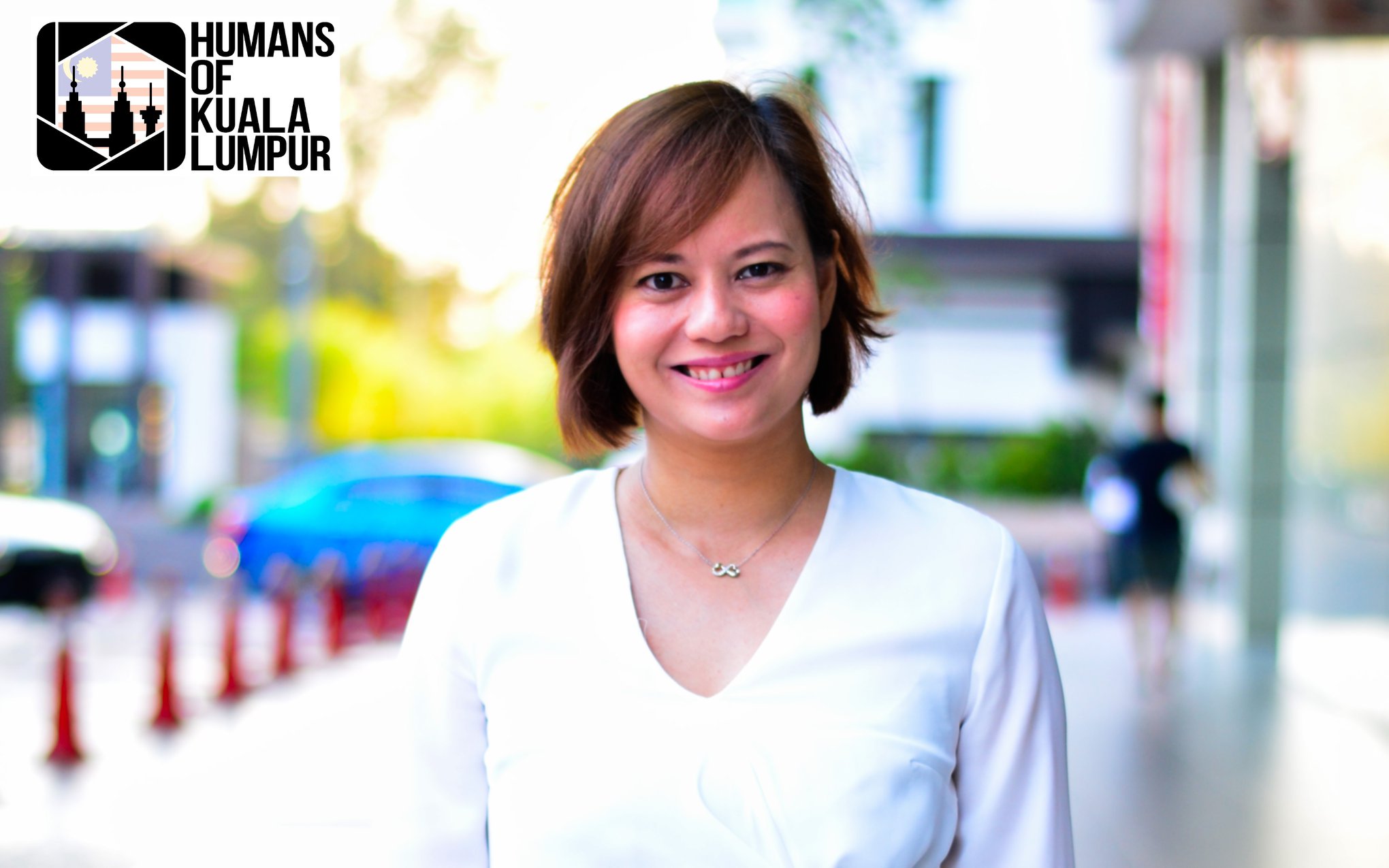
(1/2) “I grew up being surrounded by expensive things, so I don’t feel anything different or special about it.
Most people in the affluent society tend to live inside their bubble. They think that just because another person have a more expensive handbag, they are better than you.
For a while, those material things did matter to me. Then I went through the rough times in my business, and I couldn’t afford those things, so I became more practical about it. Yes, you can have your Dior handbag, but it hides who you are.
Its like, you wear a Dior t-shirt plastered across you, but who are you? You’re like a walking advertisement, rather than yourself. It plasters your personality. I don’t want to be hiding behind those material things, I want people to see me for who I am.
When I was at university in London, my parents didn’t really give me enough money, so I had to work. I worked in the cinema and started a small catering business to support myself. I was very skinny when I lived there, because I would eat dessert like pudding as lunch, to save money. I would also congregate with my ‘poor’ student friends, and we would buy a sandwich pack with two sandwiches and take one each.
I met my husband when we were studying in London together. He went to Imperial, and I went to UCL. When I met him, I realized we think on the same wavelength – he’s very intellectual and I like to read and play with ideas. We felt that entrepreneurship was the only way we can experiment with what we think, and succeed.
Our entrepreneurial adventures are our creative and intellectual pursuits in thinking outside the box and thought a salaried job will not give me the creative exploration that I want.
We have been together for 18 years, and started our first business together 15 years ago.
We have had half a dozen businesses, some succeeded and some failed.
Currently, we are the co-founders of Maideasy, an app that provides cleaning services to households. We only employ local cleaners, and most of our cleaners are from the B40 (Bottom 40{eb97150a49149dc6c9e8165e90f1c9129bb6172e02a598b4264a1fc329d7d5bc} income level) group.
Working with the B40 has really opened my eyes. It made me realize that a lot of them don’t even have things that we easily take for granted, like a roof over their heads, stable parents, food you can eat anytime you want and education. With all of those things, you feel very confident to face the world. But a lot of the B40 don’t have these privileges.
One of our cleaners is a single mother with two kids. She didn’t have money to pay for rent and the landlord is about to kick her out from her room. We loaned her RM300 and a smartphone, so she can get started with cleaning.
But when she started cleaning, she didn’t have anybody to take care of the kids. We found out that she leaves her 3 year old and 5 year old kids inside the room, alone, when she goes to work. Eventually, she moved back with her parents in Seremban. The parents will look after the kids while she goes and cleans. Luckily MaidEasy was operating in Seremban, so she now manages that area.
I read a book called ‘Scarcity’ written by two MIT professors that talked about how poor people think. That book explained that each brain has limited space. With most people in the B40, they have to make a lot of decisions. Who’s going to take care of my child, am I going to have work tomorrow, where will my next meal be from? So when they have too many things in their mind, they can’t find solutions for the simplest things.
For example, the cleaners would say, ‘oh my phone doesn’t have battery la.’ Then we say, buy a power bank. ‘Oh my motorcycle is broken’. Then we say, go la to the garage. They cannot make those kind of decisions, even the smallest ones they’d have trouble with.
We went to PPR (Projek Perumahan Rakyat, low-cost flats) to ask people there if they want to be a MaidEasy cleaner. You’d be surprised by the things they cannot do. I’ve met one cleaner that didn’t know how to go beyond 5km radius of where she lives. And the second cleaner – someone who doesn’t know how to use a smartphone. The third cleaner didn’t know how to use Waze or GPS.
Complex decisions are too much for them, so you make it easy for them. MaidEasy helps simplify their decision making process.” _____________________
“Once, I remember going back home, I found my car splashed all over with red paint. I knew who did it, because I caught him ponteng class. I wasn’t afraid because I know them and knew how to navigate. You need to know not to go head-to-head with them, but you still need to get them into order. That is the challenge.
You just have to be sincere, humble, be friends with them. You don’t want to be punched in the head when you walk out of school right, so you just explain to them what might happen to them. Don’t be stuck up and langsi. I found out early in life that there there are many, many ways to solve a problem (with difficult people), not just one way.
The whole experience made me a more rounded person in how you deal with tough people when you are a prefect. Now at my age I see that you have to deal with a lot of difficult people.
When you want to deal with people you need to know first how to motivate them. I used to be a high demanding, aggressive, hot tempered boss. So people worked under a lost of stress under me, which eventually burns you.
And it burns you when people come to you and resign – not because they are bad but because I am just too tough. I have toned down and learn.
So until now I learn that people don’t owe you anything. You are as a manager. People leave not because of the job, they leave because of the manager, right? So you just have to learn how to be a good manager.
So make sure that whatever position that you are in, especially with my small company, with my people I try to teach them beyond what they are doing on their job, try to bring them up to a higher level, spend some time with them – teach them.
And dealing with the tough performer – I always believe in meritocracy. Know that your performance is dynamic, it always changes. You can be a top 20 performer today, and you can be at the bottom 10 the next day. So you need to keep your performance up. There are always people who are better than you, so you need to always be savvy.
If you want to climb the corporate ladder, always aim to be the Top 20, so try not to be in the Bottom 10 – you will know when you are there. You need to tell them what to improve. You as an individual and as an employee you need to know what is your goal. I would advise people to follow their passion. I only work with my passion.
I don’t do my job because its my job, I do it because its my passion. We spend a lot of hours in a job. Many people do a job because they want to sustain their lifestyle. I don’t believe in that. I will perform if I really like it. If I am put in a position in a company that I really hated, I know I am going to be bad at it.
Sometimes when there are job offers which pays comfortably – they are high paying for a reason, but I know that I myself and am past that.
With Millennials, and working with young graduates, I noticed that they lack focus and just don’t know the reason WHY they are working. They take on any jobs. Sometimes I ask them a simple question, what is your goal?
And many millenials say ‘I want to be rich’. I said: who doesn’t want to be rich? That’s not a goal. That is never a goal. You think about it. I don’t think you want to be rich, or do you want to be financially free? That’s a goal, and there’s plenty of ways to be financially free – and you will be rich when you do things that you are good at.
Treat people with respect, and just be sincere. People can see.
For me, I have found out what my passion is – from my time working in China with a marketing research company, I found out about Gigagigs.
GigaGigs, is an app that instantly connects you with micro tasks that are simple, fun and easy-to-do, and pays you upon completion of these tasks.
We have had 80,000 downloads and 15,000 users and collectively they have earned rewards close to RM 300,000 since we started 1.5 years ago.
And all the while I have been in corporate and was never exposed to the startup ecosystem – and that’s how Malaysian Global Innovation and Creativity Centre has helped us out. They made me see their big network of entrepreneurs and you can see all the innovations and ideas of other people, and that opened my eyes of what Malaysians can do and how I could apply it my industry to solve problems.
My vision and aim now is to expand out to South East Asia.
I’ve been in the corporate life for 20 years – its been a comfortable life, so why did I want to get out that into the startup life?
I could have a comfortable or an uncomfortable life. Asking myself that question made me realize that this is something that needs to be done for the greater good, I love the app so much that I am willing to take a bet to make this work. And true enough it has grown by leaps and bounds.”
“I’m Anne and the founder of the Inclusive Outdoor Classroom (IOC).
At IOC we want to change mindsets and give families who have children with special needs a platform, to be part of a community.
We also get parents who don’t have children with special needs to be part of this (our programs) and that’s how we encourage maximum inclusion, even from the public.
That way, both parties are learning from each other and contributing towards the well-being of an inclusive society.
It’s important to remember that it doesn’t mean when a doctor says your child has special needs, nothing can be done.
In fact, there’s a lot that needs to be done. The first is educating society that autism is not a disease which can be contracted.
It’s about understanding, stepping into a world that is unfamiliar and trying to discover the best of yourself. At the end of the day, everybody just wants to be accepted and included into society.”
Photostory by Annis Saipul Edited by Christine Cheah
“At that moment, I was struck by darkness. I felt my world collapsing, but then I asked: ‘How am I going to help him?’
At a young age, Ethan never responded to me. No eye-contact, nothing.
Only when I sing to him, he will look at me and that’s how I started communicating with him.
The biggest challenge is when I take Ethan out in public and he starts to have meltdowns, throwing tantrums.
Sometimes, they cannot stand too much noise, the sensory is too overwhelming. They cannot take it and they don’t know how to express it, so they start to scream and yell.
People would stop and stare, and give me that ‘you could be a better parent’ look. It didn’t happen once, but often and always in restaurants.
One day these kids have meltdowns and the next day they’re happy and showing their true potential. So, don’t judge.
Some of them are really good at drawing too, but you just need to discover their talents.
For parents with young kids on the autism spectrum, my advice is to let them experience, let them explore their strengths and true potential. Give them a chance to prove themselves.”
“When I was in school, I got bullied a lot. I feel a lot of teenagers think that many people don’t understand them, even the popular ones. That’s why most teenagers would change their personality to join a crowd. That’s what happened to me. I was bullied by students who joined their friends in doing so.
But my advice would be to love yourself. God gave me autism for a reason, and to blame me, is to blame God.
When we watch some tv shows where there is an autistic character, the character will be high functioning autistic people. They feel shy and always looking down, but people forget they are also very smart.
I can talk to people face-to-face. I can look them in the eye, but most of the time I would feel awkward when I stop talking and then I would be thinking: ‘What do I do now?’
As for my dreams in the future, I prefer to keep them under wraps but I will tell you this – I want to study drama and theatre. I want to give people that magical feeling, because, well, everybody could use some magic in their lives.”
Photostory by Annis Saipul Edited by Christine Cheah
“Because Malaysians like to dress like someone else. This example may be a bit offensive but a lot of women like to dress like Vivy Yusof or any other celebrity.
They like to dress like someone. But the thing is, the people they want to dress like doesn’t share the same physique, skin tone, height, etc. Unless you have a physique like a celebrity, you can dress like them but most of us don’t look like a celebrity. That is a fact we need to realise.
And instead of looking like a celebrity, dress according to what is best to your physique or personality. For me is not about the expensive things but the variety.
My passion is not in Fashion per se. My passion is in creativity. I think Malaysians don’t have the same level of creativity like Indonesians.
When I say Indonesians, I don’t mean all Indonesians but maybe the creative side. That’s why I believe in terms of the film industry, Indonesians are way ahead of us. Not in cinema but the films. I think Malaysians are not creative. Not everyone.
There are creative people but we like to copy. I think the issue with Malaysians is that one – we like to copy. Two – we like to do the trendy things. The problem with copying and doing the trendy things doesn’t mean that it fits you.
The link or the linkage that we are trying to create with Ombré is the link between your clothes and you. Ombré is a fashion stylist software. The software aims to give clothing or fashion suggestion to our users – to tell them what to wear based on their physique.
That’s why our tagline is: Dress Like Yourself. For us, clothes are the extensions of ourselves. So when it is the extension of ourselves, you can’t just wear something based on some other people.
For example, if I don’t look like David Beckham, I shouldn’t wear like David Beckham even though David Beckham is my style icon. What I do is, I follow his style but I change the colour.
For one thing our skin tone is different. David Beckham has a cool skin tone whereas I have a warm skin tone. Our bodies are also different.
The point is there should be a linkage between the wearer and the clothes. I think Malaysians don’t care about this. That’s why if there is a trend, for example, the varsity jacket trend. I get the trend but you shouldn’t wear that outdoors in the afternoon because you’re in Malaysia.
So always remember that there is linkage between ourselves and our clothes. I think Malaysians need to remember that. But if it is hard for them, just use Ombré.
I think the philosophy behind starting Ombré is that: we believe that fashion, before this, is seen as exclusive. If you’re rich or if you have a certain physique, then you can be fashionable. We want to tell people that fashion is not exclusive. Anyone can be fashionable regardless of your body shape and regardless of your income.
But I think what the problem that the majority of people have before this is that how can they be fashionable without hiring fashion stylists which cost around RM500 or USD500 per day. Unless they are very well knowledgeable in fashion, it is hard for them to be fashionable. But we aim to solve that.
Our software is not catered to the fashionable – it’s catered to the fashion conscious or fashionably clueless crowd, which is the majority.
We needed to do a scalable business and we decided with several ideas. But we see that fashion is the way to go because no one is doing that.
We are the world’s first fashion styling software that is patented. Our future plans is to expand to other countries. Right now, about 20{eb97150a49149dc6c9e8165e90f1c9129bb6172e02a598b4264a1fc329d7d5bc} of our users are Americans even though we don’t market to America.
We are of course thankful of Malaysian Global Innovation and Creativity Centre (MaGIC) because of the programme. We went to Silicon Valley. It was only for 3 weeks, and I learned more in those 3 weeks than learning 6 months in Malaysia. So we took that opportunity to continue fundraising and finally found investors.
I think the number 1 advice took dearly after we came back from Malaysia was when we met a CEO of a start-up named Kenny Hock.
He taught me that: don’t tell me the problem, don’t give me an excuse. Find a way to get what it is that you need and want. When visiting Facebook’s HQ, I noticed that there wasn’t any Facebook branding at all except for the light logo at the front.
Previously, this was Sun Microsystems’ HQ and their branding was still there in Facebook’s current HQ! We asked the tour guide why is Sun Microsystems’ still here and they said, “Mark (Zuckerberg) wanted to remind us that Sun Microsystems’ used to be an icon in Silicon Valley – but they died. So don’t be complacent because you can die.”
This was a ‘wow’ moment for me because it is the opposite here (in Malaysia). The culture is deep branding and putting the logo everywhere. I’m not saying that it is wrong, I’m saying that this is the other part of how people decorate their office.
The other one is there is a lot of word “hack” in Facebook issue. Even their address is 1 Hackaway I think? Why hack? They said, “our culture is hacking.
Although the word “hack” has a bad connotation like computer hacking. It doesn’t mean that.
“Hack” is more like you want something but you can’t do it in conventional means so you need to hack it out.” “the best definition of an entrepreneur is those who can create something out of something he doesn’t have”
And since I was in Standard 2 I had this urge of doing something and I love my work when it is appreciated. For example in Standard 2, I used to draw Digimon on a piece of paper and photocopied it and sold it for RM0.20.
It wasn’t the matter of getting RM0.20. It was a matter of validation.
It was the matter that people were willing to pay RM0.20 for your work. It means that people are appreciative of your work. Again, it’s not that I want to be rich at the time.
It’s more of doing something that people want. I think I really like to create something that people don’t know that they want it. So I think that is my life philosophy.
My one thing is disrupting. When I say disrupting is not necessarily disruption – it is disrupting people, disrupting things. That is my one thing. Meaning if someone is doing something, when I come in, I want to do something different. I would disrupt that process.
Even when I am old, I would still want to disrupt things. That is my one thing. And Ombré, is my one thing.
“I felt like it was not fair that my friends who were genuinely richer were able to go overseas. The other friends got scholarships. I got 8 A1s and 1 C5 (for Bahasa Malaysia), but I just couldn’t get a scholarship. So I took action on my own hands.
I went to government embassies and looked for all the addresses of universities around the world. I wrote to universities like Harvard and Princeton, and said, ‘Please give me a scholarship. I am very good, I play football and represented my school for a lot of competitions. You will be very stupid if you don’t give me a scholarship.’ I said it in a nice way la (laughs).
At that time, my father was working in the government and he got an award for me doing well in SPM. I got RM100 per A1, so I got about RM800. I thought, must do something more productive with this money. So instead of buying stuff, I bought stamps to send the letters, and spent the rest of it to take my SATs and TOEFL exams.
I did really well for my SATs – I got 800 for Maths and 640 for English. I got early entrance into Princeton and Georgetown Universities, with a small 25{eb97150a49149dc6c9e8165e90f1c9129bb6172e02a598b4264a1fc329d7d5bc} scholarship.
Eventually, I got a full scholarship from Bridgeport University, covering tuition fees, food and lodging. I got the letter on December 22nd, and school started on January 4th. So I dropped Form 6, asked my father for a few thousand dollars, and flew off to the US.
The scholarship was given by the university. They gave 10 scholarships to each country, all 160 countries, so it was like a mini United Nations (UN).
The Chinese gave the scholarship to the top 10 students from top Chinese universities including Peking university, so they were super smart kids. But some of the Africans nations were different – some were corrupt, giving the scholarships to the government officials’ kids.
I knew the Sudanese Finance Minister’s kid, and then 6 months later, he said that his father was killed in a coup d’etat. Another one of my classmates were Sharon and Fatima Mugabe, the Mugabe sisters from Zimbabwe. At that time, Robert Mugabe was still a freedom fighter.
From a young age, me and my best friends always wanted to do crazy stuff and somehow managed to get away with it.
For example, we didn’t have a padang to play football, so we looked around and found a padang. We cleared the land together, and we told our friends to go steal grass from their house. Don’t have a cangkul? We lent them a cangkul. We did all of that just so we can have grass on the padang to play football.
In hindsight, I realised it has helped teach us little lessons in leadership. I had to influence 20 boys to steal grass from their own house. In a way, I was creating a followership. Part of being a leader is to create followers. You have to cast a vision for them, like ‘when we have this padang, we can play football anytime we like.’
I don’t know what I was doing at that time – I was just a kid trying to convince them just to get things done, because i just want a football field. But that starts to teach you, that you need to learn storytelling, you need to put things in perspective, you need to tell the story of the future in order to be a leader. Because when they see the future, they are more willing to put the effort.
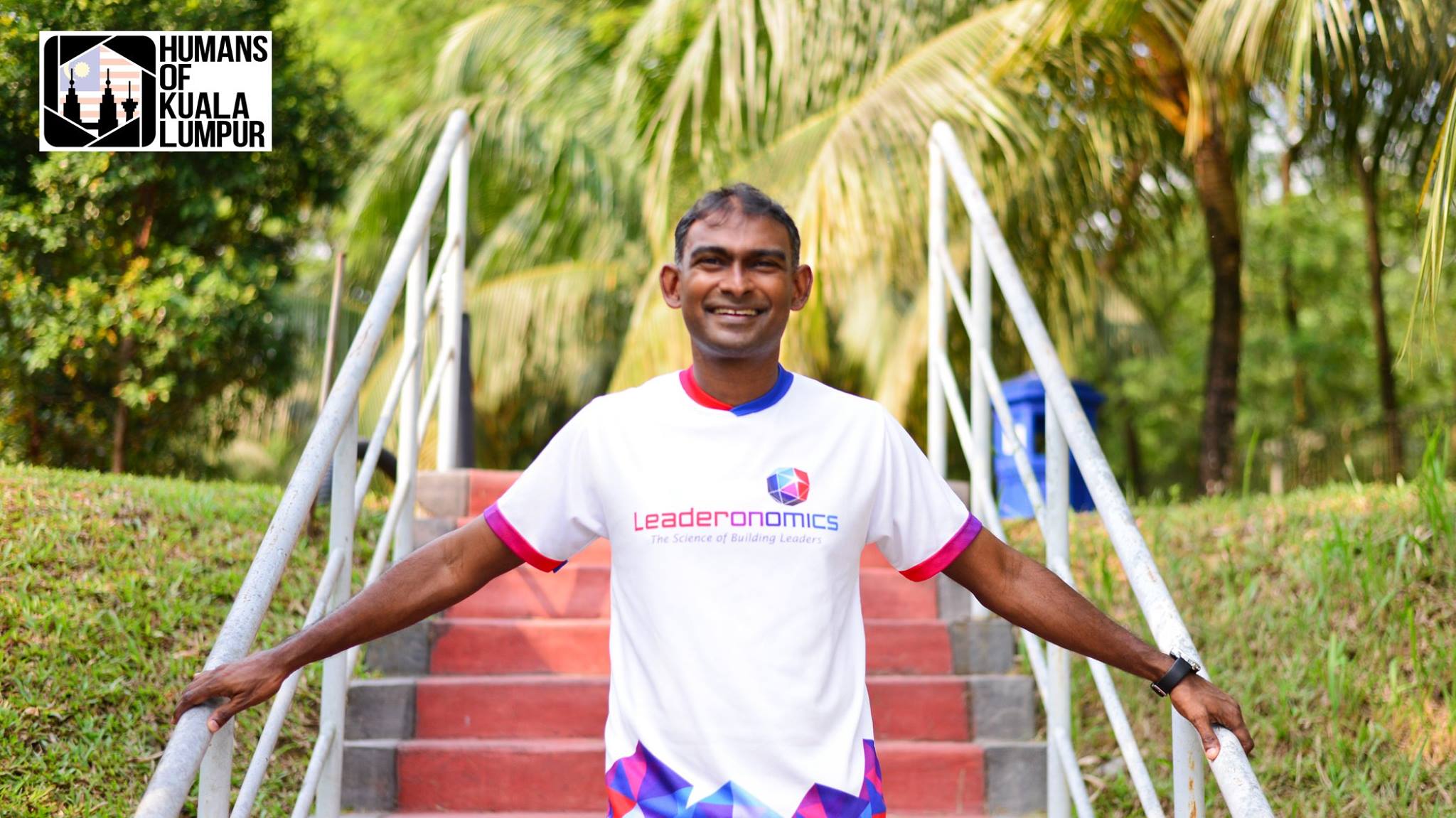
That’s called visioning. That’s part of our science of building leaders in Leaderonomics.
Leaderonomics started when I was helping underprivileged kids in Sabah and Sarawak through giving leadership camps. It was quite interesting, because not only were these kids impacted as individuals, but the communities that they lived in also had significant impact.
I wondered, why can’t we take this and make it a bigger version? If we take one person, and impact the community that they live in, their leadership will spread and create a great community of love. And that is how Leaderonomics was born. It is simply an initiative to help every single person become the leader that that they were meant to be.”
“She was obsessed in curing him and I think she got involved in some Kelantanese bomoh thing. I think somehow her obsession and all afflicted her mind.
It got worse in 2015 where the year I started Ombré (fashion stylist software that aims to give clothing or fashion suggestion to users based on their physique).
I experienced a lot of bad things and schizophrenia is something heart-breaking to see in a person you love.
In one instance she was very bad that I had to send her to the hospital because she was slapping people and didn’t eat for nearly a day. In this trip to the hospital, she screamed at me (“you anak derhaka”) and threw things at me while I was driving to the hospital. It was such a bad experience for me.
But one thing that I learned from my mom is that during the time I sent her to the hospital, when she was in bed, she finally got the chance to eat, and the first thing she did was to give food to me, like moms usually do, despite being mentally ill.
It was very heart-breaking for me. The thing I learned from that was: She’s being herself. That is what she does: she loves her son. Even in extreme conditions, she still loves her son. I think that made me feel that when I am trying to do a lot of things – people always try to control or contain me – and I think I need to reflect myself to know whether what I am doing is for the good thing.
The reason I am telling you this is because there was a lot of bad experiences in our businesses back then. In those times, I always think that whether what we’re doing is the right thing.
In my line of work, I need to be very firm with a lot of people. And because of that, sometimes I need to choose to between being the likeable person or the person who is doing the right thing. In most conditions, in my situation, it’s the opposite. I need to choose in doing the popular thing or doing the right thing.
This relates to my mother because even when she’s in bad conditions, for example when she has not eaten for a day, she’s still herself despite being in bad condition – being a mother, giving food to her son. So when I am burdened by a lot of hardships, I think I still need to remember to be myself.
From my view, if someone hasn’t eaten in nearly a day, and when they were presented with food, most people will eat it.
However for my mother, she gave it to me. Despite calling me names and throwing things at me before.
The reason being (calling names and throwing things) was because she wasn’t herself. But herself was that she is a mother who loves her children. For me, I would bet 80{eb97150a49149dc6c9e8165e90f1c9129bb6172e02a598b4264a1fc329d7d5bc} of people in that situation would just eat. But my mother gave it to me despite being mentally ill (and have not eaten for nearly a day).
My mother is okay now, she is under medication. I don’t think there is a cure for schizophrenia but her symptoms are controlled. Previously, she was hallucinating. She doesn’t see hallucinations anymore.
Another example of moments with my mother was that she talks to herself. She only talks to herself when she’s not aware that someone is there. Sometimes she is in her room and she didn’t notice I was there, and she’s talking to herself. I wasn’t afraid – more of sad.
An advice to those having familial members with mental disorders / illness: I think we need to remember what is our desired outcome.
For example, when I was driving to the hospital and my mother was shouting, “you anak derhaka” and throwing things at me, at that moment I asked myself : “what is my outcome? Was my outcome to make sure my mother gets better or for me to entertain my emotions?”
If I were to entertain my emotions, I would have stopped there and cried because that was what I wanted to do emotionally. But rationally, I wanted her (my mother) to get better.
You will always need to think what is the outcome that you want. If your outcome is for your parents (or family member) to get better then do things that will result in that outcome. It’s hard I think but it is the way it is.
My mother is best mentor. She didn’t say much but what I learned from her was to be yourself even if you are so sick – you be yourself and do what you can.
In her case, loving her children. In my case, I want to create things that can basically disrupt an industry and I will do that even when I am sick. No doubt. So my one thing in life: is to disrupt.
And my mother’s one thing – was loving her children”. _______________________________________________