(2/2) “Its normal lah with politicians – when it comes to elections, that’s when they will paint the houses, visit the people, and build new playgrounds…”

(2/2) “Before, this playground was broken down, and the kids just played anyways and risked being hurt. Now the PPR condominiums have a brand new paint job because of the elections.

Also, the elevator hasn’t been working for so long, so we have to take the stairs all the way from the 17th floor. We were provided with Chinese-branded elevator brands which breaks down easily – and these lifts are shaking, falling down, and getting stuck. Its a simple thing, but it affects our standard of living here at PPR. 

To be clear, Malaysia’s political system doesn’t work and must be changed. Whether its the Opposition or Government, they are all the same, but I hope that someone can look into our problems here. 

Its a good thing that you guys (Humans of KL) come to places like this and write our stories out.”

————————————————————————–

(2/2) “Biasalah orang-orang politik ni – bila dah dekat dengan pilihan raya, masa itulah nak cat rumah, nak lawat rakyat, nak buat taman permainan baru. Kalau tak, taman permainan ni dibiarkan je rosak macam tu, budak-budak yang datang main pun terdedah dengan bahaya. Sekarang PPR ni dapat cat baru sebab pilihan raya.

Lif di sini dah lama rosak, kami terpaksa gunakan tangga untuk naik sampai ke tingkat 17. Kami diberi lif dari China yang bermasalah – lif goyang, cepat rosak dan selalu tersangkut. Nampak macam isu remeh, tapi sangat bagi kesan dalam kehidupan seharian kami di PPR ini.

Sebenarnya politik Malaysia ni tak jalan pun dan perlu diubah. Tak kiralah pembangkang atau kerajaan, dua-dua sama je, tapi saya sangat berharap ada orang yang dapat ambil peduli masalah kami di sini.

Kami sangat bersyukur kamu (Humans of KL) datang tempat macam ni dan tulis cerita kami.”

– Humans of Kuala Lumpur

*The views and opinions expressed in this article are those of the interviewees and do not reflect the official policy or position of Humans of Kuala Lumpur.

Photostory by Mushamir Mustafa and Amalina Davis
Translated by Khairul Ridhwan

Do you have a story? Let us know here: https://forms.gle/ht4HsvbxgSgcKS5h8


(This post was first published on May 3rd 2018)

(1/2) “The living conditions around PPR (Public Low Cost Housing) are not suitable to raise children. There are a lot of drug problems here.

(1/2) “If you come here in the morning, you’ll see the ‘mat pets’ – junkies. They’re the ones who do drugs and cause problems. This place here, Lembah Pantai, – this is the very hotspot for drugs!

Pantai Dalam is known for its drug use. Just ask around. Kampung Medan, Kampung Kerinchi and Pantai Dalam are the 3 places with the most problems. 

Go and ask whichever police stations and ask which area has the most drug use – its this place! There’s no point capturing the drug users, after a few days they are just let go. You should catch the drug distributors, because it’s all about money. Since there are lots of bribery, there will be lots of drugs too.”

——————————————–

(1/2) “Hidup dalam kawasan PPR (Program Perumahan Rakyat) ni agak tak sesuai untuk membesarkan anak-anak. Banyak sangat masalah dadah di sini. Kalau datang awal pagi, kamu boleh tengok ‘mat pet’ – penagih dadah. Orang-orang yang ketagih dengan dadah inilah yang bawa masalah. Inilah tempatnya, Lembah Pantai, – tempat tumpuan untuk dadah!

Pantai Dalam memang terkenal dengan kes dadah. Tanyalah siapa-siapa di sini. Kampung Medan, Kampung Kerinchi dan Pantai Dalam, 3 kawasan yang sangat bermasalah.

Pergilah mana-mana balai polis dan tanya tempat paling banyak dengan masalah dadah – inilah tempatnya! Tak guna pun tangkap penagih-penagih ni, lepas 2-3 hari dibebaskannya. Yang patut kena tangkap orang yang jual dadah tu, tapi ini semua sebab duit. Oleh sebab banyak sangat rasuah, maka makin bertambah jugaklah masalah dadah ni.”

– Humans of Kuala Lumpur

*The views and opinions expressed in this article are those of the interviewees and do not reflect the official policy or position of Humans of Kuala Lumpur.

Photostory by Mushamir Mustafa and Amalina Davis
Translated by Khairul Ridhwan

Do you have a story? Let us know here: https://forms.gle/ht4HsvbxgSgcKS5h8


(This post was first published on May 3rd 2018)

“Vote for the government if you don’t want the “Semenanjung mentality” to spread in Sarawak” – that’s the general message of the government to the people ever since I was a kid…”

“If you don’t know what ‘Semenanjung mentality’ is, just think of the people who love to create chaos, riots and burn things to the ground. Yes, this is the picture painted by the government in everyone’s head. This is divide and conquer at its best.

This is the mentality that I have had since I was a kid till the day I flew to Semenanjung to further my studies.

Then I finally saw the truth. The people in Semenanjung are no different than us in Sarawak. They are friendly and kind just like us. But most importantly, they have access to the truth.

They know the extent of injustice and corruption that is happening in our country. This part was not made available to most Sarawakians and Sabahans. Since their news source are national radio and TV, which are controlled by the state. So they only get one view about our country, and that is the good side of the government and the bad side of opposition.

And it still happens to this day.”

– Humans of Kuala Lumpur

The views and opinions expressed in this article are those of the interviewees and do not reflect the official policy or position of Humans of Kuala Lumpur.

Photostory by Amalina Davis
Edited by Mushamir Mustafa

Do you have a story? Let us know here: https://forms.gle/ht4HsvbxgSgcKS5h8


(This post was first published on May 2nd 2018)

(1/2) “I am from Sarawak and in my hometown, it’s common to receive a bribe of RM50, RM100 or even more from ‘some officer’ to vote for the government…”

(1/2) “Sometimes, the bribery is not even in monetary form, but in forms of rice, powdered milk or other basic necessities. It has happened at every election and it will happen again this time.

I am of Iban descent and my grandparents live in a longhouse. Everytime there’s elections, the government will go to these rural longhouses by 4WD or boat, just to give these basic necessities.

They will also bribe the ‘tuai rumah’ (leader of longhouse), so the ‘tuai rumah’ can influence longhouse residents to support the government. Even my parents look forward to the elections, because they will get money for voting for the government.

As a kid, I couldn’t wait to grow up so I can get money by voting for the government too! 

And most people love that. Sadly, they don’t know the impact of their actions. It’s never about the welfare of the people. It’s all about winning and staying in power.

Still, I don’t believe that the opposition is any better. They have their fair share of dirty tricks and tactics to ensure their winnings as well.

But one thing is for sure, I simply want change for my country. So go out there and vote for what you believe is the change that you and your people need. May God bless us and our country.”

– Humans of Kuala Lumpur

The views and opinions expressed in this article are those of the interviewees and do not reflect the official policy or position of Humans of Kuala Lumpur.

Photostory by Amalina Davis
Edited by Mushamir Mustafa

Do you have a story? Let us know here: https://forms.gle/ht4HsvbxgSgcKS5h8


“I am 33 years old but I have never voted in the General Elections. To be honest, I have not even registered as a voter after all these years…”

“The people we vote for are supposed to serve the ‘rakyat’. They are supposed to bow down to the needs of the people, because we are the ones who put them there. That is the whole point of a democratic system. But I don’t see that in either sides, whether its the Government or the Opposition. They seem to be in politics to serve their own needs.

Until I see a leader from either side that has the people’s best interest at heart, I refuse to participate in this so-called democracy.”

– Humans of Kuala Lumpur

*The views and opinions expressed in this article are those of the interviewees and do not reflect the official policy or position of Humans of Kuala Lumpur.

Photostory by Mushamir Mustafa

Do you have a story? Let us know here: https://forms.gle/ht4HsvbxgSgcKS5h8


(This post was first published on May 1st 2018)

“‘Why do you want to be a masseur?’ This is the question I get when I tell my friends and family about my physiotherapy studies…”

“It’s quite hurtful to hear them say this but physiotherapy has always been a big part of my life.

When my mother was pregnant with me, my family took a drive across Malaysia, They didn’t stop and rest much. When they came back to Kuala Lumpur, my mother was admitted to the hospital and I was born a premature baby, at seven and-a-half months old.

I had to spend about three months in an incubator. In about the last month the physiotherapist came in to help me. 

It is what I am learning as a physiotherapist student now, teaching the baby to lift the head for feeding, roll sideways, how to walk, how to sit in a baby chair…

Seeing my grandmother suffering from a stroke, and her perception towards physiotherapy gave me a stronger desire to be a physiotherapist. 

Though she went for traditional Chinese medicine after she left the hospital, and when I try to give her treatment now she will say ‘I don’t trust physiotherapy’, I believe what helped her in the first place was the one-month physiotherapy treatment she received.” – Justin Kong

Story by Samantha Siow
Edited by Christine C

Do you have a story? Let us know here: https://forms.gle/ht4HsvbxgSgcKS5h8


(This post was first published on April 30th 2018)

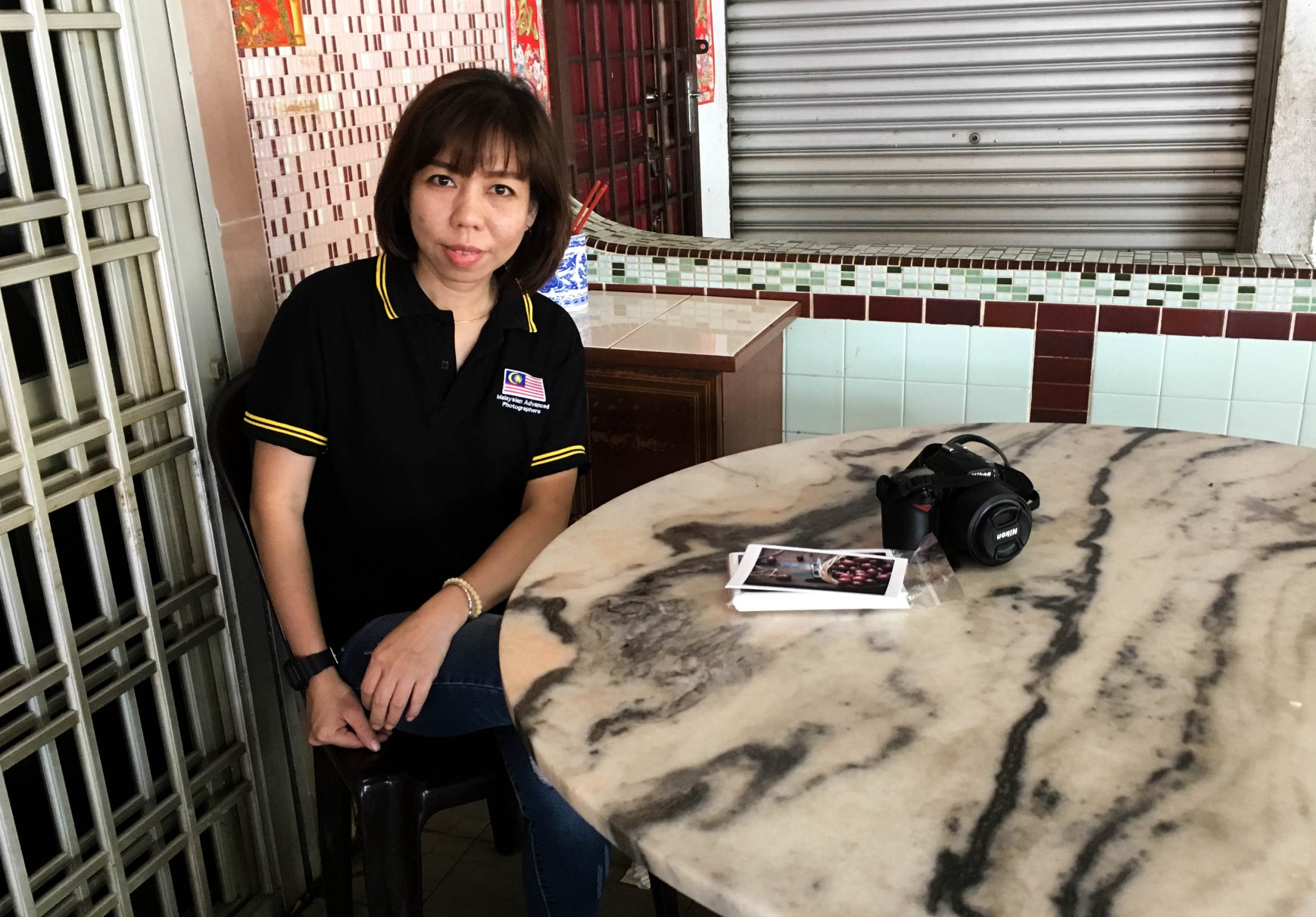
(3/3) “I followed my husband to Sungai Besar (a town in Selangor) after getting married. We helped run the family’s coffee shop business..”

(3/3) “This was a huge turn around in my daily routine. From being a hair stylist, waking up later than usual and dolling myself up to getting out of bed by 4 in the morning to start the day.

At first I was upset, then I told myself since I’ve chosen to marry my husband, I will support him in whatever way I can. 

I started learning from scratch again, taking down my mother-in-law’s recipes and doing whatever work I could do. It has been this way and today, with the children growing up, I have more time of my own now to do things that I enjoy such as photography.

My love for photography grew from cooking and baking. After cooking or baking, I’d take photos of the final dish presentation. 

I like challenges, so I’d take photos of food or ingredients people don’t usually like, or the simplest of staple food such as eggs or onions and present its beauty through photos.

When I first started photography, I didn’t know much. So I’d ask friends or search online for information.

I believe God will take care of hardworking people. He will bring light in their lives and never give up on them.

Looking back, I have to thank the people who have helped me along the way, and that’s how I can be more confident of myself today. So long we continue this journey, one step at a time, there will be good things coming.”

“认识我先生之后,我来到雪兰莪大港(Sg. Besar)跟他一起经营家族的传统咖啡店。

我从一个做美发,可以睡迟些、打扮美美的工作,变成现在要在凌晨4点起床准备营业。面对不一样的作息,刚开始时觉得委屈,但我告诉自己:“嫁鸡随鸡”。我开始在这里重新学习,把家婆的料理记录起来,也不分工作贵贱去做。

就这样到了今天,为这个小小的生意打拼;为了这个家,看着孩子一天天长大,慢慢地多了一些属于自己的时间,去做自己喜欢的事——摄影。

爱上摄影,是从以前喜欢烹饪和烘培时,所培养的。自己动手煮或烘培后,就把美丽的成品拍下来。我喜欢挑战,把人家不喜欢或是一些普通、常见惯的物品,如鸡蛋啊、洋葱,通过摄影发现它们的美。

刚开始接触摄影,遇到不懂的地方,都会请教朋友,或上网找找资料,自己摸索。

我相信,老天会眷顾努力的人、照亮他们,不会放弃他们。

回头看,能够一路走到现在,真的要感谢这一路上提拔我的贵人,成就今天比较自信的我。
只要我们一步一脚印,总会有好成果。”

Story by Dao Hong
Photo by Chin Feng 
Edited by Christine C 

The above interview was conducted in Mandarin.

Do you have a story? Let us know here: https://forms.gle/ht4HsvbxgSgcKS5h8


(This post was first published on April 21st 2018)

(2/3) “Perhaps this isn’t true, but I always felt that people looked down on me…”

(2/3) “When I was Form 3, I decided to stop schooling. My uncle advised me on many occasions to go back to school. I told him I was scared but the fact was I had set my heart out to help my family earn some money.

I remember my results were not too bad at that time, but I chose to go to Bukit Mertajam (another town in Penang an hour’s drive away) to work with a cousin sister sewing Barbie doll dresses. 

Every week, we would rest on Sunday and I would go home. 
Early in the morning on every Monday, I would cycle my mother to the bus station to board the bus to Bukit Mertajam. 

These were the saddest days I lived through weekly. I vividly recall once when we were laughing and talking while cycling and suddenly the bicycle swayed, I lost control and both of us fell on the road. 

During those days, mother always waited till I boarded the bus before she heads back home. I wish I didn’t have to leave home for work and could have stayed home to accompany my mother.

At that time, I also had this thought that of being a seamstress or fashion designer; but reality is reality. I had to face the reality in life that my family was not well off.

Not long after I stopped school, I took a chance to work at a neighbour’s beauty salon in Taiping. I was daring at that time and told the ‘taukeh nio’ (lady boss) I had some basic hair dressing skills even though I didn’t know much. 

I saw other people could do it and felt that I could do the same too. The ‘taukeh nio’ was also willing to teach me. 

After working for a year there, I was promoted to be a stylist and had my regular customers.”

“我怕别人瞧不起,或许别人不一定真的瞧不起我,但我内心总会有这种感觉。

初中三的时候,我决定退学了。伯伯曾多次劝我回去上学,我对他说我不敢。其实,不是我不敢,而是我坚持不要,当下的想法就是想为家里多赚点钱。

退学时,印象中自己的成绩非常不错,但我选择到槟城大山脚,和表姐一起做洋娃娃服装的裁缝工作。那时候每周日休息,我都会回家。星期一是我最伤心的日子,因为得返回工作的地方。

我得骑着脚车载着母亲,老早到巴士站等候巴士。有一次,我們一路有說有笑,突然脚车摇晃失控,我們俩都跌在路边。

那些日子,母亲都会等我上了巴士,再自行回家。每回看着母親离去的身影,都不想到远地工作,想好好地在家里陪伴她。

当时,我还想着可以投入裁缝或服装设计工作,可是,现实终究还是现实,你还是得面对现实生活。

不久后,邻居女儿开美发店需要人手,我便决定到太平去试一试。当时我很大胆,跟老板娘说自己懂得一些基本美发工作,因为心里觉得,看着别人怎么做,自己好像也可以。老板娘也愿意教导我。

工作一年后,我也获晋升为美发师,有了属于自己的客户群。”

The above interview was conducted in Mandarin

Photo and story by Dao Hong
Edited by Christine C

Do you have a story? Let us know here: https://forms.gle/ht4HsvbxgSgcKS5h8


(This post was first published on April 19th 2018)

(1/3) “When I was little, there was a narrow road that leads to where we live. Sometimes when I come to that junction, I feel like turning away because those days were tough and it made me feel shameful and inferior to others…”

(1/3) “Before my siblings and I go to school in the morning, we would be picking duck eggs in the farm. Some of the eggs would drop into duck feces and we would still have to stick our hands in and take the eggs out.

Thinking about this makes me sad. 

We’ve also done various kinds of jobs. We wired the frames of traditional lanterns, piece by piece we would stick glass papers, you name it (odd jobs) and we would have done it before. 

We had a father but MY father was different. He was sick and couldn’t provide for the family. 

You know in school the teachers like to ask the young students to write essays such as ‘My Father’, that’s the topic I feared the most. Other students would write how great and noble their father is, and I struggled to describe my father. 

Until now, when people celebrate father’s day, the word ‘father’ is foreign to me.”

“小时候走路回家,有条小路通往我们居住的地方。走到那个路口,有时我会不想走进去,那时候的日子不容易,让我觉得有压力、让我感到自卑。

记得读书时期,早上还没上学就要去农场捡鸭蛋。因为鸭蛋有时掉在鸭粪里,肮肮脏脏的,还是得伸手进去捡。想起来,还真的有点可怜。我们什么工作都尝试过,缠过传统灯笼的铁框、粘过玻璃纸,还有其他无数由母亲带回家做的小手工。

我们不是没有爸爸,只是爸爸跟别人不一样,他有病在身,无法工作支撑我们一家人。

小学时期,我最怕老师让我们写“我的父亲”,这样的作文题目。其他孩子都会写着父亲的伟大,我却不知道该如何形容自己的爸爸。到今天,别人庆祝父亲节时,“父亲”这两个字眼,对我来说还是很陌生的。”

Photo and Story by Dao Hong
Edited by Christine C

Do you have a story? Let us know here: https://forms.gle/ht4HsvbxgSgcKS5h8


(This post was first published on April 18th 2018)

“Jumaah is a big day. Now I’ve not heard the khatib speaking on the courtesy of parking during the khutbah (sermon) and I think double parking should be covered in the ethics of Jumaah…”

“When you double park, you cause traffic. When you cause traffic, you take away somebody’s time.

God has said in the Quran, there’s a verse called time. ‘By the token of time, men is at loss.’ This means, in Islam, time is everything. If you steal my time, 5 minutes or 10 minutes, I can’t buy back that time anymore. I lose minutes of my life and that is all the time God gave me. 

If you want a preferred parking, go to the masjid early. Itsjust like you want to watch your favourite football match at the stadium, you know there’s gonna be a big crowd, you know you have to get there early so that you’ll get a good parking space.

Now if you care about football, you should also care about getting parking when you want to pray.

Most Malaysians profess a religious belief so I’m saying this (double parking) is across the board. I see it everywhere, be it buying a cigarrette, going to the bank or picking up kids from the school. 

It seems as if we talk a lot about religion, where is religion in our daily life?” – Syed Mahdar Tahir

—————————————————————

“Jumaah adalah hari yang penting. Kini aku tak lagi mendengar khatib berbicara tentang ‘parking’ dalam khutbah. Dan aku rasakan sangat perlu untuk menjadikan isu ‘double park’ sebagai salah satu adab Solat Jumaah.

Sebab, bila kau ‘double parking’, kau akan kacau trafik. Bila kau kacau trafik, kau akan curi masa orang lain!

Dalam Quran, Allah bersumpah dengan satu surah berkenaan masa. ‘Demi masa, sesungguhnya manusia kerugian!’ Maksudnya, Islam mengajar kita bahawa masa adalah sangat berharga.

Kalau kau curi masa aku, 5 – 10 minit, aku akan kehilangan beberapa minit itu dalam hidup aku yang Allah hanya berikan pada ketika itu.

Jadi, kalau kau nak ruang untuk ‘parking’, datanglah awal ke masjid. Macam kau dengan perlawanan bola sepak kegemaran kau di stadium. Kau tahu tempat itu akan sesak dengan orang ramai, dan kau akan ke stadium lebih awal untuk pastikan kau dapat ruang ‘parking’ yang terbaik.

Nah! Jika kau sangat pedulikan bola sepak, kau juga perlu peduli untuk dapatkan ruang ‘parking’ bila kau ke masjid untuk solat.

Rata-rata orang Malaysia mengaku mereka adalah orang yang beragama, jadi aku boleh katakan hal ini (‘double parking’) adalah isu semasa buat semua.

Aku ada juga lihat orang ‘double parking’ di merata tempat, masa nak beli rokok, masa nak singgah bank dan ada juga masa nak ambil anak balik sekolah.

Hari ini kita banyak bercakap hal agama, tapi dimanakah agama kita letakkan dalam kehidupan seharian?”

The above interview was conducted in English 

Story by Christine C
Photo by Faizal Hussin 
Translation by Khairul Ridhwan 

Do you have a story? Let us know here: https://forms.gle/ht4HsvbxgSgcKS5h8


(This post was first published on April 14th 2018)