Do you have a story? Let us know here: https://forms.gle/ht4HsvbxgSgcKS5h8
(This post was first published on March 30th 2019)

Do you have a story? Let us know here: https://forms.gle/ht4HsvbxgSgcKS5h8
(This post was first published on March 30th 2019)


“I haven’t returned since. I miss my family and they miss me too. But this is for them.
All of this is for their future.
I came to Malaysia because I heard there were plenty of jobs here. Even if it is just doing jobs that no one else wants to do, I’ll do it. I’ve been doing it 7 days a week, 365 days a year for the past 27 years. I haven’t once taken a day of sick leave or even an off day. And I’m still going strong, insha’Allah.
My needs here are simple. I send most of my earnings back to my family. I wake up, I bathe, I have my breakfast, I go to work, I come back, I talk to my family back home over the phone, I rest and it’s the same thing the next day, and the day after that. I have made some good friends here, too.
One of my daughters is now a judge, another is a doctor and my son is an engineer. I’m thankful for what they have achieved.
This December I will be going home for good and finally see my family again. It will be the first time I’ll see my two grandchildren too.
I can hardly wait.”
– Humans of Kuala Lumpur
—
Abu Bakar is a 70-year old cleaner who works at Klang Parade. He is the oldest among his crew.
Captured at Klang Parade as the crew celebrates their achievement for winning Klang’s Cleanest Public Toilet (Mall) award by Majlis Perbandaran Klang.
Photostory by Ariel Chew
Edited by Mushamir Mustafa
Do you have a story? Let us know here: https://forms.gle/ht4HsvbxgSgcKS5h8
(This post was first published on March 29th 2019)

We had so much fun visiting the Orang Asli (indigenous) village for this Humans of KL project. We learnt about the amazing work that EPIC Homes is doing – building safe liveable homes for the Orang Asli.
We can say that we ourselves were so inspired by their story and how they are making real tangible impact to the local communities!
This project was done In collaboration with the Malaysian Global Innovation and Creativity Centre (MaGIC).
Produced by Mushamir Mustafa and Amalina Davis.
Do you have a story? Let us know here: https://forms.gle/ht4HsvbxgSgcKS5h8
(This post was first published on March 17th 2019)

Here’s the short and sweet video story of the amazing trip.
Do you have a story? Let us know here: https://forms.gle/ht4HsvbxgSgcKS5h8
(This post was first published on March 28th 2019)

Click here to apply! https://goo.gl/forms/

Do you have a story? Let us know here: https://forms.gle/ht4HsvbxgSgcKS5h8
(This post was first published on March 15th 2019)

“So when I was given an opportunity to work in one of the Onsen Hotel in Kumamoto City as a hotel receptionist, I immediately took up that offer. I would want to challenge myself and see how far I could go with this opportunity.
Before taking off for the journey, I did not have any expectations. I was driven and most of my friends and family supported my decision. I told myself that I would try a different working culture for 3 years and if it went well, I will consider permanently staying in Japan. With only some basic knowledge of Japanese, I was fearless as nothing will stop me from living in Japan.
After a year working in Japan, I told myself enough is enough. I was under a great deal of pressure and it almost caused me to feel depressed because of the stressful working environment required me to be a ‘yes’ man even though my rational brain told me otherwise.
One night when I was video-calling with my best friend back in Malaysia, she told me that if you think the lifestyle is not what you want, you can always come back to Malaysia, here is your real home.
“Kuroshi” is not a new term, I have heard of it before I traveled to Japan. That is one of the many reasons brought me back home.
The main reason my mind has changed is because the working culture was rigid and inflexible. For example, when the managers were planning for a new project, they always stick with the one and only plan they have in mind. With the absence of backup plans, they will give up on the idea entirely once the plan has failed. I have a few local colleagues who are distressed with the working style, but they do not dare to raise out their concern simply because they do not want to upset their superiors.
I was told that showing emotion was forbidden at work… I have to hide all my feelings and emotions from everyone… when I went back to my room, I will cry out my emotions. I felt that bottling up my emotions was unhealthy and I told myself I needed to put a stop to it. At that point of time, I could genuinely understand what the working adults are going through, it is a sense of emptiness.
Family was never their priority, they only cared about their career. I would think that New Year is one of the many occasion to gather with friends and family. I would find it surprising when most of my colleague said they work during New Years Day.
Most working adults would stay alone in the city and never leave their home unless it is needed. During the last General Election in Malaysia, I flew back to Malaysia to vote. My decision was being criticised and laughed by my local colleagues because they would not go to the extent of taking a day off simply for to vote in an election.
I had a lots of fun being in Japan, but working there is definitely not a great pleasure. I met a Malaysian lady who stayed in the hotel, it was the first in a long time someone spoke Mandarin to me and I felt genuinely happy. Before she left, she passed me her name card and told me that if anyone tried to bully me, do not hesitate to call her immediately. It made me realise that no matter where we are, Malaysians will always be there for each other”.
Photostory by Kelvin Mah
Edited by Mushamir Mustafa
Do you have a story? Let us know here: https://forms.gle/ht4HsvbxgSgcKS5h8

(This post was first published on January 6th 2019)
With her manic depressive ravings set against sharp British humour on the 12th of January 2019 at Studio Ramli Hassan. Get your tickets!
www.ladyswettenham.peatix.com — with Masakini Theatre Company.

Do you have a story? Let us know here: https://forms.gle/ht4HsvbxgSgcKS5h8
(This post was first published on January 6th 2019)

“But the average age of marriage is around 15-17 years for both girls and boys. According to me, the main reason for this is lack of awareness of family planning and lack of financial stability. The only hope for change is through education.
My name is Puan Asma and I work as a teacher for the kindergarten we have in our orang asli kampung. I have spent all my life in this village and teaching is a privileged service for me to give back to our community.
This is the job I have been doing from the last twenty years. I teach the children very basic reading, writing, math and some crafts. But I spend a lot of time talking to them, telling them stories and I hope that through my teaching I am able to make a difference in the lives of the children who attend kindergarten.
Once the children finish their early education, most parents will send their kids to nearby local schools. But the drop-out rate of orang asli students from these schools is very high. One of the main reasons for this, as I have observed over the years, is the issue of bullying.
Our kampung children grow up very differently from kids in other towns. Some of them do not speak English very well, some cannot afford new uniforms and stationery, some of them do not even have a proper pair of shoes. Because of these reasons, our children are looked down upon and teased very often.They feel insecure, their confidence level drops and many of them refuse to go back to school after these unpleasant experiences.
Of course you still need to survive. So these children find odd jobs to support themselves and their family. In fact one of the reasons why our girls get married so early is to stop being a financial burden to their parents and often to support their younger siblings.
Many girls these days are finding partners for themselves through social media. We have some internet connectivity in our village (on and off). Through social media, our younger generation gets exposed to topics that they do not fully understand and get influenced by what they perceive as reality.
This is not very healthy for them and it is a situation we elders don’t have much control over because our overview on technology and smart phones is also very limited.
That is why I always encourage our children to get educated. Education will not only give you knowledge, it gives you the wisdom to plan your life properly.
It also opens up better job opportunities and gives you good wages with which you can not only support yourself, you can also give your kids a good education. That is how change will happen”.
Photostory by Nafisa Dahodwala
Edited by Mushamir Mustafa
Do you have a story? Let us know here: https://forms.gle/ht4HsvbxgSgcKS5h8

(This post was first published on January 5th 2019)

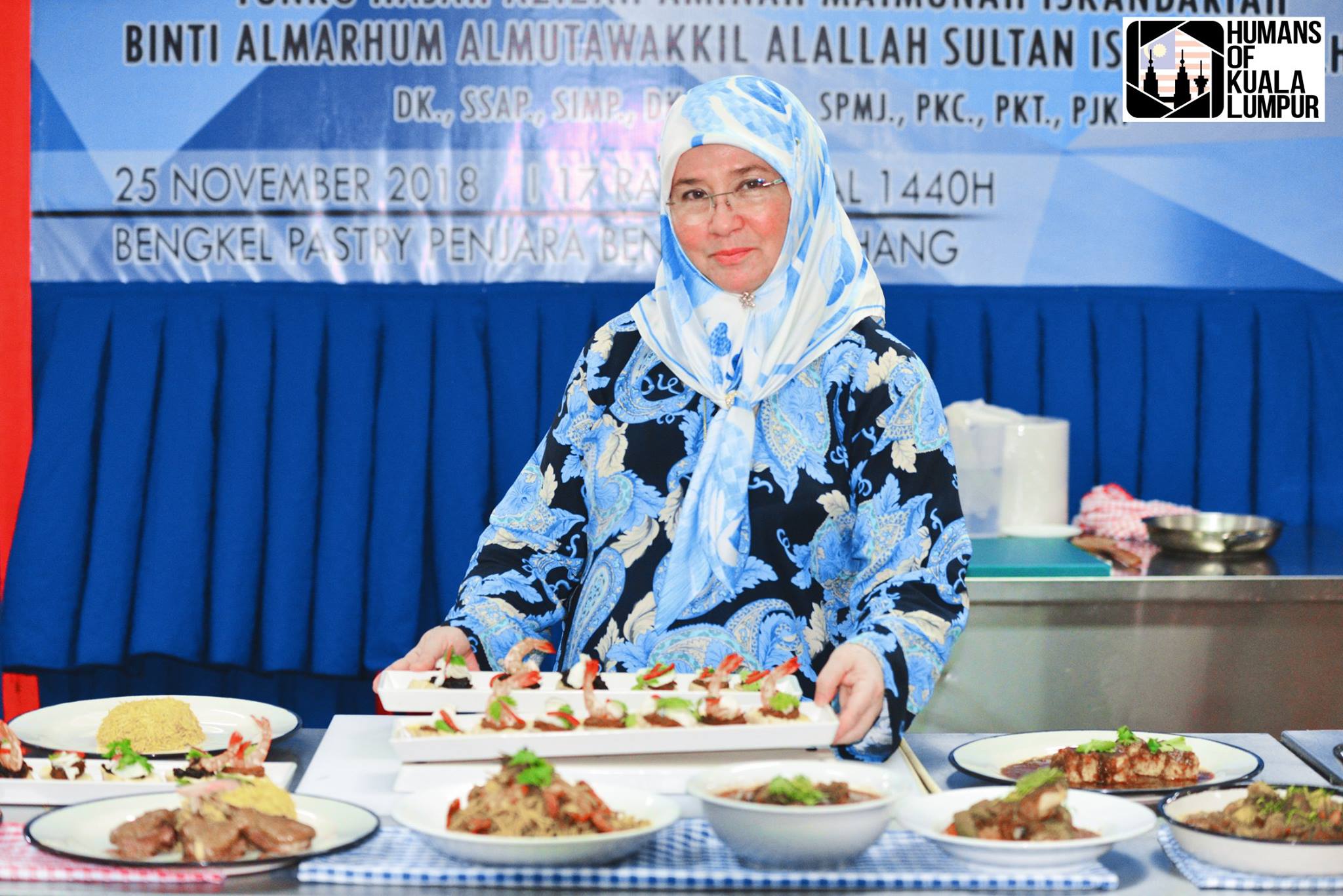
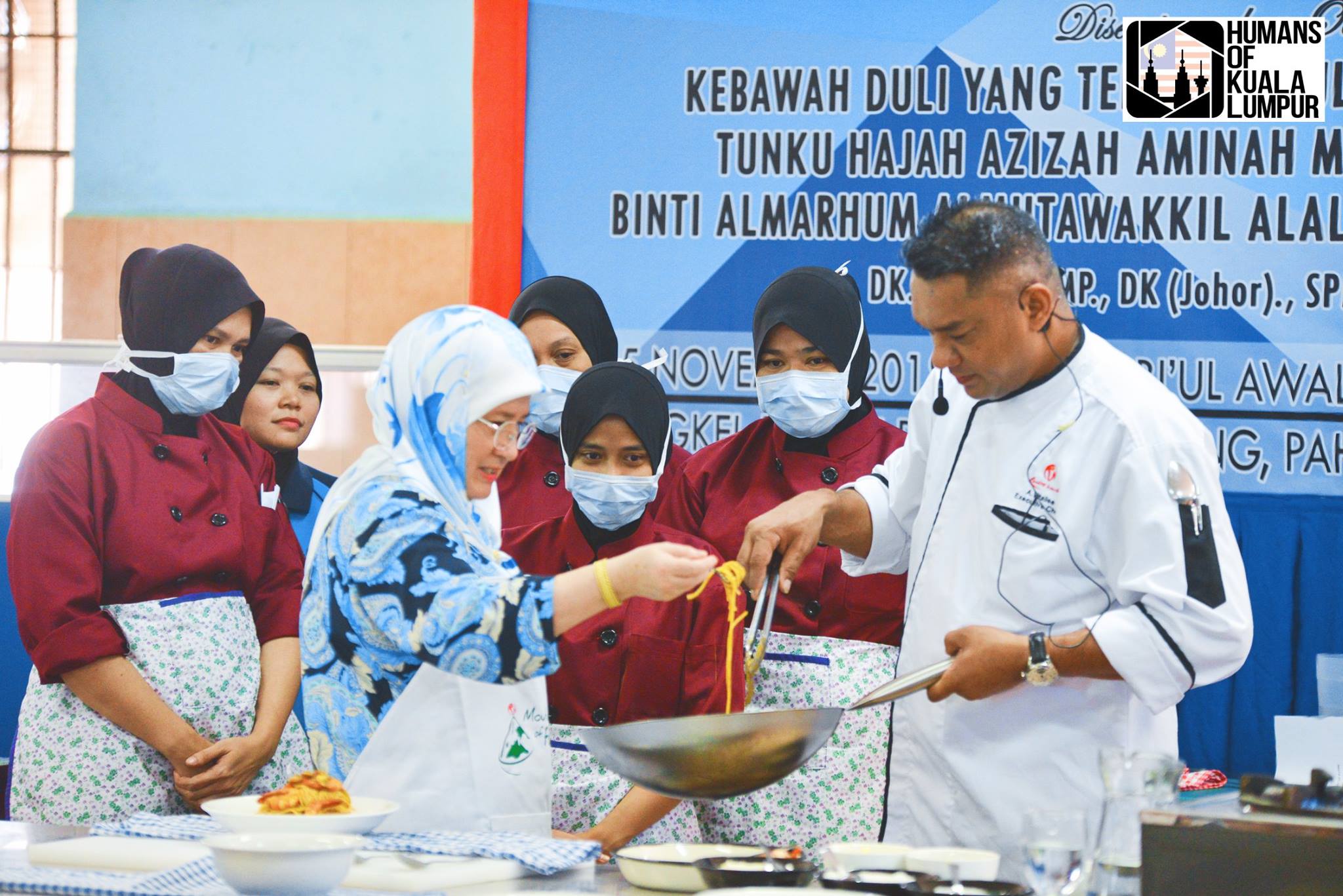
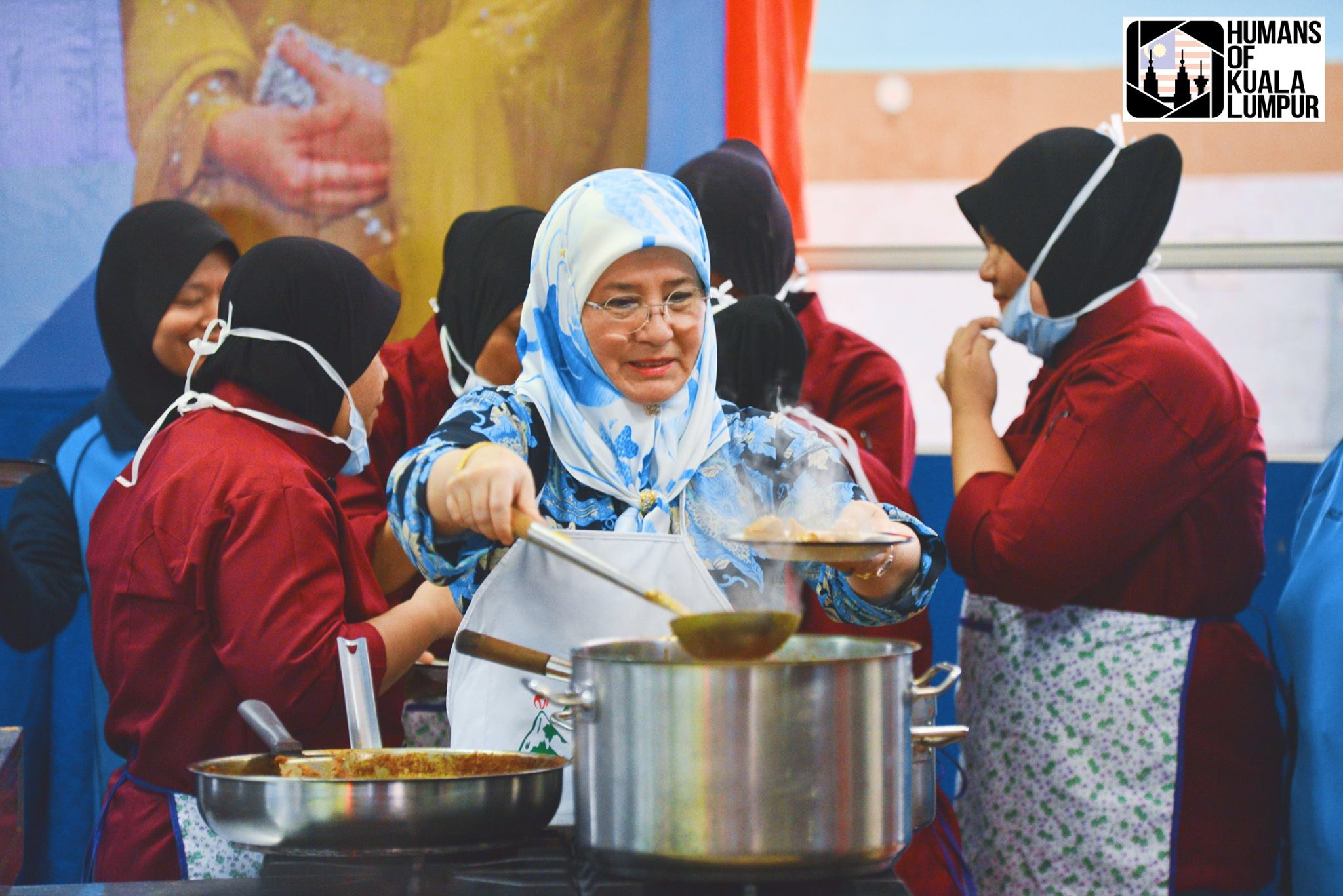
“When I teach these girls how to cook, we get to spend time together and I would listen to their stories. I ask them, what happened to you? Some of them told me how much they regret their mistakes. Some of them were too young so they didn’t even know what they did was wrong.
What we are doing here is to give the prisoners hope and to broaden their views on opportunities after leaving the prison. The recipes from my cookbook ‘Air Tangan Tengku Puan Pahang – Masakan Tradisional Pahang’ is the basis of this rehabilitation programme for prisoners. In the first class,I will teach the prisoners how to make ‘rendang’ paste and ‘asam pedas’ paste.
We want to give them training while they are here and get their mind active in contributing to the society and at the same time having sustainable income.
This is very important as we want them to be useful and accepted by the society. We hope this pilot project and initiative by the Malaysian Prison Department and support by Resorts World Genting will bear fruit.
If it is successful we hope to expand this idea to other prisons in Pahang and maybe other prisons in Malaysia in the future as well.
Apparently TPP doesn’t only stand for ‘Tuanku Puan Pahang’, it also stands for ‘Timbalan Penguasa Penjara’ (Deputy Director of Prison). They gave me a special ‘pangkat’ (title) because I am involved in the welfare and rehabilitation of these inmates. So I guess I am double TPP now. (laughs)”
————————————————-
Captured at the “Beauty Behind the Wall” programme, a CSR initiative by KDYTM Tengku Puan Pahang (TPP) Tunku Hajah Azizah Aminah Maimunah Iskandariah and Resorts World Genting, aimed to equip female inmates of Bentong Prison with culinary skills.
Photostory by Mushamir Mustafa and Amalina Davis
Do you have a story? Let us know here: https://forms.gle/ht4HsvbxgSgcKS5h8
(This post was first published on January 4th 2019)

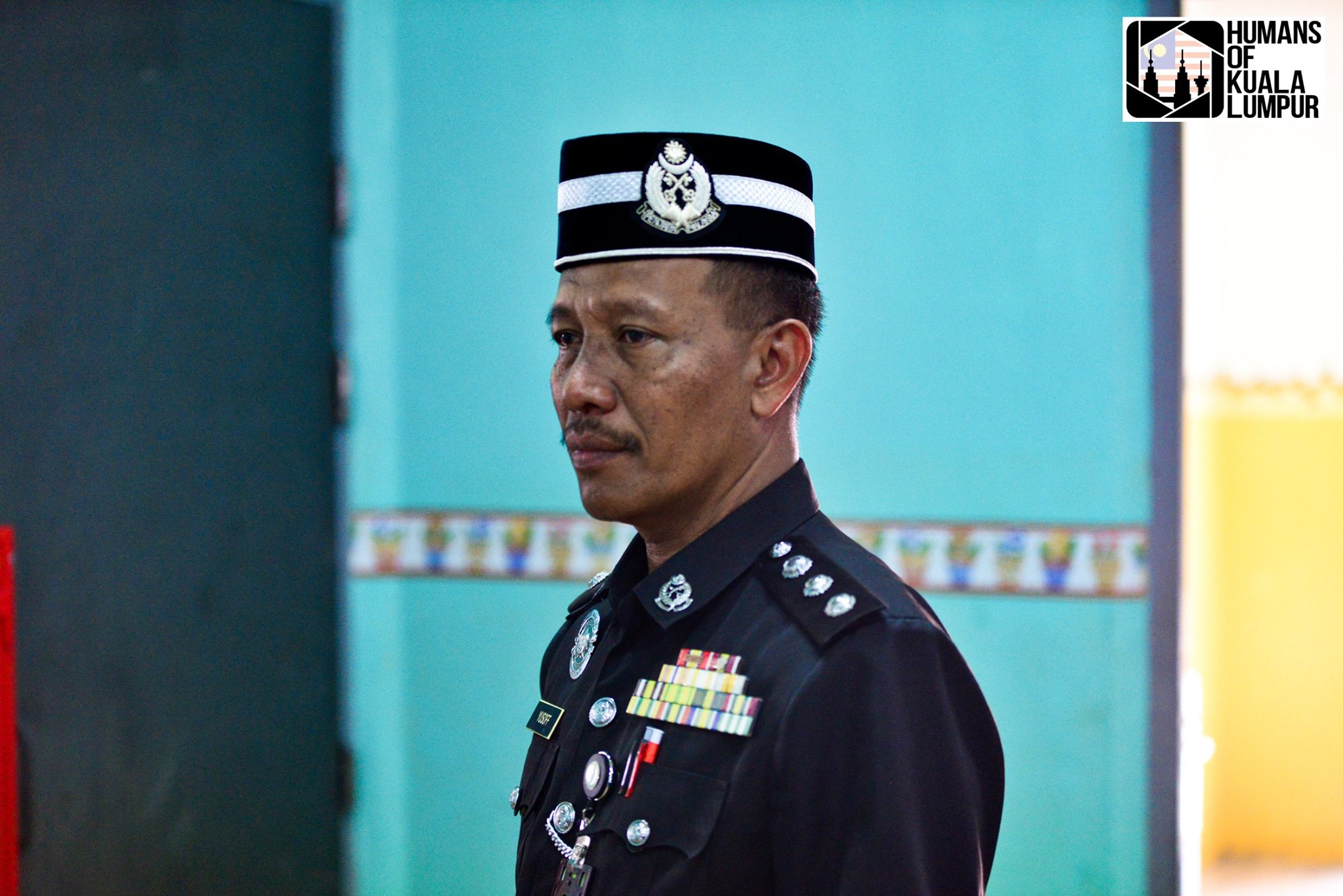
“We then give a test to see if they have changed and improved themselves. Each inmate will go to a religious class and be assigned their guru. If you’re Muslim you go to the Islamic classes and if you’re Buddhist or Hindu you go to those religious classes. We tell them ‘when you walked in here, you were empty, you did not know many good things. You now leave with goodness in you’.
Majority of prisoners here are Malays, about 60{eb97150a49149dc6c9e8165e90f1c9129bb6172e02a598b4264a1fc329d7d5bc} of them, with 40{eb97150a49149dc6c9e8165e90f1c9129bb6172e02a598b4264a1fc329d7d5bc} Chinese and Indians. There’s 3000 inmates in this (Bentong) prison, and 200 of them are women. The women are in mostly because of drugs, and the men’s crimes vary from drugs to rape and assault.
Most of the prisoners are here because of drug-related crimes. For inmates, their uniforms vary on color. We measure them by months. If you’re here for more than 12 months, and for many years, you will be wearing the dark blue uniforms. Those who had attempted to escape out of prison will be wearing those black and white striped uniforms that you see in the cinemas. New prisoners wear the orange colored uniforms.
They spend their time doing work – we pay them and they gain valuable skills that they can use after they have served their prison sentence.
There’s 4 workshops the can work on – laundry, sewing, metal works, gardening and making chairs out of rotan.
We want to show that here in Malaysia, even though they are in prison, we are training them in useful vocational skills so that they have a chance for the future.
Death row prisoners (those who have been served death sentences and are awaiting their time) are not allowed to go out and work. They are secured in the maximum security cells, with only 1 hour a day given to go out on a break.
Their food and meals are specials too – the chicken that we serve does not contain any bones. This is because they can potentially use this to end their own life”.
Captured at the “Beauty Behind the Wall” programme, a CSR initiative by KDYTM Tengku Puan Pahang (TPP) Tunku Hajah Azizah Aminah Maimunah Iskandariah and Resorts World Genting, aimed to equip female inmates of Bentong Prison with culinary skills.
Photostory by Mushamir Mustafa