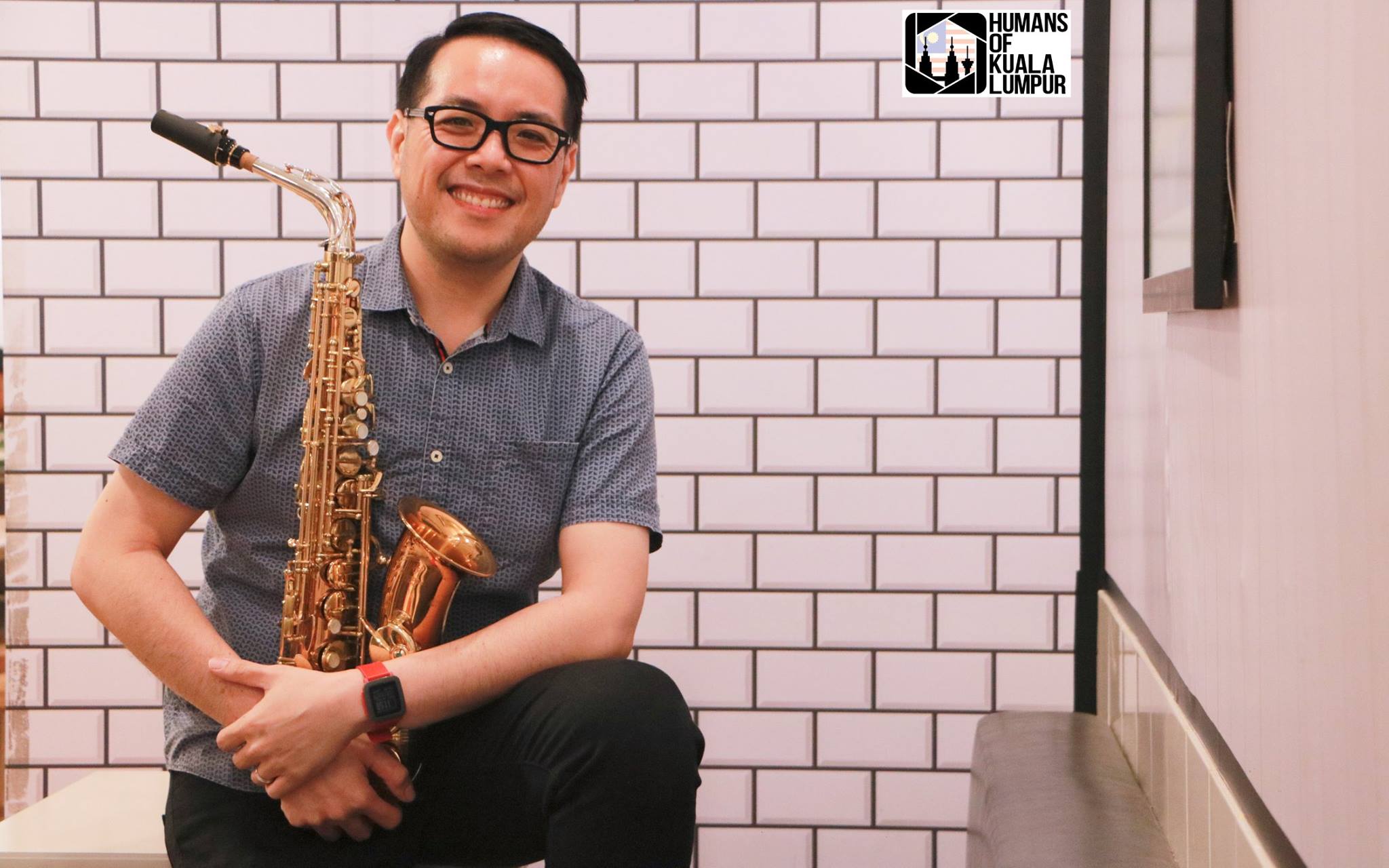
“Last year we did a concert called ‘ Seketika Sebelum Merdeka’. We rearranged music from the pre-independence days…”

“A lot of it were Malay songs from Saloma and P.Ramlee times, songs like Kita Manis and Lenggang Mak Limah. I think the old and the young should enjoy more live music.

There’s a certain energy, excitement, with a live band performing. Energy is transferred from live musicians to the audience. It has a different feel to it. I think 8 out of 10 people who have attended events with live musicians can tell the difference from recorded music. 

So that’s who I am now, a musician-for-hire. I have a band, we play together, its called WVC. We have quite a number of albums already. 

And while my parents never pressured me to get a ‘real job’, my relatives did. They used to say, ‘you sure or not can make money?’ I would listen to them, but would continue doing my own thing, despite having studied accounting. 

I did a lot of soul searching and asked myself, is this the right thing to do? Did I make a mistake? 

I love playing music, the saxophone, I love making music with other people, I love performing in front of an audience. The more I performed, the more I got sucked in, not just music as a career, but also as a lifestyle and passion. That whole vibe wiped my doubts away. 

If I can make a living off of it – why not?

In the long run I just knew that this is the right thing, what I was meant to do. 

When I was young I just wanted to learn how to play saxophone. I just loved the sound of it. It attracted me to it. Eventually I got the chance to learn it and go for it. 

Growing up in Kajang there were not many people playing music so I played by listening to cassettes and radios. It wasn’t until college that I could connect to other musicians, through the early days of the Internet, where I started meeting other people outside of Kajang, and we would jam and make music together.

I don’t see myself as an artist per se. Me making music is just like anyone else choosing a profession. I wanted to do this, so I just did it. People who create art still have to find a way to make money, to continue making art. 

As professional performers, we have to play in a lot of different situations – corporate events, weddings or even small places. 

And ‘art’ doesn’t even come into the situation. We’re not thinking if this is artistic or not, but we still perform as artfully as possible. A lot of the work we do isn’t necessarily artistic, but it makes ends meet. 

Some gigs don’t necessarily make money, but I get the opportunity to be out there. If people want a saxophone player, they just called me up. It was a bit of a struggle initially, but things eventually snowballed and grew bigger. We still get to do what we like to do, which is play music.

In the crowd, there’s always someone listening. In my 18 years of playing, there’s always at least one or two people listening. They might be eating or talking, but one ear is listening. 

Even if it’s just for a few hours. When people go home and they feel good, and we somehow contributed to that, it’s nice. 

And that makes us, the musicians, happy”. 
_______________

Julian Chan will be performing An Evening Of Jazz, at Damansara Performing Arts Centre (DPAC.) on 6th September 2018.

As part of the Kuala Lumpur International Arts Festival (KLIAF) x @DiverseCity happening in the month of September, Humans of Kuala Lumpur will be featuring talented artists, musicians, actors, designers and sponsors that help make KLIAF a reality.

Humans of Kuala Lumpur (HOKL) will have its first ever PhotoStory exhibition titled ‘Stories from Malaysia’, showcasing portraits of people in Malaysia, alongside their real, personal and intimate stories. 

Located at Carcosa Seri Negara, HOKL PhotoStory exhibition is happening from 1st until 30th September 2018. Come to meet the people behind your favourite stories, learn storytelling from the HOKL team and enjoy art performances, while admiring the mesmerizing colonial architecture of our venue.

Photostory by Amalina Davis
Edited by Mushamir Mustafa

Do you have a story? Let us know here: https://forms.gle/ht4HsvbxgSgcKS5h8
 

(This post was first published on August 31st 2018)


“The music school I went to in Beijing, China trains solo musicians. My teacher would hit my hands to correct my mistakes and every little action is being scrutinized to its finest details…”

“They have very rigorous learning processes and I didn’t have the stamina to keep up with 8 hours of practice a day.

One cold, winter evening during Christmas, I had a 3 hour session with my teacher to prepare for auditions. That session felt like 3 full days. It’s even harder to practice during winter because of the freezing temperatures. It’s just too painful that I had to warm my hands near the heater. I broke down in tears at the end of the session.

And after that, I couldn’t get a cab to drive me home, because of the extreme weather. Crying, and desperate, I managed to get on those illegal cabs for a ride home. It was extremely dangerous to do so, but I had no choice.

Sometimes, I would look at my friends back home, that were enjoying themselves in their university days, and asked myself, ‘ why should I have to be here at all?’ 

At one point, I hated my harp so much and wanted nothing to do with it. There wasn’t anybody to motivate me, because all I had was myself. The audition into music school itself is one full year of hard work. Eventually, I realized that the level I wish to achieve doesn’t come in a day or two. It requires a lot of sacrifice to get there.

I embarked on this path right after high school and it has been eight years of training and countless nights of loneliness playing with the Chinese harp, also known as the ‘Guzheng’. 
I was not naturally gifted, nor were my parents musically inclined, so I had to work extremely hard to get into music school.

I have never wanted something so much in my life, so I kept on going.

Now that I’m back in Malaysia, I’m collaborating with people from different cultural and musical backgrounds. We know of their food and celebrations, but not of their culture, art and music. 

It is my personal mission to promote and share about the Chinese harp to Malaysia. If piano is considered the king of instruments in the West, then in the East, this privilege belongs to the Chinese harp. 

I would describe it like a marriage of beauty and strength – tender, yet with an explosive punch. The Chinese harp has always been portrayed as something feminine, like in the movie scenes of classical Chinese drama.

I want people to know that it is no longer the case. Today, it has grown into something versatile and capable of expressing modernity. 

There are a lot of different things to explore with the Chinese harp in Malaysia. We get the freedom to experiment because the community is open minded about it. You get to taste a little bit of everything as there is no right or wrong in music. 

Now, more than ever, I want to show how far the Chinese harp can go, in hopes that the younger generation will learn to appreciate it, and maybe learn it too.” 

______________

Sara Heng will be performing Xún, which explores different sounds of Guzheng, at Damansara Performing Arts Centre (DPAC.) on 9th September 2018. 

As part of the Kuala Lumpur International Arts Festival (KLIAF) x DiverseCity happening in the month of September, Humans of Kuala Lumpur will be featuring talented artists, musicians, actors, designers and sponsors that help make KLIAF a reality. 

Humans of Kuala Lumpur (HOKL) will have its first ever PhotoStory exhibition titled ‘Stories from Malaysia’, showcasing portraits of people in Malaysia, alongside their real, personal and intimate stories. Located at Carcosa Seri Negara, HOKL PhotoStory exhibition is happening from 1st until 30th September 2018. Come to meet the people behind your favourite stories, learn storytelling from the HOKL team and enjoy art performances, while admiring the mesmerizing colonial architecture of our venue.

Photostory by Dao Hong
Edited by Amalina Davis and Mushamir Mustafa

Do you have a story? Let us know here: https://forms.gle/ht4HsvbxgSgcKS5h8


(This post was first published on August 28th 2018)

“Car racing is in my blood and representing Malaysia on the world stage will always be my ultimate dream…”

“But to face the realization that the thing you’ve worked for your entire life might actually come to an end, it’s depressing…

It all started when I was twelve and out of boredom my family found this go-karting track in Sepang. I became hooked by it immediately and kept returning for more. 

My dad enrolled me in a go-kart academy and in no time I was competing in my first local club go-kart race. Ever since then, I never looked back. 

Before I started formula car racing, my weekdays were normal but on weekends I would be on trips to other countries like Macau, Thailand or the Philippines with the team to race competitively. I was leading a dual life and I felt like a superhero.

I entered my first formula car race when I was 17. It was the Asia Cup Series and I came out on top of some pretty big international names. I’ve stood on top of the podium having a Malaysian flag above my head, and that feeling is just priceless. 

I thought I was set for something bigger after ranking the highest among Asians in my international formula car championship debut. I was even picked up by Porsche for a driver program, but things didn’t turn out as I expected. 

I’ve taken leave from my formal education for 3 years now to pursue professional race car driving, but things are stagnating. 

I haven’t been racing at all this year because I’ve reached a stage in my career where my family can’t afford it anymore. In this sport, money talks. This is worse as you progress higher. The people that gets the most practice are the ones who can afford it because they are really rich or well connected. 

One day of practice will cost around USD 15,000, because one set of tyres is USD 1,000 and you can only use a set of tyres for 20 laps. 

You actually get to see a performance disparity between the kids with money and the kids without (money). You’re part of the community where you see kids with private jets, they have their own islands, they have literally billions of dollars behind them, because their fathers are very wealthy businessmen. 

If they are not very wealthy, they have parents who are politically important, very well connected and through that they’ll be able to get sponsorships. Unfortunately, even if you’re extremely talented but don’t have the money, you might not be able to make it.

People often overlook the other side of things and they just don’t understand how tough it is to follow your dreams and keep going. 

There are moments on those sleepless nights when you would really think of just giving it all up. If it wasn’t for racing, I would be in university being a normal kid getting a degree and going through a normal cycle of life. 

Instead, I chose to take this risk because I know if I don’t, I’ll regret it for the rest of my life. It’s kind of bittersweet, because I would rather let it hurt me and have it beat me down than to end up saying ‘what if’. “

Editor’s note: The interview for this story was conducted in October 2016.

Photo and story by Mushamir Mustafa
Edited by Dao Hong, Amalina Davis and Yu Ping May 

Do you have a story? Let us know here: https://forms.gle/ht4HsvbxgSgcKS5h8


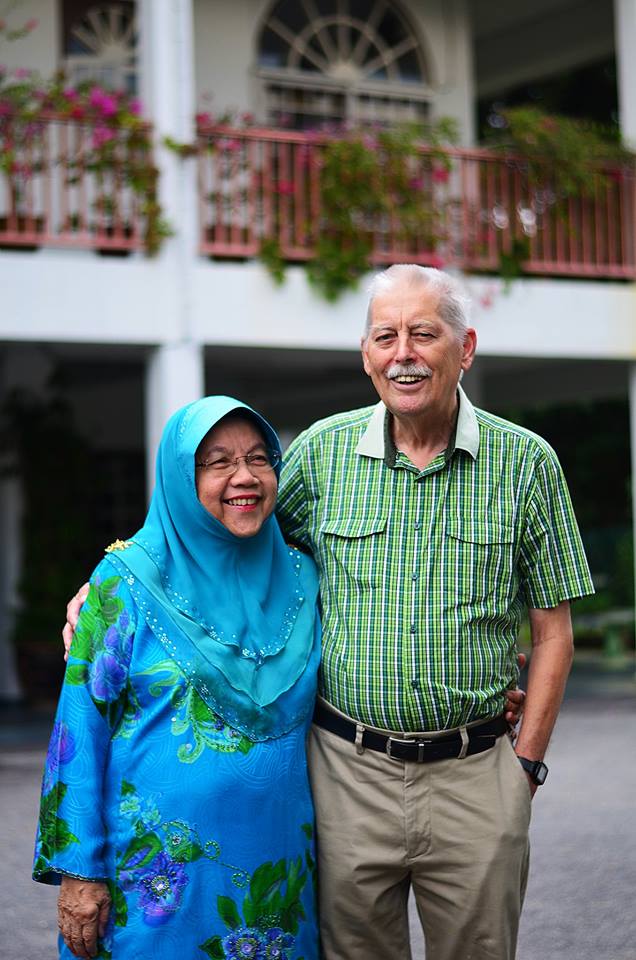
“We met when work sent me to Australia to learn a laboratory technique for my research in Malaysia, and he was teaching me how to use the equipment…”

Noni Sharif:

“For our first date, we went to the circus.

I was in Australia for six months before returning back to my job in Malaysia. We kept in touch through letters, but after a while we realized that it was difficult to be together. I was bonded to the Malaysian government, and he couldn’t get a job in Malaysia.

Four years down the road, I received a letter from him out of nowhere. Imagine my shock! Apparently he got sick and it changed his perspective on life. We exchanged letters for a few more months before he asked me to marry him. At this point, we still didn’t know how we’re going to be physically together, but we took a leap of faith.

We did long-distance marriage after Peter’s visa to Malaysia ran out. One evening, I got a call from a good friend telling me about a PhD scholarship to any Australian universities, offered by the Commonwealth government. This is your chance to be with your husband, he said. I stayed up all night filling in the scholarship application. Out of 2000 applicants, I was one of the two that got it.”

Peter Davis:

“That was the next four years settled, at least. I had a good job with CSIRO, the top Australian research organisation and was looking for any scientific jobs in Malaysia. But science was not a thing in Malaysia at that time. During those four years Noni was in Australia, I wrote letters to research facilities and universities in Malaysia, asking if they would hire me. 

Universities required a minimum of a masters degree for any teaching position, so I enrolled myself in a part-time Masters degree. I spent four days working full-time, and one-day a week at the university for classes. 

Weekends were spent catching up on studies. It all paid off when I got a teaching position at Universiti Putra Malaysia (UPM) on a 2-year contract basis with possibility of renewal. That got around the difficult Malaysian immigration policies for foreigners.

I still needed to become a Permanent Resident (PR) of Malaysia. That way, even if my contract didn’t get renewed, I could continue living in Malaysia. Everyone I talked to about applying for Malaysian PR told me how difficult it was to get. You will be rejected for a minimum of 4 times before they even consider you, and that usually takes about 10 years. Somehow I got it at the first try in just a year and a half.

The thing is, when you’ve set your mind to something, the universe and people around you will help make it happen. We didn’t sit back and let fate take control. We kept on looking, if one thing failed, we were onto the next solution. We never gave up. Against all odds, we have been happily married and living in Malaysia for the past 30 years.”

– Humans of Kuala Lumpur

Story and photo: By their daughter Amalina Davis

Do you have a story? Let us know here: https://forms.gle/ht4HsvbxgSgcKS5h8

(This post was first published on February 11th 2018)

“There’s a reason why God created special children, whether its autistic, Down Syndrome or dyslexia. Its to teach us to understand the world from their eyes and look at the world differently.

“My son was two years old when the doctors diagnosed him as autistic. I had a feeling that something was not right when Dzarif was a bit slow to start walking and speaking compared to his sisters. Dzarif is now five years old and he teaches me something new every day.

There’s no dictionary or guideline on how to raise autistic kids. There’s no one size fits all. 

Autistic kids are very sensitive to sensory stimulation such as sound, touch, smell or sights that seem normal to other people. When they experience a sensory overload, they will have a meltdown. 

During Dzarif’s early stages, he refused to go to shopping malls because there are too many people. He wouldn’t even want to leave the car park and start flapping his arms like a bird because he’s overwhelmed. 

I know of a 17 years old autistic boy who repeats his sentences twice. ‘I want to buy ice cream, I want to buy ice cream. Vanilla flavour, vanilla flavour.’ 

The ice cream seller would probably think he’s an ‘orang gila’, but that’s just how the boy releases his sensory overload. 

Each autistic person has different ways of sensory release – some rock their body back and forth while speaking and some bite their fingers. It might be awkward for people who don’t understand autism, but that’s just how they are. 

It is not about changing them and molding them to be ‘normal’, it’s about accepting them for who they are. 

What’s normal anyway? You think normal is standard one, UPSR, PT3, SPM, get a job and get married. But there’s also people who never live through that track but still live as good human beings. 

“What is one thing you wished the public knew about autism?”

People have often asked me, how they can support autism. Number one, they must understand and number two they must accept. 

How? As simple as when you go to shopping malls and you see parents dealing with autistic children that are having a meltdown. Instead of staring, or worse, recording a video, you can just go to the parents, tap their shoulder and say ‘its okay, I understand.’

Dzarif sometimes has public meltdowns, the worst being in Langkawi airport. 

Overwhelmed by the number of people, he started playing with a trolley to release his energy. He has always loved moving items. 

But once we tried to return the trolley, he refused to let us. He immediately laid down in the middle of the floor of check-in queue and started rolling around. 

Everyone was staring at us and started talking amongst themselves. 

If only, someone would just tap my shoulder and say, ‘we understand.’ 

– Humans of Kuala Lumpur

Dzulkaedah runs marathons to raise awareness on autism and fundraising for NASOM – National Autism Society of Malaysia. Last year he raised RM 38,000 after running the Berlin Marathon which was given to NASOM facilities around Malaysia, like Kedah, Kelantan, Penang and Selangor to subsidize underprivileged kids for their speech therapy programme. 

He is now fundraising for the Autism Cafe project, a cafe that employs autistic youth. To contribute to this cause, please consider donating at https://www.simplygiving.com/dzul-run-ultra-for-acp

Story by Amalina Davis
Photo provided by Dzulkaedah
Photo/story edited by Mushamir Mustafa

Do you have a story? Let us know here: https://forms.gle/ht4HsvbxgSgcKS5h8


(This post was first published on April 1st 2018)

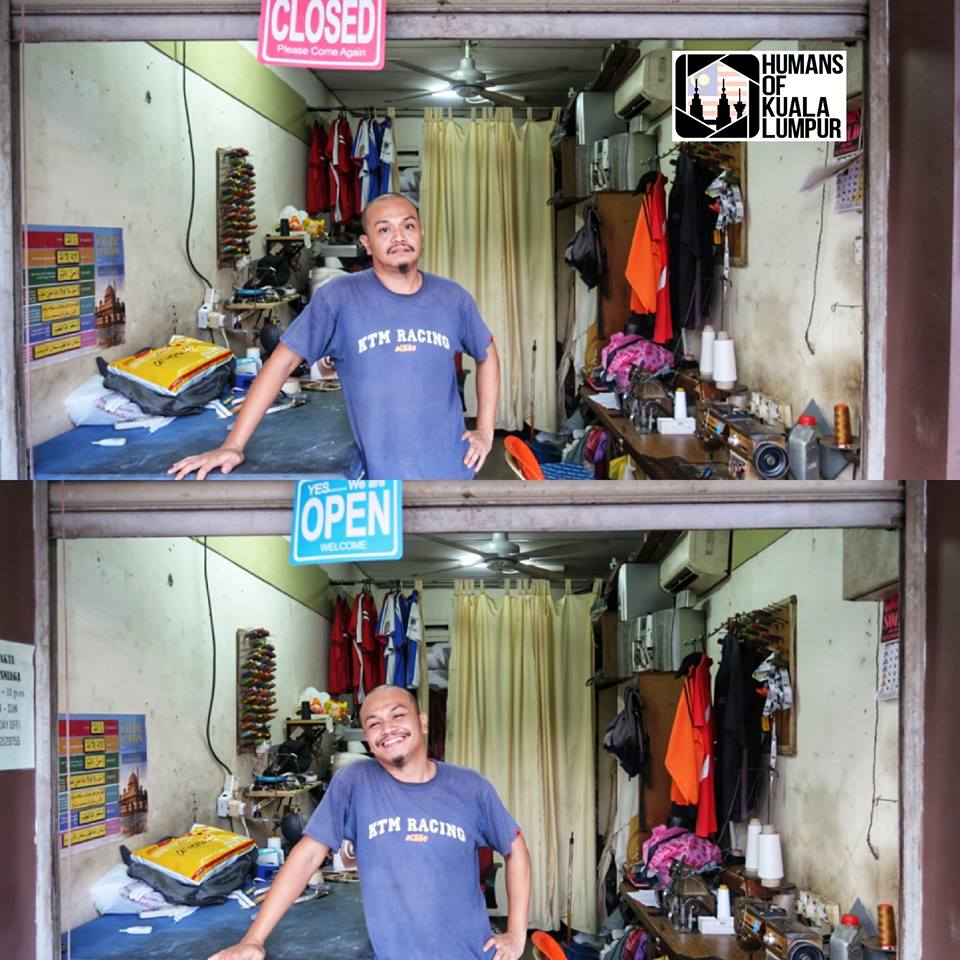
“I’ve been a tailor since I was 16 years old. My dad was a tailor too, and he kinda forced me to take up tailoring…”

“I didn’t like it, but eventually it was the only thing I was great at. And people think tailoring is easy, but its not like mechanical engineering where skills only mattered – there’s an art to it, the way your stitches are woven into the fabric.”

——————————————————————-

“Saya jadi tukang jahit sejak 16 tahun lagi. Ayah saya pun tukang jahit juga, dan dia suruh saya jadi tukang jahit. Mula-mula saya tak suka, tapi lama-lama itu je yang saya pandai buat. Orang selalu ingat menjahit ni senang, tapi ia bukan macam kejuruteraan mekanikal dimana hanya kemahiran yang diperlukan – tapi ada kesenian disebaliknya, seperti cara jahitan ditenun menjadi kain dan kemasannya.”

Seen at PPR Lembah Pantai

– Humans of Kuala Lumpur

Photostory by Mushamir Mustafa

Do you have a story? Let us know here: https://forms.gle/ht4HsvbxgSgcKS5h8


(This post was first published on May 5th 2018)