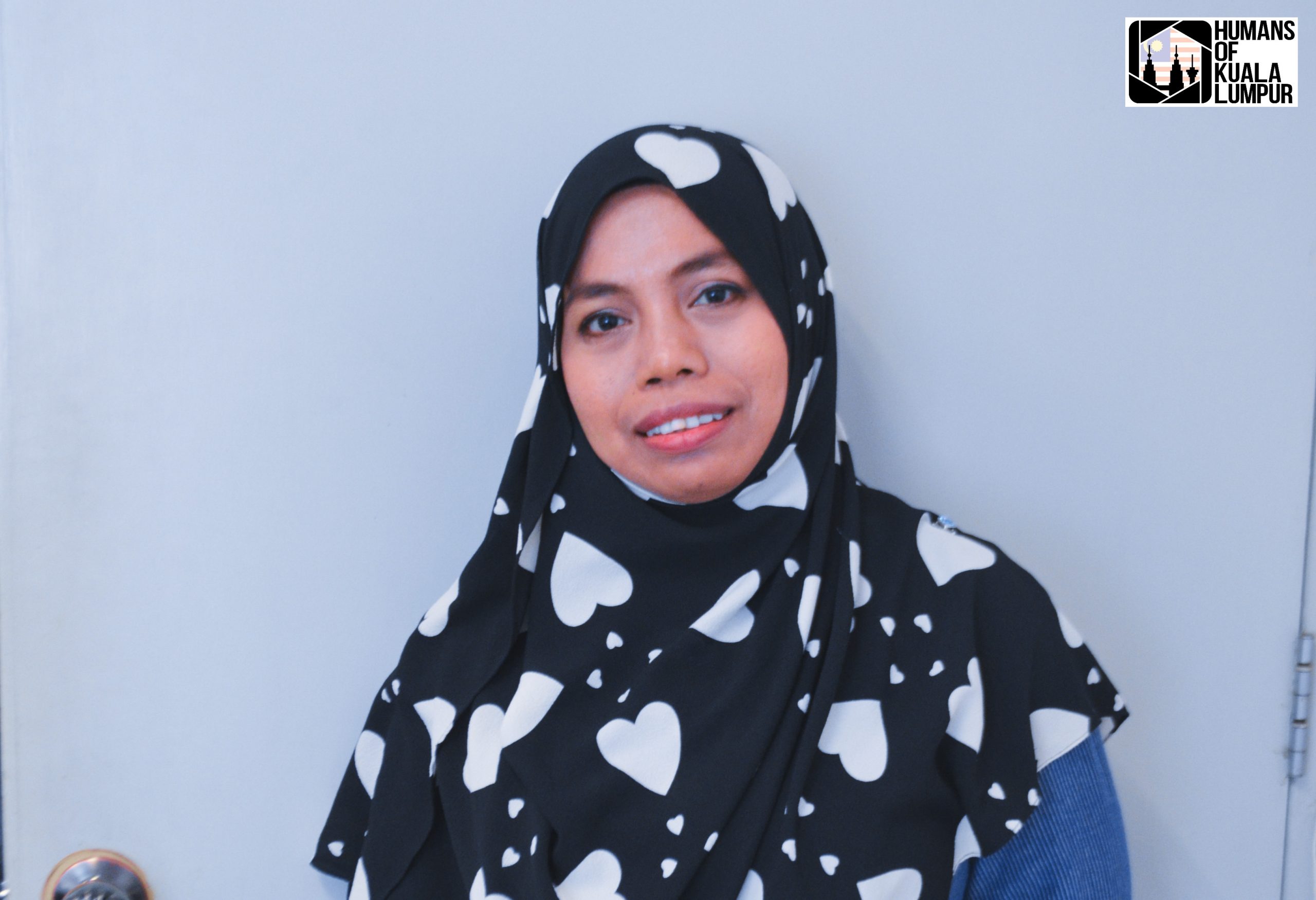
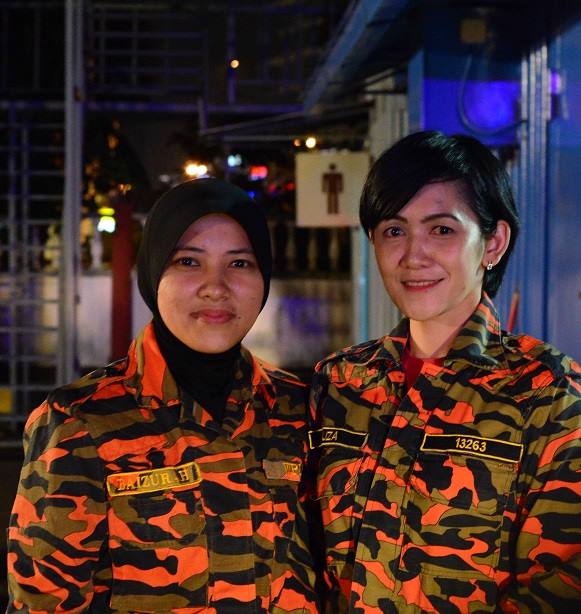
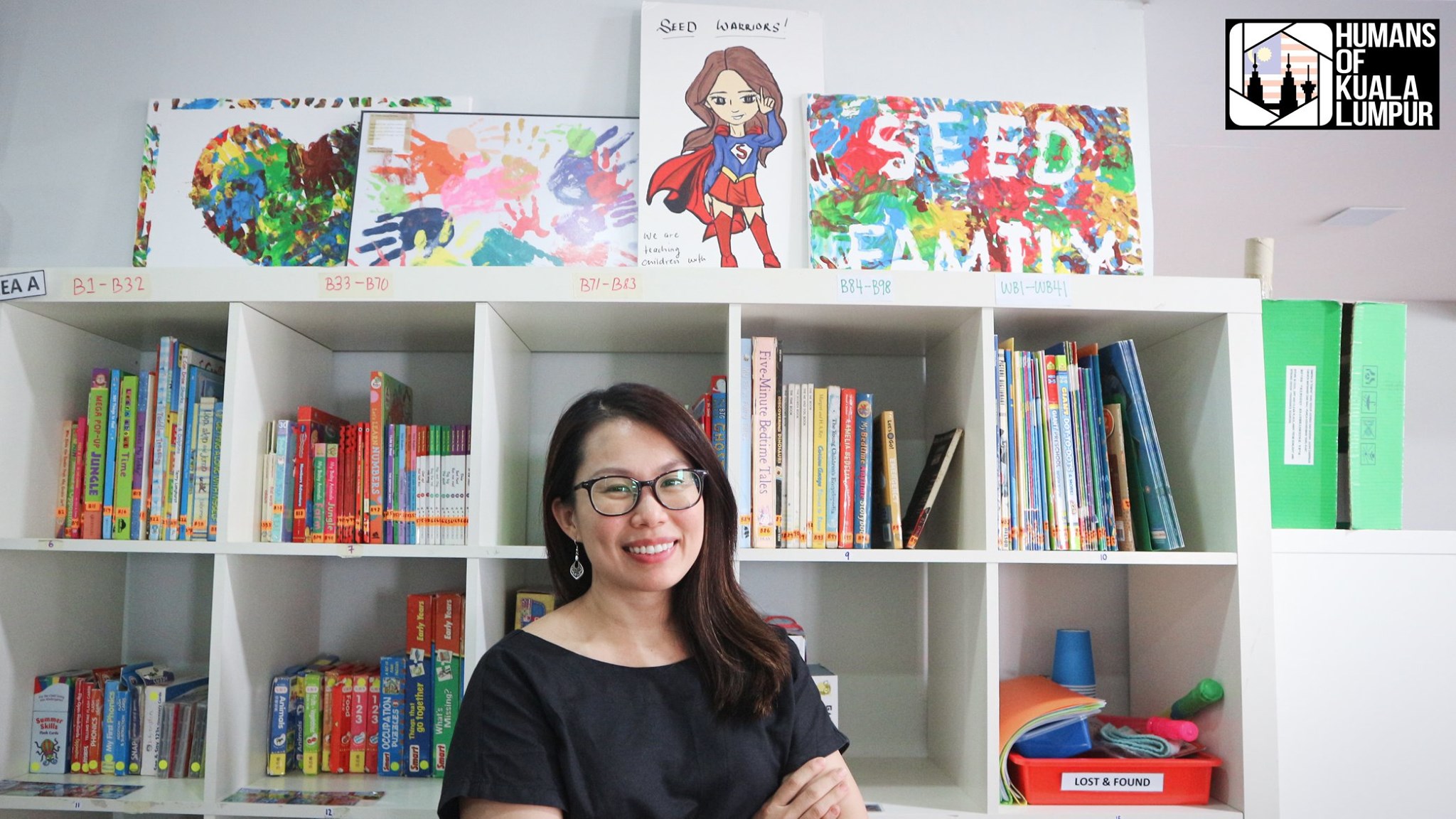
“We should not laugh, make jokes, look down on them, nor treat them differently.”

“I have been working for the Malaysian Mental Health Association (MMHA) since 2003. I was encouraged by my lecturer to study counseling beforehand. Joining the MMHA made me realise that mental illnesses are so much more than someone who is labeled as “crazy”. There are many factors that leads to someone’s mental illness.

When it comes to a person who struggles with their mental health, they are unable to cope when they encounter or are triggered by an issue. It affects their functions. For example, if it’s a student, they are unable to continue their studies, they can’t attend their classes, they can’t concentrate or focus. This leads them to feel that “I can’t do this, I’m suffering.” Another example could be when a worker is unable to concentrate or perform. This will make them feel like they are not effective, no longer useful, or unable to function.

As humans, we have to pay attention to our emotions. We tend to neglect and suppress what we feel. When we are tired, exhausted, feeling hopeless or unsupported, we tend to keep to ourselves. We tend to keep telling ourselves, “never mind, never mind”. Many of us highlight other people’s problems, trying to emphasise that they are more important than what we are going through. But we should learn to prioritise ourselves too. When you are in a good mental state, you are happy to help others feel better too. When you are not, how then? By learning from our own ups and downs, it helps us to improve as well.

The theme for this year’s World Mental Health Day is suicide prevention. Anyone can have suicidal thoughts, they are not exclusive to those suffering from a mental illness. People can feel lost because they are unable to find ways to solve the problem or options to cope with the issues they have. Sometimes it’s not about the mental illness, it’s about the issues we face and us not knowing where to go and how to deal with it.

If someone is having suicidal thoughts, what they can do first is to talk to someone who is able to understand. Although the other person may not necessarily solve the problem, the empathy they show will make them feel that they are not as hopeless or as alone in their situation. If someone comes up to you saying they are having suicidal thoughts, you can consider prompting further to ask if they have thought of ways to execute it. The reason why is so that we can assess the risk involved. From there, we can see if they have thoughts of it or if they have already planned the solution. Then how we can help is to convince the person to talk to someone, especially their family members, who can help them. Whether to take them to the hospital, or be with them, to reduce that risk. If someone comes up to you saying they are having suicidal thoughts or if you yourself are having suicidal thoughts, you should definitely encourage the need to see a psychiatrist.

There are several places where we can seek help. The public can check if the organisation is certified before seeking for their services. The government still has tele-counselling, providing assistance through the welfare department. There is still help accessible, but not a lot of people are aware of how to access it.

We have to check with the lawyers when it comes to law protecting mental illness patients. But in terms of the entitlement to benefits, they do have that right. There are three categories of common illness, where they can claim for treatment from their EPF. There is also some support through Perkeso (SOCSO), and the Welfare Department. In terms of legal, it’s not for me to comment on that. For a worker, they are entitled to medical leave. But in regards to whether they have a higher risk of being fired due to taking time off to treat their relapse, this is still debatable.

In terms of the topic of euthanasia, the choice to stop treatment is against human rights. However, we do understand the consequences. Hence, we normally educate clients about the risks of stopping your own treatment.

What helps me deal with my mental health are my children, because there is hope. Whenever I see them, I always think about their future. What I see, what I learn from working with MMHA, I always share what I encounter with my children – how I feel, what I think, what is happening in our society. I set aside alone time once a week, and I also invest in a hobby. I love sewing, doing arts and crafts.

What we as the public can do is to provide support. It’s not necessarily financial support, but it can be emotional support. Because when a person is suffering on the severe end of the spectrum, the focus is usually only on medication. But who is the one caring for their emotions? Once a patient starts seeking treatment, they need continuous support. By providing that, they will feel much more confident that someone is there, someone is understanding them, and someone who understands them could maybe one day be able to help them achieve something in their lives. We should not laugh, make jokes, look down on them, nor treat them differently. All of us are vulnerable. Anyone can be struggling with mental health issues without us realising.

People are afraid to talk about mental health because of the stigma and judgment that still exists. My experience with clients is that they try not to associate themselves with MMHA because they don’t want people to know about their problems. But our approach is that we try to educate them on this matter. The concern for these patients is for them to be able to get support in their workplace through someone knowing their issues. This isn’t to jeopardise their role in the workplace, but if anything happens, this person can help encourage them to seek treatment or inform their employer if anything happens.

For teenagers, they spend a lot of time with their friends. They listen a lot to their friends, sometimes rather than family members. If their friend is aware of what they are going through, they will know when to step in to encourage them to seek help. Family support also plays an important role. Family support helps to motivate a person to share about what they are going through, to recover, to seek treatment. Another method is through education – in schools, in public. I believe that all Malaysians should learn and understand what mental illness is. That it is important to learn, to know, and to help a person immediately. Our concern grows bigger when a person delays seeking help.”

Photostory by Maxy

Edited by Win Li

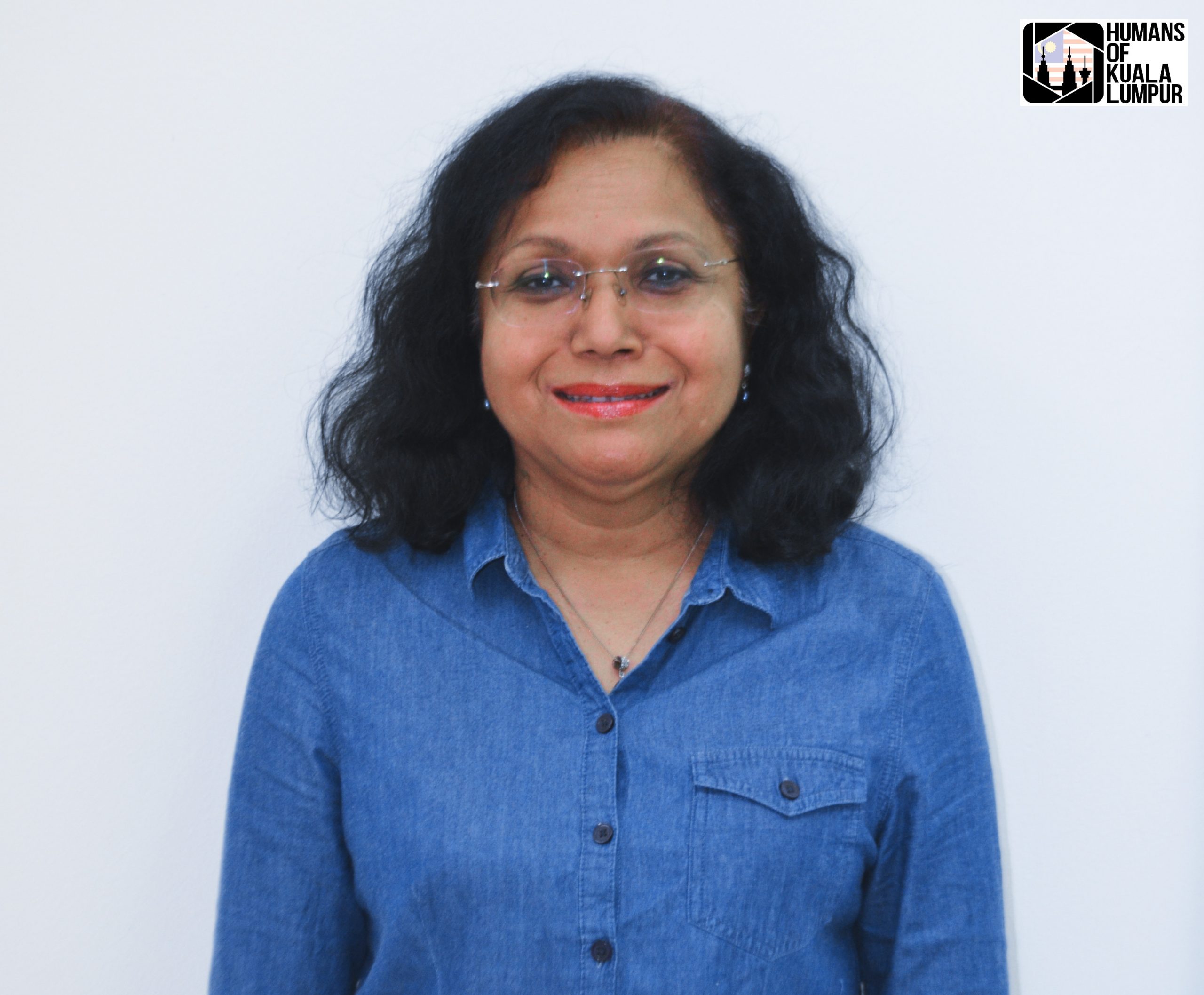
“I try to stimulate her intelligence in that way instead of looking at it from a negative perspective.”

“I have been a caregiver for my daughter since she was diagnosed with schizophrenia in August 2011. I’m involved with MMHA as a trainer, I do a lot of art therapy and other work with them. I’m a trainer in the Montessori curriculum and early intervention. Most of my team consists of young people, as I appreciate that they are very effective and are able to think outside of the box.

My daughter is a special needs child, her development was a little bit slower than the others. She decided she wanted to do something for herself, as her older siblings are very independent. Coincidentally at the time I had a project in Bangkok. I work with the Ministry of Social Welfare, and an NGO had asked me to train shelter workers on the Montessori way of learning for 3 weeks. My daughter encouraged me to go for it, as she would take this as an opportunity to try out being independent in the hopes of living in Singapore or Australia on her own. The day before I was leaving Bangkok, my daughter said that someone had changed everything in our house, and she was scared and paranoid. So she went to stay with my sister. When she came back, she didn’t allow my sister to come in because she said the place was in a mess and she needed to clean up before I returned the next day. But when I returned, the whole house is in a mess, all the glasses that we left were full of fungus, and footprints were everywhere. She was so feeble, she weighed only 26 kilograms. I observed her and realised she wasn’t focusing whenever I was talking to her. Her hygiene was very unkempt, hair, fingernails, everything. She would smile to herself, talk to herself, spaced out, walking around – I thought this was not right. I decided to take her to a doctor. Upon seeing her state, the doctor was worried that her organs might collapse. After getting all checked through, he said it was a miracle she was alive, that nothing had affected her. This was when she was diagnosed with schizophrenia.

My daughter used to be an outgoing person. In Bangkok, she used to drive the motorcycle, taxi, and take flights on her own. She used to do a lot of things independently. But now, she gets paranoid about everything. She doesn’t want to go out, doesn’t want to socialise, very introverted, wants to be by herself. When she’s not with the unreal world, she’s okay. But when she’s in her psychosis, she gets highly anxious about every little thing.

As a caregiver, you have to keep reminding them to be mindful of their hygiene and self-care. My solution for her is that if she’s coming out with me and I’m meeting people, she needs to be presentable. She would usually agree and get ready as she doesn’t like being left alone. Her logical thinking skills and self-care may be very low, but her higher-order thinking skills are very high. So I’m able to tell her situations about my business, ask her if she thinks we are on the right track, do we need see somebody about this, will they be helpful, what strategy should I do for this month. If you ask her, she will tell you. She will comment if we are going in the wrong direction, why is nothing happening, what if we try another method. I try to stimulate her intelligence in that way instead of looking at it from a negative perspective. We also do some banking work, meet people, have lunch, then we come back home. My daughter also helps out a bit with domestic chores, so she washes the plates, mops, and cleans.

Currently, my daughter is taking Clozapine mixed with Solian. The Clozapine medication has made her focus and have clearer thoughts. The voices, the hallucination, and the delusion is still there, but it contributes to her having a higher functionality.

What helps me to deal with my mental health is my work. When I give workshops and deliver talks, I get very highly-spirited. I feel very motivated when I’m able to make a difference, to help somebody, or to share my knowledge. Whenever I see changes in people and I see them happier, that adds to my motivation. I also do meditation, painting, and gardening – these are the little things that makes me happy.

What we as the public can do is understand the power of early intervention. The age between 0 to 6 are the crucial years. My daughter was badly treated during that time because she was a special needs student and teachers were unable to understand her. They would whack her, raise their voice, and shout at her. So now whenever someone yells at her, her expression would change. The core had already started from early childhood years.

This is why I do a lot of work in that area, and I also try to educate teachers and parents on the importance of helping kids through these crucial years especially. Montessori belief is that you instil positive thinking into them during the time before they turn 6. But in Malaysia, these are the pressure years. They want the child to make the grades. It becomes irrelevant if the child has a learning disability, or if the child is suffering from any kind of condition. When the child faces such challenges, they start bottling up their growing stress.

Mental illnesses are often described as “transparent”, something that the public is unable to see that someone is suffering from. So to a lot of people, they are misunderstood as lazy. For the people I train, I get very happy whenever they achieve something, even if it’s small. If you talk to them, you’ll realise that it takes a huge effort to even get out of bed and do something. It’s a huge milestone for them. Normal people like us are so blessed, but we don’t want to have the patience to understand. What we want is the goal, we don’t want to see the process.

I don’t want to look at my daughter’s illness as a curse or a burden, because I think God has given her as a gift to me. My daughter has been able to complete her Victoria Certificate of Education (VCE), where she took up Psychology, Business Studies, and other subjects. After that, she completed her foundation studies in Media and Communication. She also wrote a book. She studied Fashion and Design in Bangkok.

Because of my daughter, she has also helped me to be able to do what I do. With my passion for Montessori and early learning, I combine all these together and try to help people as much as possible. If you come to our education, it’s all about the child – not about the adults around them. If anything goes wrong with child, it has nothing to do with the child, but the environment and the people that has created them to become this way.

I feel that people get greedy, “oh the child can do this, let her do more – she’s getting better”. For an analogy, it’s like diabetes. If you have high sugar and you’re diabetic, you take medicine, right? When you take medication, it maintains. It doesn’t disappear, right? When your sugar level goes high, you have all the conditions of being diabetic. The same applies to mental illness. If they are getting better, it doesn’t mean that they snap out of it and that’s it. If stress or something comes back and triggers them, they will go through the cycle again. That’s what we need to understand.

I feel that if each one of us take the step to help those who are suffering, it will grow from a ripple in a pond to a wave. I have family members who come to me and say “just slap her out of it”, “she’s lazy”. Those people, I don’t know how to educate them because they don’t want to know. The older generation has a fixed pattern of thinking. If they cannot help, they should stay away. If they can help, then they can do something about it.”

Photostory by Maxy

Edited by Win Li

“I would also like to tell everyone who is struggling with depression to not feel sad or bad about what you are going through.”

“I was diagnosed with schizophrenia for more than 30 years. Before the diagnosis, I wasn’t feeling well for a few years and decided to seek help for myself. I don’t hear strange voices in my head, the biggest challenge for me is having a low level of concentration. I have been working for six months because my mother knows the boss of the company that I work at. Having difficulty in focusing is my current struggle at work.

I stopped going to church for a few months because it has been difficult for me to wake up in the morning. I used to exercise to maintain my mental health but stopped exercising since I started working. 

I am taking Clozapine, Lexapro, Sulpiride, and Chlorpromazine as prescribed by a psychiatrist. The cost of medicine is around RM300 every month, but I get financial support from an organization so I don’t have to pay. I have attended a rehabilitation program and still see a counselor today. They helped me get back to my work life. 

I don’t care about the public’s perceptions of mental health. I know mental illnesses are caused by an imbalance of brain chemicals. I have not had suicidal thoughts. I think some people choose not to discuss mental health because it may be a little traumatic for them to share as they probably have gone through very hard times. We need more love and care from society. Mental illnesses are just like a fever or flu but when you are not mentally well you see a psychiatrist. Never delay and seek help as soon as you can.

I would also like to tell everyone who is struggling with depression to not feel sad or bad about what you are going through. You can get help from professions in the mental health industry and also church. Be brave and seek help.”

 Photostory and edited by Maxy


“They want you to be able to just understand them.”

“I’m a full-time caretaker for my loved one. I don’t remember when I took over the responsibility but it has been about 20, 30 years since.

When I was really young, I didn’t know how to communicate with him because I did not understand his case, schizophrenia. So, we didn’t communicate and he got frustrated, and I got frustrated. But after I grew up, I got to know more about the different types of mental illness. Then, I learned how to communicate with him the way he needs to be communicated. I also learned to understand what exactly is he trying to tell me.

Learning to communicate not only benefits him but also helps me to improve my communication skills and my understanding of the illness.

It helps me when dealing with people outside of our family, with the public. Many times, when we deal with people, misunderstanding happens due to miscommunication. After attending classes at MMHA (Malaysian Mental Health Association), I learned how to explain to people around me about what is happening in my family so that they can understand it better. So, communication is really very important – how we communicate to our loved ones, to the public, and with people around us.

Someone with mental illness has shared with me that ‘You can choose not to be a friend. You can choose not to understand what mental illness is all about. But you don’t discriminate me.’

 What they really need is not sympathy; they need empathy. They hope you can ‘understand how I really feel’, just like a person who is in so much pain. Is there any way you can understand how painful they are in? If you have been in that experience, you will know. But if you have not, you wouldn’t know.

Empathy involves understanding their feelings. Sympathy is looking down on them, like ‘Aiyoh, you very ke lian (you’re so pitiful).’

Just like any other humans, they need empathy as well. They don’t want to be sympathized. They want you to be able to just understand them.

People don’t talk about mental illness because the stigmatization and stereotyping are so bad. They don’t want to see the doctor because they are afraid of being labelled as someone with a problem.

You know how sometimes we read newspaper and we go, ‘This person committed suicide. Jump from the building. He’s crazy’ or ‘He’s crazy. He’ll chop people up (kill people).’

This is not true. The public needs to really understand why it happens. It happens because people with mental illness are not being treated. They are in the dark. They don’t know what to do. They need help. If they have been treated, they can be very stable. They are actually very smart. In fact, they are even smarter than you and me. They have a lot of ideas. They think differently and can actually contribute more. I have personally seen this in a few people I know.

Hopefully, there are more employers who are willing to open up opportunities for them. They will be more than happy as long as opportunities are given, even if it is just a few-hour job. When they have a job and manage to achieve something, it actually helps to improve their mentality as well.”

Photostory by Siti

Edited by Siew Ling

Photo by Aiman

“When I had suicidal thoughts again after, I reported myself to the mental ward and I was hospitalised.”

“I was diagnosed with Bipolar disorder for more than 5 years ago.

I was initially diagnosed with Depression. This was after the time I was raped when I was studying for Masters in Counselling in the United States. Later on, when I lost both of my parents, I thought of wanting to join them. I realised I needed help. After I was diagnosed with depression, I returned back to Malaysia. Initially, it was depression still. But in 2009, a psychiatrist diagnosed me as having bipolar disorder instead.

Whenever I was bipolar, I had a delusion that I am just a burden to my family and I felt depressed most of the time. Sometimes, I would shop and spend thousands of dollars per day. It’s money that I don’t have, so I was maxing out credit cards. When I was shopping, it was pleasurable. But the feeling of guilt after I was done shopping was pretty bad.

The theme for this year’s World Mental Health Day is suicide prevention. I personally have experienced suicidal thoughts both before and after my diagnosis. When I first had suicidal thoughts, I went to the counseling center and the counselor felt that I needed a psychological evaluation. They decided to send me to the mental ward of a hospital, where I was accompanied by the police. I was put under a 72-hour hold. When I had suicidal thoughts again after, I reported myself to the mental ward and I was hospitalised. Whenever I had these thoughts, I didn’t have specific plans. All I knew was that I felt hopeless and I wanted to die.

There are several outlets where we can seek for help. I sought for help both in the States and in Malaysia. When I was in the States, I went for counseling. They also had a partial hospitalization programme (PHP) where they provided dialectical behaviour therapy, but I only attended for a while before my father brought me back home.

Currently, I have been undergoing psychodynamic psychotherapy with a private psychologist. It costs RM 200 per month for consultation and RM 800 per month for the medication (Abilify Maintena injection). On top of that, I also take another medication called Pristiq, this costs RM 400. This is also purchased per month, but I’m only supposed to take this for a while.

What we as the public can do is to provide support, because it’s hard enough to fight the battle alone. We need to understand that mental illness patients are not crazy, they are not violent. I think people are afraid to talk about mental health because it’s not talked about openly.  If someone comes up to you saying they are having suicidal thoughts or if you yourself are having suicidal thoughts, you should definitely encourage the need to see a psychiatrist. There should also be greater public awareness of other mental illnesses such as schizophrenia, bipolar disorder, and depression. 

I hope that more can be done to solve the financial concern that comes with getting help for our mental health. Not everyone is able to afford treatment. My hope is that something can be done about that, maybe insurance that can provide for treatments.”

Photostory by Maxy

Edited by Win Li

“Sebenarnya, kebanyakkan penyakit mental bermula daripada masalah persekitaran, di mana ia boleh dirawati sepenuhnya melalui sokongan masyarakat”

HOKL: Sila perkenalkan diri puan.

Z: Nama saya Nor Zalina binti Zalwadi. Kerja saya sebagai seorang kaunselor di salah sebuah kolej universiti di bawah MARA. Saya juga merupakan seorang aktivis kaunselor sukarelawan di MIASA untuk tempoh tertentu.

Berapa lamakah puan telah bertugas sebagai seorang kaunselor?

Secara rasmi, sejak memperoleh lesen pada tahun 2011.

Apakah faktor yang mendorong puan untuk menjadi seorang kaunselor?

Banyak faktor, misalnya minat untuk mengetahui tentang kehidupan manusia sendiri. Saya dibesarkan oleh seorang ibu tunggal daripada luar bandar. Kita melihat setiap hari itu macam mana, survive untuk teruskan kehidupan dan jadi orang yang lebih baik. Jadi kaunseling ialah bidang yang sangat besar untuk kenal diri seseorang individu dan diri sendiri.

Apakah tugas puan sebagai seorang kaunselor?

Berdasarkan garis panduan yang ditetapkan oleh Lembaga Kaunselor Malaysia. Antara peranan yang rasmi ialah menjalankan sesi kaunseling, sesi bimbingan dan juga intervensi kepada klien yang terjerumus dalam masalah kesihatan seksual, mental dan penyalahgunaan dadah. Selain itu, seorang kaunselor bertanggungjawab dalam aspek pengesanan awal simptom-simptom yang mungkin merupakan indikasi untuk masalah yang disebutkan tadi. Seorang kaunselor juga memainkan peranan sebagai seorang pemudahcara bagi mana mana-mana individu yang sangat memerlukan intervensi secara kecemasan, contohnya sebagai satu medium untuk seseorang itu berkongsi perasaan dan juga lenguhan kehidupan.

Tugas puan mesti melibatkan puan untuk berjumpa dengan ramai orang dari kehidupan yang berlainan. Apakah tanggapan puan terhadap masalah mereka?

Misalnya saya sendiri. Saya dibesarkan di kawasan luar bandar. Kemudian saya melanjutkan pelajaran di universiti awam di Lembah Klang. Dalam kalangan klien-klien saya yang melalui pengalaman yang sama seperti saya, saya melihat terlalu banyak perubahan yang berlaku dalam diri mereka disebabkan transisi dari kehidupan luar bandar ke bandar. Terutamanya sekarang ini terlalu mudah untuk mengakses maklumat, tidak kira sahih atau tidak. Impaknya manusia sekarang semakin unik dan oleh sebab itulah manusia sekarang sedang berhadapan dengan cabaran yang sangat besar.

Bolehkah puan menerangkan cabaran yang disebut tadi secara lebih terperinci?

Sebagai seorang kaunselor yang bertugas di sebuah universiti, klien saya terdiri daripada remaja yang baru ingin memulakan kehiudupan secara berdikari. Contohnya mereka daripada kumpulan pelajar yang sebelum ini tidak pernah dilepaskan oleh keluarga mereka, dan kini perlu hidup bersendirian. Pada masa inilah mereka sedang mencari personaliti, tujuan kehidupan dan cita-cita mereka yang tersendiri. Selain itu, individu di dalam kelompok umur seperti klien-klien saya ini sebenarnaya juga sedang mencari keseronokan dan mempunyai sifat ingin mencuba sesuatu yang baru. Dalam keadaan seperti ini, jika mereka tidak dapat mencari satu acuan atau ikon yang terbaik dalan kehidupan mereka, mereka akan menghadapi satu masalah yang besar. Sebabnya cabaran mereka ialah untuk mengawal pergaulan serta pemikiran mereka terhadap orang sekeliling. Akhirnya, mungkin ada yang berjaya mencuba dan ada yang gagal. Itulah cabaran yang saya maksudkan.

Adakah puan rasa ada “connection” dengan orang yang puan bantu?

Ya. Sebenarnya seorang kaunselor harus teguh dari aspek pendirian dia. Kerap kali saya menjumpai klien yang melalui keadaan yang hampir sama seperti mana yang saya lalui, iaitu dibesarkan oleh ibu atau bapa tunggal. Individu seperti ini memikul tanggungjawab yang berat, terutamanya jikalau mereka merupakan anak sulung. Contohnya, mereka perlu monolong ibu atau bapa untuk menjaga adik-adik, di samping memberi tumpuan untuk mencapai cita-cita mereka yang tersendiri. Itulah yang biasanya saya rasakan sebagai satu connection kerana saya memahami apa yang klien tersebut rasa. Namun sebagai seorang kaunselor yang beretika, saya tidak boleh melibatkan countertransference dalam sesi kaunseling kami, iaitu menerapkan nilai dan emosi kami kepada mereka. Walaupun saya pernah melalui pengalaman yang sama seperti mana mereka lalui, saya tidak boleh menggunakan pengalaman saya untuk menasihati mereka dalam menjalani kehidupan yang lebih baik.

Adakah cabaran yang dihadapi oleh seseorang individu yang berpindah dari luar bandar ke bandar, berkait dengan kesihatan mental?

Sangat berkait rapat. Contoh yang paling mudah adalah dari aspek kewangan. Di luar bandar, kita tidak akan berhadapan dengan bermacam-macam kehendak. Jadi, duit mungkin dapat diminimakan penggunaannya.  Namun, berbeza pula ketika di bandar kerana kita ingin hidup dalam keadaan yang lebih selesa, mengikut arus moden dan memenuhi kehendak hiburan kita. Perbezaan ini meberikan suatu tekanan tambahan kepada individu yang baru berpindah ke kawasan bandar. Selain faktor kewangan, faktor lain yang boleh memberikan tekanan yang tinggi kepada golongan ini ialah tekanan dari aspek kehidupan sosial seperti penyalahgunaan dadah.

Jikalau klien puan berhadapan dengan masalah kesihatan mental, bagaimanakah puan membantu mereka?

Disebabkan kesedaran tentang kesihatan mental semakin meluas, kadang kala mereka cuba untuk memberi diagnosis untuk diri sendiri, tidak kira tepat ataupun tidak. Namun, saya ingin tekankan bahawa simptom yang mereka lalui ialah simptom tekanan yang berkala, ataupun simptom pemulaan kepada penyakit mental. Sebagai seorang kaunselor, kami tiada kepakaran dari segi klinikal, tetapi kemahiran kami lebih kepada aspek hubungan. Misalnya kaedah pertama yang kita akan cuba sebagai seorang kaunselor ialah dengan mengenal pasti apa yang berlaku pada klien tersebut baru-baru ini, 2 minggu yang lepas atau sebulan yang lepas. Kemudian kita kaitkan dengan latar belakang dia dan sekiranya benar-benar didiagnos dengan penyakit mental, kita akan kenal pasti punca utama di sebaliknya. Kemudian, kita akan fikirkan cara yang berikutnya, seperti menyerahkan kepada pihak yang lebih berkepakaran.

Apakah pandangan puan terhadap klien yang memberikan diagnosis sendiri kepada penyakit mental yang mungkin ada pada klien tersebut?

Sebelum menjawab soalan ini, saya ingin menyeru kepada rakyat Malaysia supaya jangan sewenang-wenangnya menggunakan perkataan spesifik yang berkaitan dengan penyakit mental. Misalnya, “aku rasa depressed”. Ataupun satu perkataan yang digunakan ialah “OCD”. Walaupun orang itu cuma agak pengemas, ia tidak merupakan penyakit OCD. Namun kita labelkan ia sebegitu. Itulah antara keadaan yang menyebabkan kita semakin keliru dengan apa sebenarnya maksud kesihatan mental ini.

Balik kepada soalan tadi, boleh kita sarankan supaya mereka cuba untuk mengenal pasti simptom-simptom secara lebih awal, tetapi bukan terus membuat kesimpulan. Pihak yang mengenal pasti simptom tersebut mestilah pakar. Contohnya, kaunselor dan pakar psikiatri. Kalau seseorang merasakan diri tiada kekuatan untuk membawa hal ini kepada psikiatri dan sebagainya, saya ingin sarankan supaya individu tersebut berjumpa dengan orang yang dipercayai, terutamanya kaunselor.

Adakah puan rasa penyakit mental dalam kalangan orang muda satu isu yang menular di Malaysia?

Berdasarkan pengalaman saya, penyakit mental ini memerlukan masa yang panjang untuk menjadi satu diagnosis yang sah. Ia bukan boleh berlaku dalam tempoh yang sekejap sahaja. Contohnya, seorang klien ini berumur sekitar 22 tahun. Kita kenal pasti rupanya punca awal dia menjadi pesakit mental bermula sejak dia berumur 15 tahun. Jadi ia mengambil tempoh sepanjang 7 tahun untuk mengalami proses perkembangan sehingga menjadi penyakit mental. Oleh itu, ia boleh dikatakan bahawa zaman muda seseorang itulah yang merupakan titik permulaan di mana penyakit mental mula berkembang. Zalimnya, masalah kesihatan mental mungkin lebih mudah untuk melibatkan golongan yang lebih muda sebab mereka tidak ada pertimbangan yang begitu baik. Mereka mungkin tidak ada pasangan yang betul-betul setia dengan mereka. Mungkin ini akan membantu lagi dalam penambahan pesakit mental dalam kalangan golongan muda.

Bolehkah puan memberi contoh kes di mana penyakit mental tersebut bermula dari usia yang muda sehingga menjadi satu diagnosis yang sah apabila mencapai peringkat dewasa?

Sebagai seorang kaunselor, kami perlu mendapatkan persetujuan daripada klien kami bahawa apa yang dibincangkan akan ditinggalkan sebagai kami punya kerahsiaan, kecuali situasi di mana maklumat yang dikongsi memberi satu kesan bahaya kepada pihak ketiga. Saya cuma boleh menyatakan secara umum sahaja. Ya, pernah saya jumpa di mana ia berkembang ketika seseorang itu masih pada peringkat awal remaja. Ketika awal remaja, ibu bapa mungkin berasa bahawa anak-anak ini berkembang dalam rentak yang sama dan boleh dilayan seperti anak-anak yang lain, terutamanya dari segi pendidikan dan pergaulan. Mungkin terdapat ibubapa yang merasa didikan tradisional masih relevan untuk anak mereka, sedangkan ia sudah tidak relevan pada peringkat tersebut. Jadi, anak itu mungkin membesar dalam keadaan yang melawan arus. Contohnya, anak itu cuba untuk menikmati kehidupan, tetapi ibubapa memberikan hala tuju yang bertentangan dengan kehendak dia. Jadi, faktor inilah yang akan membantu perkembangan (penyakit mental) dari semasa ke semasa. Sebenarnya, didikan ataupun apa yang terjadi pada diri kita, kebanyakannya bermula dari rumah. Sama ada didikan yang baik atau sebaliknya. Kalau perkembangan (penyakit mental) itu bermula dari rumah ataupun pada peringkat awal remaja, ia akan mengambil jangka masa yang panjang untuk dibentuk dalam klien itu sendiri. Saya memang mengalami situasi yang banyak di mana apabila diselidik, banyak (kes kesihatan mental) yang bermula dari rumah dan peringkat awal remaja, terutamanya pada peringkat awal menengah.

Bilakah masa yang sesuai untuk seseorang berjumpa dengan kaunselor atau pakar psikiatri?

Saya ingin mengambil kesempatan ini untuk menyuruh semua masyarakat Malaysia untuk tolong hapuskan stigma bahawa berjumpa dengan kaunselor ini adalah hanya apabila seseorang itu bermasalah sahaja. Bukan begitu. Apabila ingin bercakap dengan seseorang, kita perlu mencari seseorang yang betul-betul boleh dipercayai. Bukan semua yang senyum depan kita itu adalah kawan kita. Jadi, kita kena faham kepentingan mencari orang yang terbaik untuk berkongsi masalah kita. Realitinya, kita memang tidak boleh hidup bersendirian. Kadang kala kita rasa seperti tidak boleh meluahkan kepada ibubapa atau adik beradik kita. Jadi, tolonglah cari seseorang yang boleh dipercayai. Dan saya ingin menyeru kepada kaunselor yang lain untuk tetap berpegang teguh pada etika kerahsiaan, agar boleh tetap menjadi seorang kaunselor yang menerima klien tanpa syarat, tanpa memberi nilai ataupun justifikasi lebih awal sebelum kami kenal atau tahu apa yang terjadi pada klien kami.

Jika seseorang mula merasakan satu pendaman yang berat, saya sarankan supaya individu berkenaan terus berjumpa dengan kaunselor. Kaunselor sebenarnya banyak disediakan seperti di institusi pembelajaran sendiri, sekolah dan sebagainya. Kaunselor juga disediakan di luar, terutamanya di jabatan kebajikan masyarakat.

Apakah perkhidmatan yang diberikan oleh seorang kaunselor kepada klien mereka?

Kami tidak mempunyai kepakaran klinikal psikiatri, kepakaran prescribe ubat dan sebagainya. Namun, kami perlu membantu pada peringkat awal untuk memberi satu kesedaran awal dan membuka pemikiran klien tentang apa yang sedang berlaku pada diri mereka. Rawatan yang kami berikan adalah dari aspek psychosocial. Bukan semua orang boleh mendengar dengan baik seperti seorang kaunselor, kerana kami telah menerima kemahiran dan pendidikan secara professional untuk mendengar luahan hati seseorang. Selain itu, kami juga dilatih untuk memberi dorongan minima supaya  klien ingin lagi untuk bercerita dan seterusnya meningkatkan lagi kepercayaan mereka terhadap kami. Paling penting sekali, kami tidak boleh membuat keputusan untuk klien. Seseorang tidak boleh mengharapkan kaunselor untuk menyelesaikan semua masalah yang sedia ada.  Kaunselor merupakan seseorang yang berada dalam keadaan rasional dan tidak menyebelahi mana-mana pihak. Kaunselor boleh membimbing klien itu untuk meluaskan lagi pandangan mereka supaya mereka sedar apa yang sedang berlaku dalam kehidupan mereka, punca kepada masalah yang berlaku pada diri mereka, intervensi yang mereka boleh lakukan pada masa kecemasan, dan sebagainya. Kesimpulannya, peranan kaunselor ialah lebih kepada kemahiran dan teknik dalam mengawal perasaan dan emosi seseorang klien secara sementara, iaitu pada saat itu juga. Jikalau masalah klien berlarutan dan melebihi skop kemahiran seorang kaunselor, kami perlu berserah pada pihak yang lebih pakar.

Sebagai seorang kaunselor, apakah impak cerita yang diberikan oleh klien terhadap puan?

Besar, memang besar. Saya rasa bersyukur. Ketika saya melalui fasa-fasa sebagai seorang kaunselor, mesti ada ups and downs juga. Kadang-kadang saya berhadapan dengan satu rasa seperti unfinished business, di mana saya rasa simpati yang teramat sangat pada klien. Kadang-kadang saya akan terfikir dan rasa, “wah, dalam kehidupan sebegini rupanya akan ada masalah yang tidak masuk akal seperti ini”. Saya rasa lebih empati daripada simpati. Simpati mungkin kami akan rasa, “hmm, kasihannya”. Namun perasaan simpati ini tidak akan sampai ke hati. When it comes to empathy, kami akan rasakan seluruh organ dalam badan kami sedang bekerja dan bersama-sama dengan klien. Dan klien akan rasa yang kami ikhlas untuk tolong dia. Sebenarnya, klien tahu sama ada kami ikhlas atau tidak, dan sama ada kami benar-benar ingin membantu dia atau sebaliknya tidak mendengar dia langsung. Jadi, kami ada connection. Itulah yang akan mendorong klien untuk datang berjumpa dengan kami dan terus bercerita dan mempercayai kaunselor. Jadi, kaunseling sangat membantu kehidupan saya kerana sama ada kaunselor atau siapa, manusia tetap akan ada masalah kehidupan. Apabila kita melalui fasa-fasa membantu orang lain, dari situlah kita akan belajar.

Apakah pandangan puan terhadap kesihatan mental di Malaysia?

Mungkin kita belum lagi mendengar kes bunuh diri secara terang-terangan. Tetapi saya bimbang, dengan keadaan sekarang, sebenarnya kesihatan mental ini seperti satu wabak. Apabila kita dengar orang kata “kemurungan”, adakah mereka faham kemurungan ini datangnya dari mana? Bagaimanakah simptomnya? Apakah sebenarnya kesakitan ini? Contoh yang lain ialah penyakit skizofrenia. Orang selalu kaitkan szikofrenia dengan orang gila dan sebagainya. Namun, apakah sebenarnya yang kita faham tentang penyakit ini?

Jadi, saya sangat berharap supaya kesedaran penyakit mental dalam kalangan masyarakat Malaysia bukan hanya untuk diri mereka sendiri dan bukan mengikut pengedaran semasa, seperti menyatakan bahawa penyakit mental ini akan menyebabkan semua orang untuk sakit. Tidak. Sebenarnya, kebanyakkan penyakit mental bermula daripada masalah persekitaran, di mana ia boleh dirawati sepenuhnya melalui sokongan masyarakat yang mengambil berat tentang isu sebegini dan bukannya judge sesama sendiri. Namun, jikalau puncanya ialah  dari aspek genetik, keadaannya berbeza kerana intervensi yang perlu diberi ialah secara seumur hidup.

Paling penting sekali, kita memerlukan masyarakat yang mengambil peduli tentang isu penyakit mental, bukannya masyarakat yang sibuk untuk mecampuri urusan orang lain. Ia adalah dua perkara yang berbeza. Kalau kita masih ada lagi sifat sebegini di Malaysia, ia mungkin boleh lagi diselamatkan. Jika tidak, ia mungkin semakin parah seperti mana yang berlaku di negara-negara yang kita nampak mengalami kes bunuh diri dan sebagainya. Sangat serius sebenarnya.

Saya pernah melawat wad psikiatri dan saya pernah tengok kehidupan orang-orang yang kehilangan sesuatu yang penting. Apa yang boleh saya simpulkan ialah wad psikiatri itu ialah real, apa yang berlaku dalam kehidupan pesakit mental juga ialah real. Kebanyakkan pesakit mental tiada sokongan dan hidup tanpa kasih sayang. Kasih sayang itu sebenarnya paling dahulu dalam hidup mereka. Kalau itulah yang hilang dalam kehidupan mereka, agak mustahil untuk seseorang itu untuk terus hidup. Jika kita tidak memiliki duit ataupun tidak dapat mencari makanan untuk hari ini, it’s okay. Selagi kita masih mendapat sokongan dan kasih sayang, kita boleh hidup. Jika tiada dua perkara penting itu, kita akan hilang harapan untuk hidup. Jadi, saya sangat berharap supaya kita jaga orang sekeliling kita, terutamanya adik beradik, keluarga dan kawan-kawan kita. 

Edited by Mei Hui

Photo by Kelly Goh
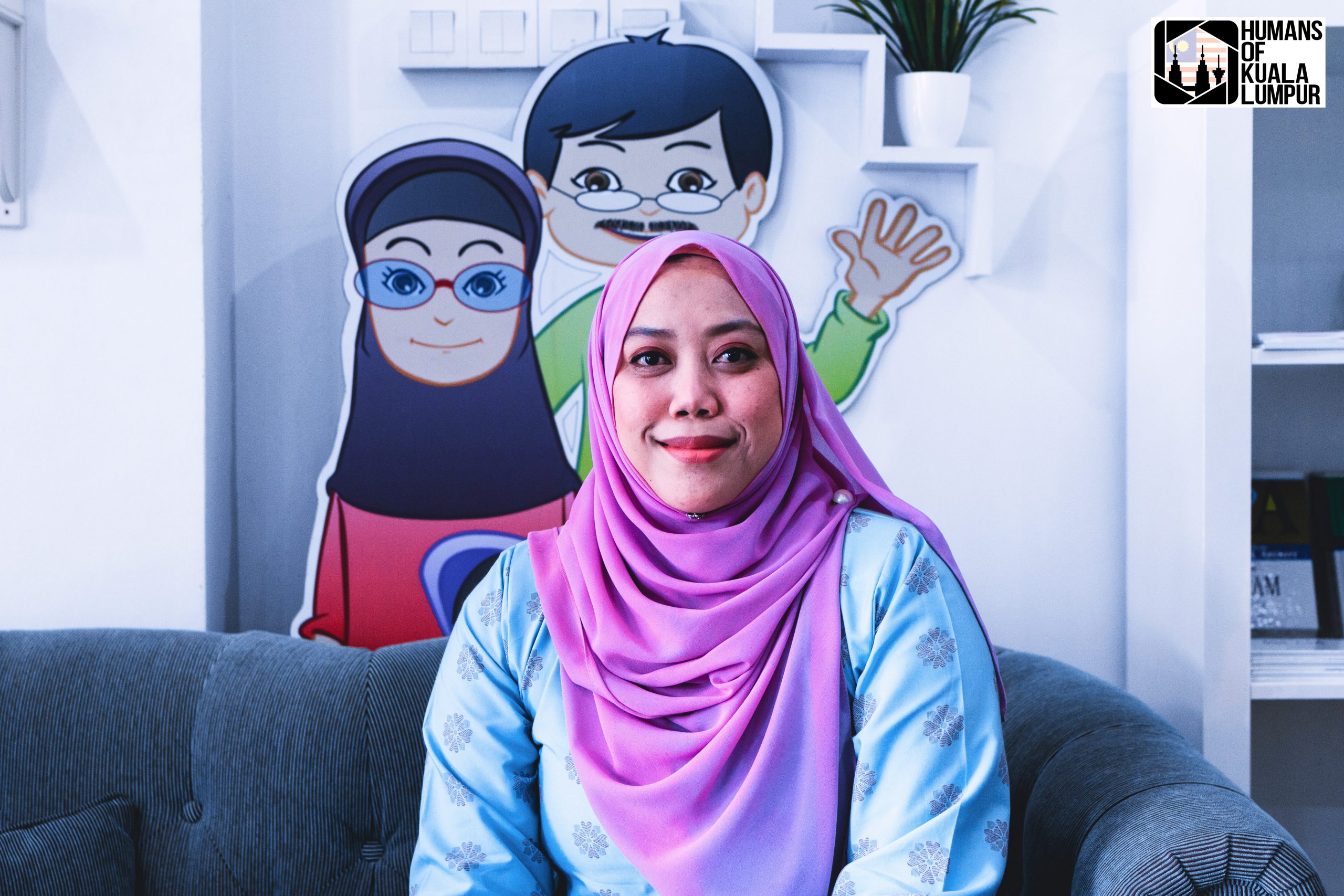
 

“Before all these, I loved to travel. After that, I just couldn’t because of this anticipatory anxiety.”

What were you diagnosed with?

I was diagnosed with Anxiety and Major Depressive Disorder during my 40’s. It’s been about a 20-year journey since then.

What made you seek help?

I woke up one day and felt that the world was different. I can’t explain it. My thoughts were racing, my brain was foggy. I managed to take the train to work, but I was having this unknown fear that something was wrong. I went to work, I functioned normally. But through all this, I kept feeling that something was off. I thought I was going mad. And the more you think about it, the more your fear increases. I went to see a doctor, explaining how I was feeling foggy and I had this fear. My company then sent me for a brain scan, and everything was okay. After this was ongoing for some time, the fear that I was going mad had increased. I felt that I just wanted to chuck it in, give away my stuff and all. I think this triggered the doctor to think I was having depression. I was told to go see a psychiatrist. And you know there’s this perspective that when you go to see a psychiatrist, you’re certified mad? The psychiatrist told me, “I see a lot of people with your condition.” It made me feel, “okay, maybe I’m not going mad, my brain seems to be okay.” The psychiatrist recommended me some medication. And usually the first medication you take just makes you feel worse. So I called him up, saying that my brain was racing like a train that I couldn’t stop and my anxiety had gone up. He then recommended some Citalopram and Proxac . You feel that you have no energy after taking it, not even to move your arm. He explained to me that my anxiety was masking my depression, so when my anxiety goes down, my depression comes up. Over time, you learn to become functional. The Proxac helps to stimulate you, but it never fully gets rid of the anxiety.

What changed before and after your diagnosis?

Before all these, I loved to travel. After that, I just couldn’t because of this anticipatory anxiety. Before going on a journey, I would catastrophize a lot: thinking of all the things that could go wrong, what if I missed the plane. My friends would call me up for trips. Before the trip, it was hell. But during trips, I felt good, I never had any anxiety during the trip. My family has also learned how to work with me.. My sister wanted us to go to India, and she hid it from me until the very last second so that I wouldn’t think about it. She didn’t tell me about the trip until the day we were leaving and she asked for my passport. She asked me to just relax and sleep during the flight there. I didn’t have the chance to think about it, and I was able to enjoy the trip. To be honest, I had almost totally given up on travelling. The anticipatory anxiety destroyed my life, it pushes me down a big slope right to the bottom and it’s not worth it. If I could book a flight today and go on a trip, I would do it. Because I know that I would be okay once I’m on the trip. But if I knew we were going a month before the trip, I wouldn’t be able to do it because I would go through hell waiting. It did irritate my girlfriend who wanted to travel but I would say no.

Aside from medication, was there anything else that has helped you?

When I was working, I could afford the cost of psychiatry but I did not go it. After I retired, I found someone (my doctor) who could listen to me, who was empathetic. But I realised that there is no magic to it. You see a psychiatrist and you can tell them your problems, but your problems still remain. I was treatment-resistant. It’s not the drugs that will cure you, it’s about changing your social behavior. Before all this, I always thought that I didn’t need people, I could do it all on my own. After anxiety, you’ll come to realise that you really really need people. So I try to socialise more, go out with friends. I enjoy going into the woods, I never really had any fears about it. Going into the woods, you may feel tired at the end of the day but you also feel good. I think that has helped me all these years.

20 years down the line since your diagnosis, what else has changed?

You start to empathise more with people. Initially I never really had empathy for people. My girlfriend’s brother, brother-in-law is schizophrenic. Initially I thought I could never understand him. But after all this, I kind of understand now. Now I tend to notice more about the people around me.

What is the biggest misconception the public has about mental health?

“Think positive” is one of the most bullshit statements I’ve ever heard in my life. People tell you to “get it together”, but you can’t just do that. I’m thankful to have friends who are very kind. You learn to separate your friends after that: those who you can only talk nonsense and chit-chat to, and those who you can really open up to and who are not afraid.

Another funny misconception I see, are people thinking mental illness is an infectious disease. There are so many people who think that if you talk to a sad person, you will become sad. And as a result, if you mention something sad, they would change the topic and not go into it.

Struggling with your mental health also makes you lose a lot of motivation. Back then, if I have to repair a chair, I would really find fun in doing it. Now it’s just going through the motions. I wouldn’t dream of how I could build more things around my house.. That ambition went away when I got depressed. Maybe the part that gave you the satisfaction died off? Every morning you wake up and think, “I can’t wait for night to come, this day would be over.” I should look forward that I have things to do in my day, but I don’t really.

How did you get involved with MIASA?

There was a lady in Desa complex who let me use a shop-lot for free for 6 months. Although I had a lack of drive for doing things, I wanted to start a game group. As my friends played mahjong, I bought a set for them to play (no money was involved in this). I set it up for half a year but no one came. The location was out of the way and it was hard to get the whole group together. But when this mahjong group was going down, a friend of mine said that someone was willing to let me use their cafe in Mont Kiara for free if I wanted to keep going with this mahjong group. She was willing to help me, she was a housewife and she has been travelling with her husband. To this day, the mahjong group is still going. I started the WhatsApp group, made the icon for it, I would go for most games, take pictures and post them. It’s been about 2-3 years, and they’re expanding into other games as well. I actually started a club, it’s a success story!

If you wake up in the morning and you do not see the point of living, you will get a lot of suicidal thoughts. I’m a cowardly person, I’m not going to slit my wrist or jump. I also know the consequences, the whole family will suffer. To survive, you learn to bear with it and find ways to help yourself. I started looking for support groups, and that is where I found MIASA.

At one point I was teaching Art to some Myanmar kids. I never did Art in my whole life. But after I retired, I tried drawing. From there, I realised I could draw a little bit. Then my church started an initiative for Myanmar kids and that was when I started helping. But kids are very difficult to control. When I wanted to start art classes in MIASA, it took a long time to get started as there was uncertainty if it would work. But when it finally got started, our founder too started getting excited about it.

Do you think suicidal thoughts should be discussed publicly/more often?

Yes, because such thoughts becomes a part of depression after a long time. Suicidal thoughts were not in my mind during the first 10-15 years. But after I retired, going through all the aches and pains of life, my hip broke after I got hit when riding my bike. There was a time when my brother was really worried about me. 2-3 Christmases ago, I didn’t want to join them in celebrating. I told him about how the world has gone a bit dark for me.

What do you hope for from your family and friends? What do you expect?

I don’t put many expectations on them. Family-wise, they have learned to understand it. And sometimes, people can only go so far to help you. Even when I’m sitting in a group playing mahjong, there are times when my anxiety level shoots up until I’m unable to concentrate at all. You can be in a social circle but still be miserable. But overall, you are happy being there. I hope people can be more accepting: “okay you have this, and it’s not going to be an issue.” You’re going through this journey with your mental health, you will learn something from all this.”

Photostory by Divaa

Edited by Win Li

Photo by Aiman

“We have to stay strong, because these people just lost everything in a blink of an eye.”

What was your most challenging experience so far as a firefighter?

(On the right)

“It was during Ramadan so we were fasting, and didn’t have the usual stamina to fight the fire but had to summon all our energy as people were crying and telling of how their books are gone, their homes, how the victims are wondering what’ll they do for upcoming Raya.

“We have to stay strong, because these people just lost everything in a blink of an eye. Yes we are firefighters, but we are also women.

“It was also a squatter settlement and those structures can be fire hazards and the cramped illegally constructed buildings allow the fire to spread quickly”.

“Also, we undergo the same specialized training as men. We even wear the same uniform, so its a bit of a problem. The equipment come from the United States, so its all big. The coat, the boots…and I remember falling down once!”

(On the left)

“It was a 6-hour fight with a fire in a clubhouse, where everything was closed, no doors, so the condition is right for the fire to spread easily because there’s no air going inside.

“So we were trying to figure out how can we find a way to bring in some air to help kill the fire.

“In the end, we had to force open the roof using the TTL (the big fire truck with the crane-like ladder extension) and used the chainsaw to open up the roof. We didn’t eat, drink, and was just at it for 6 hours starting from 6am till 1pm.

“It started from the kitchen when they were cooking water and then it exploded. Someone probably forgot they left it there, and it was just small fire. but because there was no big gusts of wind or air, it became bigger and bigger. Thank god there wasn’t many people in it.

“Being a firefighter is very adventurous, and there many challenges. We were afraid at first but after training it becomes automatic and we aren’t afraid anymore.”

“My biggest fear when I drive would be the inability to troubleshoot a failure or when a train won’t move and there is no traction.”

A young woman shares her inspiring journey as a Transit Officer with RapidKL, proving that gender doesn’t define skill when driving trains — only dedication, resilience, and passion do.

Continue reading

10 years ago when I first came back from the States, the focus was more on raising awareness on what autism is.

“It’s important that we put ourselves in the shoes of the parents. Think of how they would want to be treated.”

There are two common misconceptions surrounding the capabilities of special needs children. It’s either people saying that they are unable to do anything at all, or they are particularly skilled in something. But we then forget those who are in the middle of the spectrum. We don’t pay as much attention to those in the middle who learn at different rates.

I feel that I get inspired daily, and that keep you to stay on in the field. Everyday here is like Autism Awareness Month. A kid who has been working really hard to say a certain word and is finally able to say it, that’s inspiring. A kid who isn’t able to sit still for half an hour but is now able to do it with guidance and help, that is inspiring. Teachers who go all out, that is inspiring too. Parents being able to do family things with their kid, that’s inspiring too. Of course, we do have our share of bad days, and so do our kids. But there is always a new day, and you learn to celebrate every little success along the way.

Placing our kids in schools remains as the main challenge. There are students who are ready, but the schools are not ready. We don’t know how to go about this yet, but we are doing whatever we can to reach out to schools that we do work closely with.

10 years ago when I first came back from the States, the focus was more on raising awareness on what autism is. Nowadays, it’s the lack of training, resources, and manpower that is the problem. There has been an allocation of budget to make places more accessible, but we’ve yet to talk about training teachers in certain skills sets. It will take time, but I am optimistic about the direction we are going. There are a lot more awareness campaigns and organisations. We do get referrals of kids at younger ages. Another thing we should look into is for our children to get evidence-based, scientifically proven treatment. I think it’s very sad when parents spend so much money on something that is not even proven or something that is dangerous. We should not be swayed entirely by testimonies. Why would we subject our kids to treatments that have not yet been proven to work?

Every year we take out time to empower the public. We went to different universities to educate students about autism. Two years ago, we went to the kindergartens in our area and gave a free workshop on how to apply ABA in the classroom. We consult with Kuching Autism Association (KAA). Since then, we have seen the teachers changing, and students benefiting.

For us as the public, keep in mind that no parent wishes to have a child with special needs. To all Malaysians out there, before you pass any judgment or say anything, it’s important that we put ourselves in the shoes of the parents. Think of how they would want to be treated. They would want to be able to go into places and not get funny looks. They would want to be able to enrol their child in school instead of being rejected. They would want to be able to do family things parents wish to do with their kids. It’s heartbreaking when I hear parents tell me that other parents are complaining about their kid. Every child deserves the same opportunity to be able to learn, to be part of a group, to have a job, have a family. That would change the way you behave.”

Part 2/2

Photostory and edited by Win Li
_________________________

Gan Huey Sien is the Principal and Program Supervisor of SEED Autism Services
Website: www.seedautism.my
Email address: info@seedautism.my
Telephone number: 03-77340088