“My mom’s the Italian and my father is a Malaysian Chinese from Sabah. It’s an unusual combination.
My mom said that it was love at first sight but dad doesn’t really agree with it. I learned that they met on a train and my father didn’t have enough money on him so my mother decided to pay for his ride. He couldn’t speak Italian and my mom’s English was limited too but they got to know each other during the train ride.
Eventually, my dad gave her an address where he was studying in the UK and told her to contact him if she ever came to the UK to visit.
In fact, my mom purposely flew to the UK to look for him and they fell in love then and there. After my dad finished his studies, he went to Italy to be with my mom for her final year of university.
After mom graduated, they decided to move to Kuala Lumpur and tie the knot here.
I dream that one day I’ll meet my own love in a way as romantic as my parents did. I would imagine myself walking on a beach or just strolling on a hill reading my favourite book “Thousand Splendid Suns” by Khaled Hosseini and I would bump into my prince charming who would turn out to be also a fan of the book. We would start walking, talking and falling in love.
“Tell us a bit about your siblings, growing up together.”
I have 2 older sisters and a younger brother. I love my siblings very much. I have so much fond memories with them.
Once, I remember it was the 31st of August and we were in Italy for Ferragosto, it was a summer welcoming celebration they have over there. We were looking up to a majestic sky full of stars together. We witnessed a shooting star right in front of our eyes and we all made our wishes in our hearts.
I’m a cat-crazy lady and I remember vaguely wishing that my cat would live forever and ever.
“What have you learnt about life, growing up with your unique upbringing?”
My parents always reminds us to see the beauty in everything around us and to be grateful of what Kuala Lumpur has been for us. I’m thankful for my education here, my friends, my social life and most of all my beautiful family and home.
I do get asked a lot about how I feel growing up here in Malaysia.
Most of the time, I just shrug it off by saying I don’t know but recently, I’ve been thinking about the question more. I imagine that If I’m in a room full of Italians and Malaysians, I would identify myself more with the Malaysian group because I just feel more welcomed when I’m with them. After all, I was brought up here all my life”.
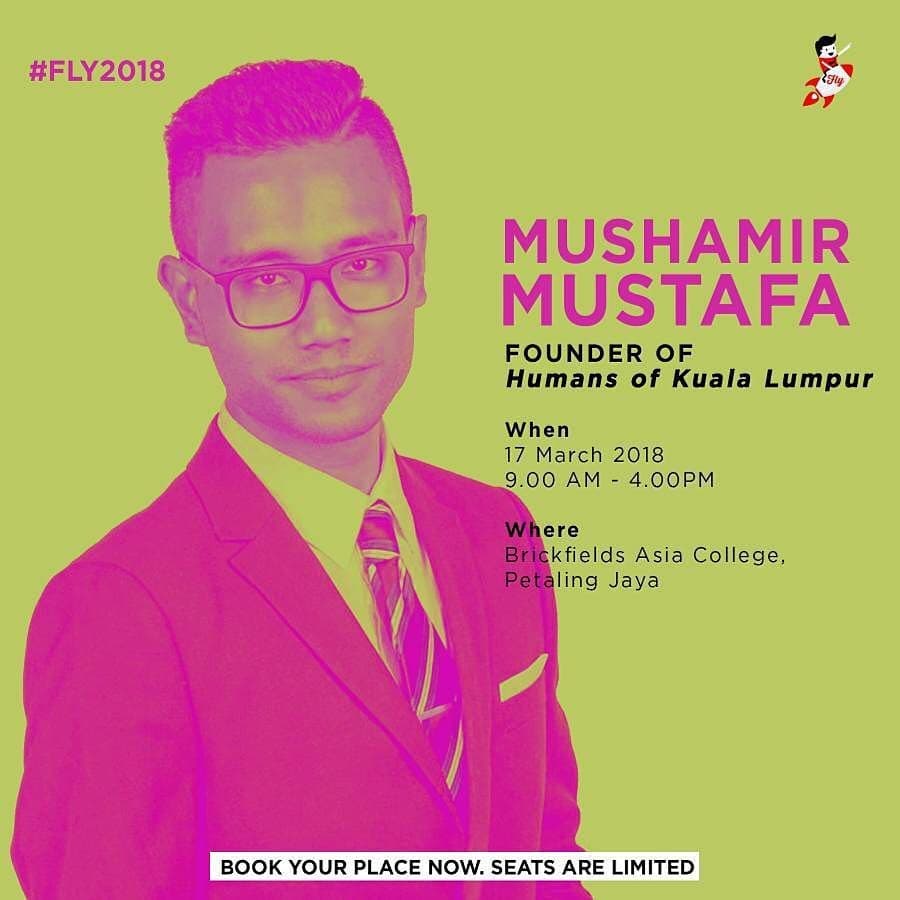
Story and photo by Mushamir Mustafa Editorial assistance by Dao Hong
“When we wish to fire people who work in corporate jobs, instead of offering a severance package, we make life very difficult for them.
We humiliate them in meetings, we tell them they are not performing, we restructure the organization and reduce their seniority, and put junior people as their bosses. Eventually even the strong cannot ‘tahan’ and they will leave themselves. This is what they taught me in corporate, and this is what I did. But you don’t realise it all eventually comes back to you.
Sadly, the company is never short of its people to volunteer to do the dirty job of undermining their own colleagues, not realising that one day they may be the victim themselves.
If you are mid-manager level, it’s fine because you are purely operational. Once you get to senior manager position, that’s when the politicking starts. People get jealous of you, people backstab you and they would do anything to get rid of you. This is the ugly side of corporate culture and sadly the dark side of human nature too.
“Why did you quit corporate?”
One late night I looked through an old photo album of my family – of my lovely wife and children and I realised the past 20 years passed by in a blur. I could barely recall my children growing up and that my wife has become older – it was like I just woke up from a coma and I lost my memory. I regretted this bitterly and it was this moment I decided to make right of my life.
I’m grateful I’m given a second chance in life. This is my second chance.
Now, I operate a modest chemical business of my own. During the weekends, I also trade at a flea-market to sell our unneeded items, and have been a trader for two years.
I am actually saving up more money now, than when I was in corporate, as I’ve also learned to manage my finances more diligently and realized money was spent on unnecessary luxuries. For example, I thought I could not live without Astro because I used to watch EPL (English Premiere League football) every weekend. When I cut off Astro to save money, I realized I didn’t miss it that much.
So here I am, selling our unneeded items, things which we rarely used – sometimes only once or twice. I have three children – a boy and two girls. Two are in university and one just finished SPM. Once the last one goes to university too, me and wife will move to a smaller apartment.
Once you declutter your life, you can focus on the things that really matter.
During my corporate work, I reported to the board and I had up to ten bosses. But now I just have one boss. My wife! This is my life now, it’s a lot simpler, but I’m happier.”
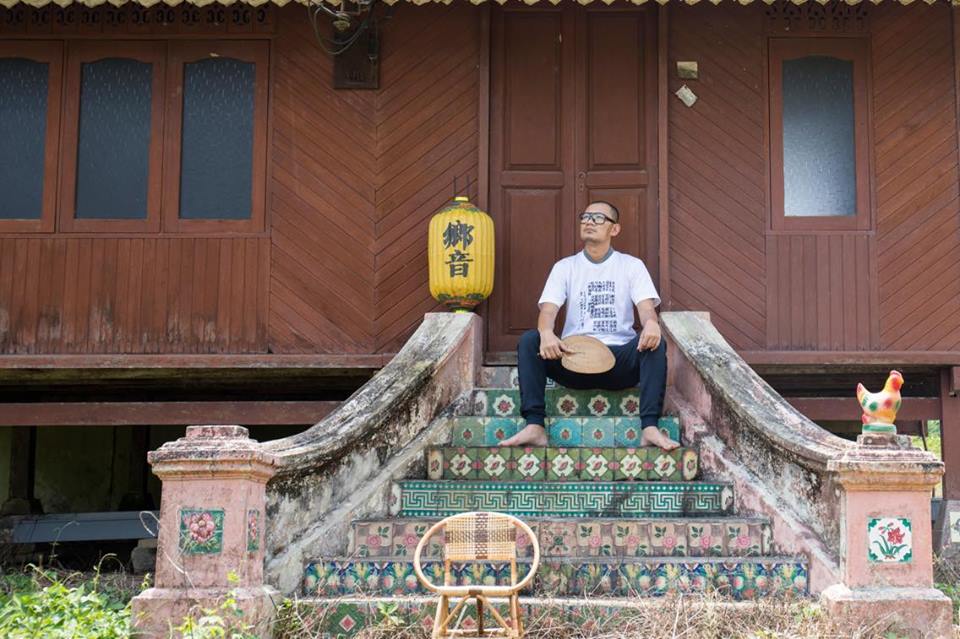
“She was a big part of my childhood. While returning to mourn for her, I saw her lying in the casket with the little things she had with her all her life. There were the little lyrical booklets of folksongs and vinyl records; some these were brought over (to Malaysia) from China.
I just couldn’t bear the thought of it being buried together with her forever, so I took it out from the casket in the middle of the night. I realized that these things I’ve kept were all related to “sound” so I started to study more about them.
For example, people use the phrase ‘mother tongue’ and not ‘father tongue’ because biologically the baby’s nerves are always linked to the mother’s tongue in the course of the pregnancy. Every time a mother makes a sound, the baby listens. That’s why, a mother’s sound and her language is the first thing that a new life hears. Every lullaby, nursery rhymes and children’s song in this world came from our mothers. They (mothers) hum to the rhythms of our daily lives, coupled with their own tune to see their child grow up day by day…
Today my work revolves around archiving sounds and stories from the elders that speaks different lineage of Chinese dialects. Some (of the elders) came to Malaysia before the Cultural Revolution in China, so the way they speak, the dialect they inherited is as pure as they were before. However, because they received limited and perhaps no education at all, they could not get by (in life) with modern Mandarin, and slowly they became marginalized because nobody speaks their dialect anymore and nobody could understand them.
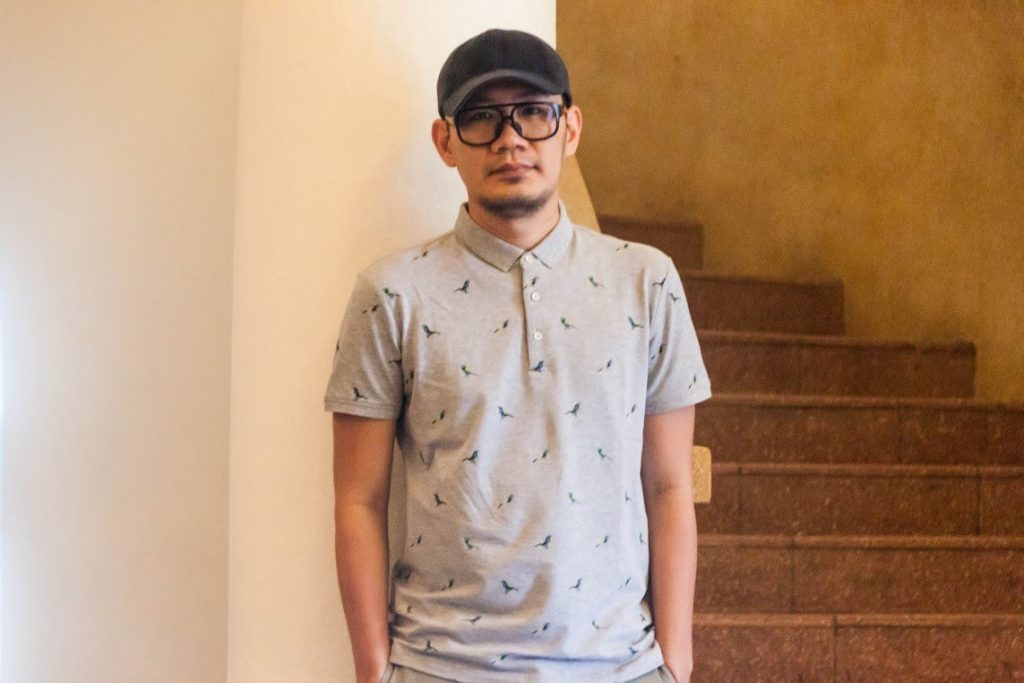
Their voices are slowly being forgotten, and their unique identity as well. My dream is to setup a Malaysian “Sound” Museum, where it houses a preservation center for Malaysian Chinese Dialects. I’m also shooting a lot of documentaries of Chinese tradition and culture that are slowly lost in time. This is a way of paying tribute to the first sound that we all hear in each of our lives and the most significant sound of all – the sound of our Mother Tongue.” – Chong Keat Aun
“There were people practising voodoo and there was once my father was inflicted with black magic. He was bedridden for almost two years. After recovering, he made a vow to dedicate his body to the gods so that he would be able to treat others with the same condition.
I tend to be alone because other people would stay away from me after knowing our family had this “thing” going on.
Usually when there is a “ceremony”, there would be a commotion with people shouting. Kids were always sent back to their rooms.
I gradually became reserved and that’s when I got my first cassette recorder.
After school, I would wait for all the other pupils to leave and then record my voice reading the entire textbook so that I could listen to it in my room.
Some people write things down when they encounter interesting things, I like to use my voice. I ‘wrote’ my diary with my cassette recorder and listened to the sounds of frogs and birds in my backyard. There was once I wrote and sang my own poems too!
I thought I was autistic, but much later I found out I just tend to be afraid of large crowds. Trying to come out of it, I turned to performing arts and in particular, dance.
My dance choreography is usually inspired by my dad’s life as a spirit medium, sometimes I paint half my face to look like a “spirit” medium.
In my final year of university, I took the stage together with my father to do a contemporary dance performance at a South East Asian cultural festival held in Pasar Seni.” – Chong Keat Aun
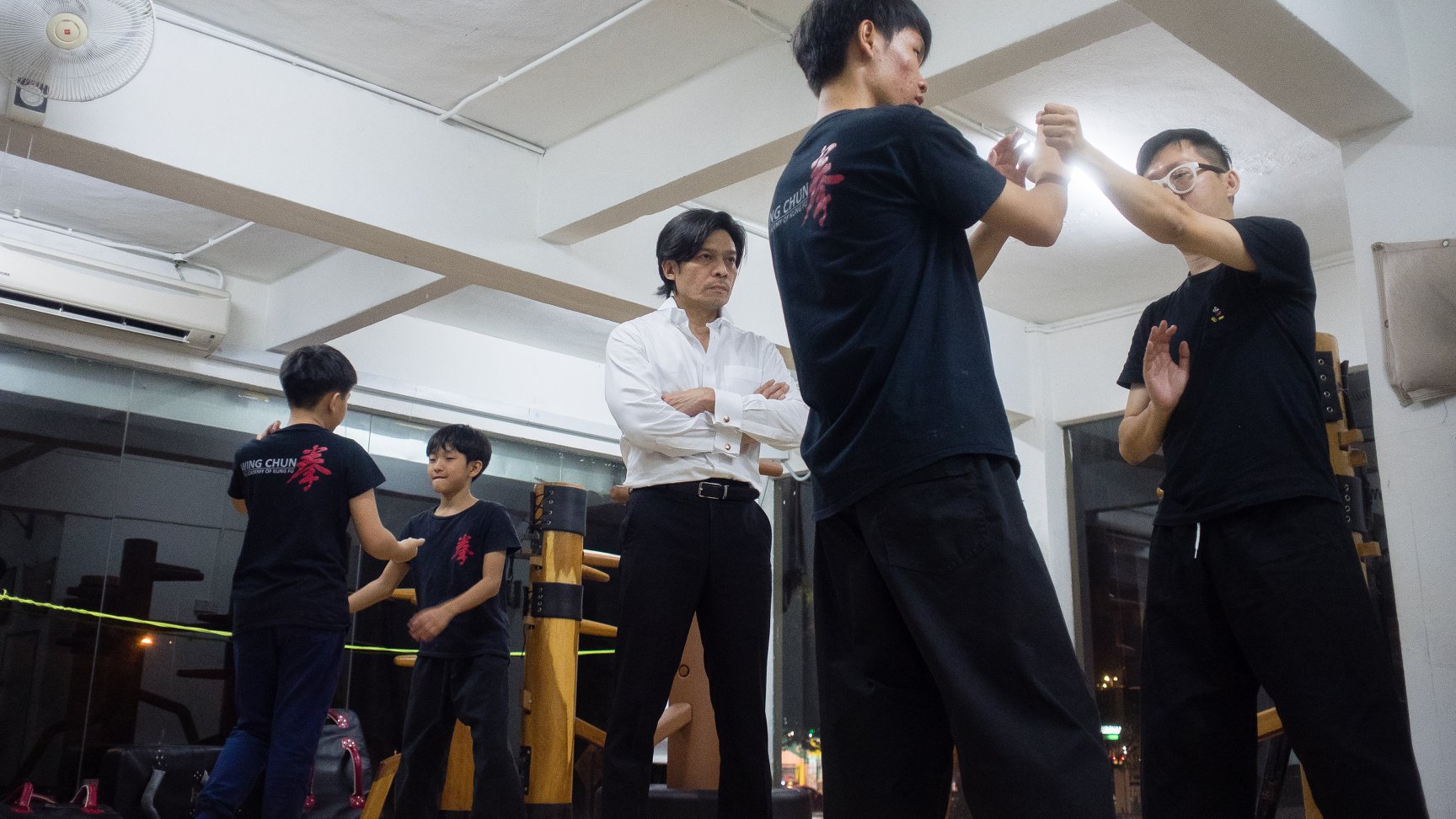
“Then when I went to the UK, I had basic training in Wing Chun. This was about 32 years ago. When I came back (to Malaysia), it was mostly Wing Chun and Aikido.
I have tried many different martial arts but Wing Chun stands out to me because of its effectiveness in close combat.
The purpose of kungfu or martial arts of any kind, when applied into real life, is very akin to an artist. Instead of piling on more paint, or more clay to a structure, what he does is he chips of parts from the block, chips off the unnecessary parts to reveal the structure within.
Wing Chun to me is beautiful – it is very scientific in nature and is practical. And I think the way it employs speed and power makes up a very complete package.
Martial arts pushes you to be disciplined, and its practice pushes you to seek peace within the mind, to realise that the true opponent in this world not external. It is basically, you.
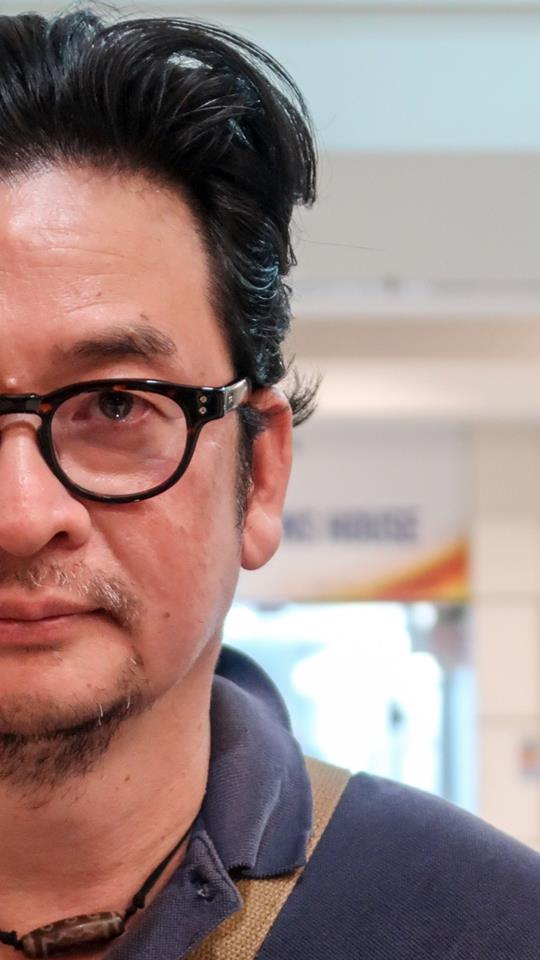
It (martial arts) has helped me in the sense of the inward search of meaning and value, and to a certain extent truth. ” – Sifu Kamarul Hisham Kamaruddin, Wing Chun Cheras – Kung Fu Centre
Adrian Jo Milang, from the Kayan tribe of Borneo, shares his journey of preserving ‘takna,’ an ancient oral tradition of epic tales and music, and his mission to revive a rapidly disappearing cultural heritage.
“This was in UK, 1992. I was working in a restaurant as a waiter. It was a popular place, and customers were lining up, in the cold winter, trying to get a table.
Outside, there was this tipsy group of five telling the customers ‘don’t go to this restaurant’. They got very upset with us (me and another co-worker) trying to tell them off. I was the only one with some skills (martial arts). Their coordination was not too good because they were tipsy but my skills came in handy. Yes, there was physical exchange between us then, and later, the police came but they had taken off at that time.
It was the only time I had to use kungfu. It was for self-defence and for the safety of the customers. I hope I don’t have to use it again.
The motions of martial arts, its discipline, the physical expression actually is introspective. It begins with what it apparently is – a physical training. It makes your stronger and faster. It makes an individual grow. The motion of martial arts, its discipline, its physical expression are meant to turn you inwards. You are really in a sense defending yourself. We hope to get more and more people to join. That’d be nice.” – Sifu Kamarul Hisham Kamaruddin, Wing Chun Cheras – Kung Fu Centre.
“Now, I feel that what is inside an ‘angpau’ is a blessing, and a form of well-wishing (from the elders). To be able to receive an ‘angpau’ with both hands is a blessing itself, its not so much about the money anymore.
There was once a customer requested for a super big ‘angpau’ (red packet) because he wanted to give his mother RM4,000 cash. I told him ‘write cheque lah!’, but he insisted because it was the Chinese New Year and giving cash carries significance, so we printed a bigger ‘angpau’ for him.
Yeah, there’s e-angpau these days, but even if there’s just one customer order, I will continue to make ‘angpau’, and tell people that I am still printing customised red packets.” – Lee Kuan Chen.
The above interview was conducted in Mandarin.
Story by Samantha Siow Photo by Kelvin Mah Translation by Christine Cheah
“I took up kungfu for self-defence. I’m too small and I was always bullied. Today, I can use kungfu to fight but I don’t want to. I will only use Wing Chun when I need to.”
“I want to have a good-looking body, with no fats.” – sworn brothers in kungfu.